Votebeat is a nonprofit news organization reporting on voting access and election administration across the U.S.
This news analysis was originally distributed in Votebeat’s free weekly newsletter. Sign up to get future editions, including the latest reporting from Votebeat bureaus and curated news from other publications, delivered to your inbox every Saturday.
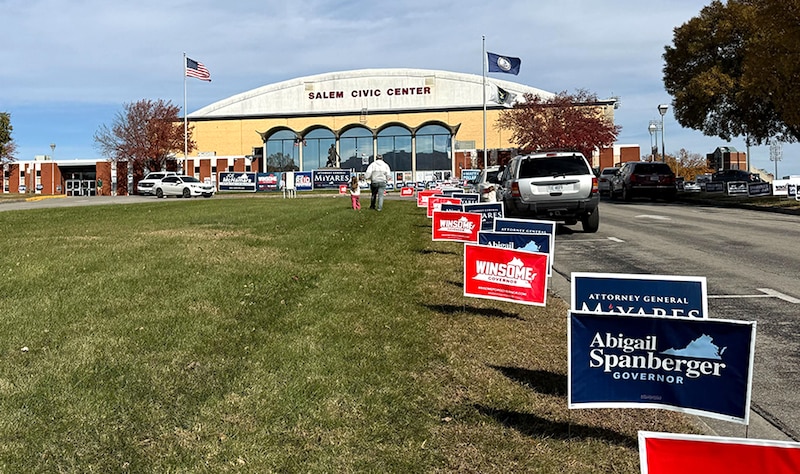
Millions of Americans voted in state and local elections on Tuesday, and for the most part, it went smoothly. In many high-profile cases, including closely watched gubernatorial races in Virginia and New Jersey, it appears the powers that be granted what is jokingly known as the election administrator’s prayer: “Please, let this election not be close.”
Voters and election officials still had to contend with bomb threats in New Jersey, as well as one in Dauphin County, Pennsylvania — a harsh callback to the rash of bomb threats around the country that marred the 2024 election.
In Chester County, Pennsylvania, as Votebeat’s Carter Walker has reported, a pollbook error means that more than 12,000 independent and unaffiliated voters had to cast provisional ballots, and their eligibility must now be verified before those ballots are tallied.
Voting on elections
In some places, voters were asked to make decisions about future elections. In Texas, voters approved a constitutional amendment specifying that voters must be citizens. In Maine, voters rejected a referendum that would have put new voter ID requirements and new restrictions on absentee voting in place (Voting Rights Lab has a helpful tracker of voter ID requirements in different states).
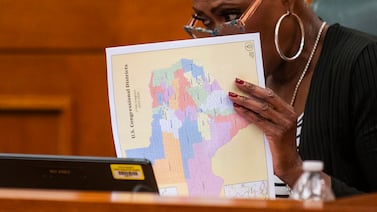
And, of course, in California, voters overwhelmingly approved new congressional district maps, part of a wildly unusual midcycle redistricting push around the country. California’s new maps, an attempt to offset new Texas maps favoring Republicans, will open opportunities for Democrats to pick up seats in the U.S. House.
Following up on federal election monitors
In last week’s newsletter, Jessica Huseman wrote about the U.S. Justice Department’s plans to send federal monitors to some locations in New Jersey and California, and how, in the context of President Donald Trump’s efforts to exert more control over elections, the news had made many people uneasy.
So this week, I followed up with some election officials in both states to ask how it went. State election officials in New Jersey didn’t immediately respond to a request for comment. In an emailed response, the California Secretary of State’s Office said the election “was secure and transparent,” adding, “the U.S. Department of Justice has not informed the State of any details about their observation.”
Election offices in Los Angeles and Orange counties, two jurisdictions the Justice Department had said it planned to monitor, confirmed nothing disruptive happened during the election, and the Fresno Bee reported all was quiet in Fresno, too.
On Wednesday, Michael Sanchez, a spokesman for the chief elections official in Los Angeles County, said his office was “unsure of whether federal observers visited vote centers in Los Angeles County,” and had not received reports of them actually doing so. Sanchez said monitors could still choose to observe post-election processing at the ballot processing center.
Bob Page, the registrar of voters in Orange County, also said he had not heard of any issues. Page said one of two Justice Department monitors assigned to the county had been observing operations at its central ballot processing facility this week, at one point asking for clarification on vote-by-mail ballot signature verification procedures.
What will happen next?
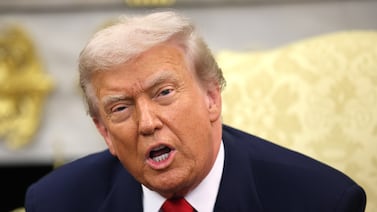
There continues to be concern about what the Trump administration will do next on elections and he sent some signals on that this week. He continued to level unsupported accusations against California’s elections on social media.
At a White House press briefing Tuesday, in response to a question from PBS reporter Elizabeth Landers, White House spokeswoman Karoline Leavitt said the White House is working on a forthcoming executive order “to strengthen our elections.”
Trump issued a first executive order on elections in March, though major provisions have been halted by the courts. He has since said he plans a second one, though it isn’t clear exactly when that will come or what it will include.
Since Tuesday’s election, Trump has also repeatedly pressured senators to eliminate the filibuster, saying it will allow Congress to pass new election laws, including national voter ID requirements eliminating mail voting, except for members of the military.
So far, key senators have said no.
Carrie Levine is Votebeat’s editor-in-chief and is based in Washington, D.C. Contact Carrie at clevine@votebeat.org.