Votebeat is a nonprofit news organization reporting on voting access and election administration across the U.S. Sign up for Votebeat Michigan’s free newsletter here.
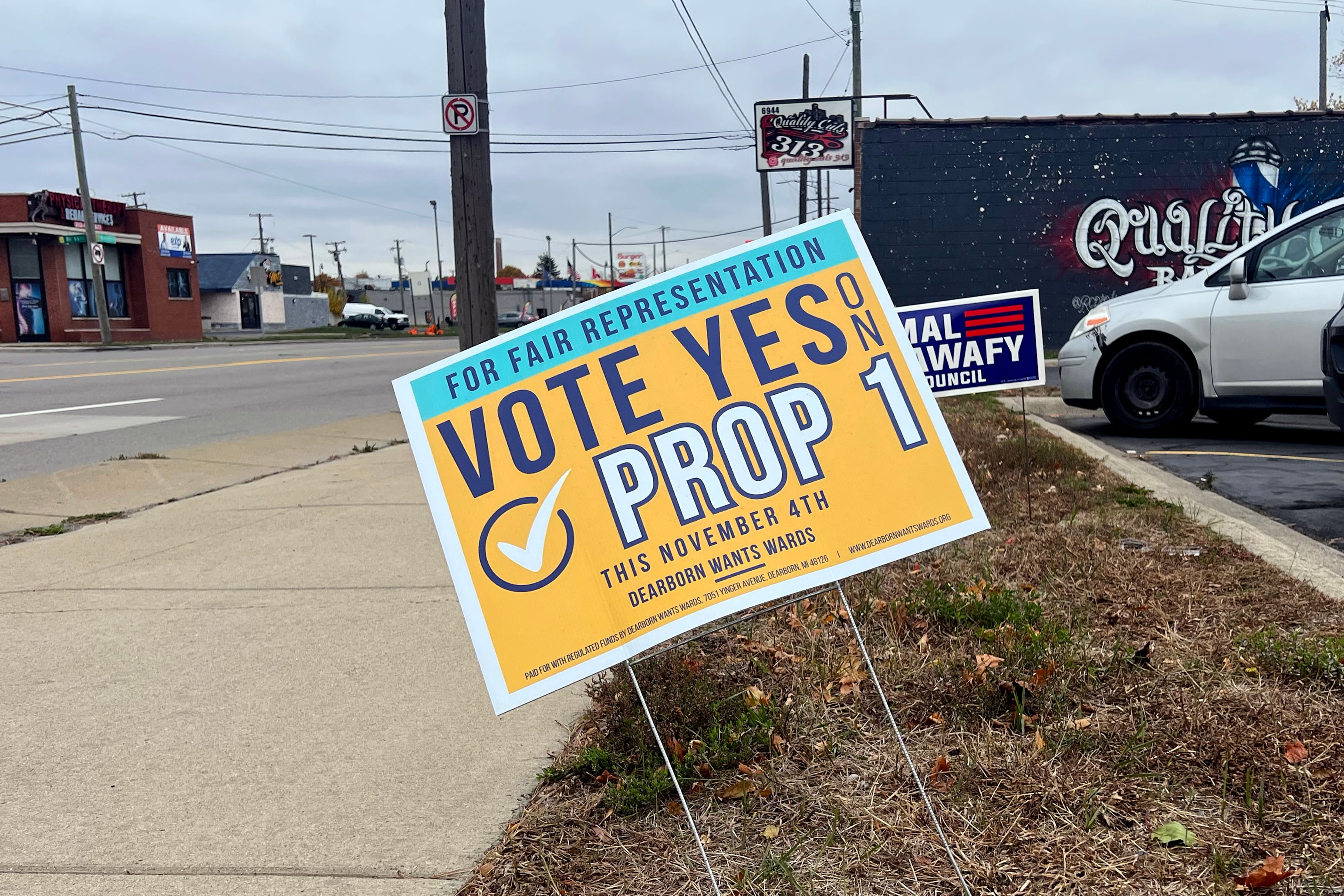
Dearborn voters overwhelmingly rejected a ballot measure that would have expanded their city council and split the Detroit suburb into council wards.
Unofficial results from the city show that nearly 71% of voters voted against the proposal.
The goal, Dearborn Wants Wards organizers told Votebeat over the summer, was to use geographic wards to help address the fact that the bulk of the city’s council members come from only a select few neighborhoods.
Increasing geographic diversity could help address flooding problems in the eastern part of the city or pollution problems in the city’s south end, organizers believed. Such a change would have put Dearborn in league with other large cities around the state who use a district-based system, including Detroit.
The group collected about 8,000 signatures to get on the ballot, but the unofficial election results show that only around 7,300 voters of more than 25,000 ultimately voted in favor of the change.
Organizers did not respond to a request for comment from Votebeat Wednesday morning.
The proposal was controversial from the moment it was approved for the ballot. Some, including former state Rep. Gary Woronchak, said they believed it would actually minimize representation for each Dearborn resident.
There was also a question of legality. The state attorney general’s office reviews all potential amendments to city charters, and in a September letter about the proposal, Assistant Attorney General Patrick Fitzgerald wrote that this ballot question addressed too many things in a single question.
Addressing multiple topics in the same question could violate the state’s Home Rule City Act, which sets standards for maintaining and changing local charters.
The proposal was “facially defective” as a result, Fitzgerald wrote. While the AG’s office reviews proposals, it is ultimately up to local communities whether a ballot issue appears before voters.
If voters had approved the proposal, it likely would have immediately gone to court, the Detroit Free Press reported, to determine if it was within the bounds of the state’s Home Rule City Act. Mark Brewer, representing Dearborn Wants Wards, told the Free Press that he believed the proposal “fully complies with the law.”
Hayley Harding is a reporter for Votebeat based in Michigan. Contact Hayley at hharding@votebeat.org.