
Votebeat is a nonprofit news organization reporting on voting access and election administration across the U.S. Sign up for Votebeat Michigan’s free newsletter here.
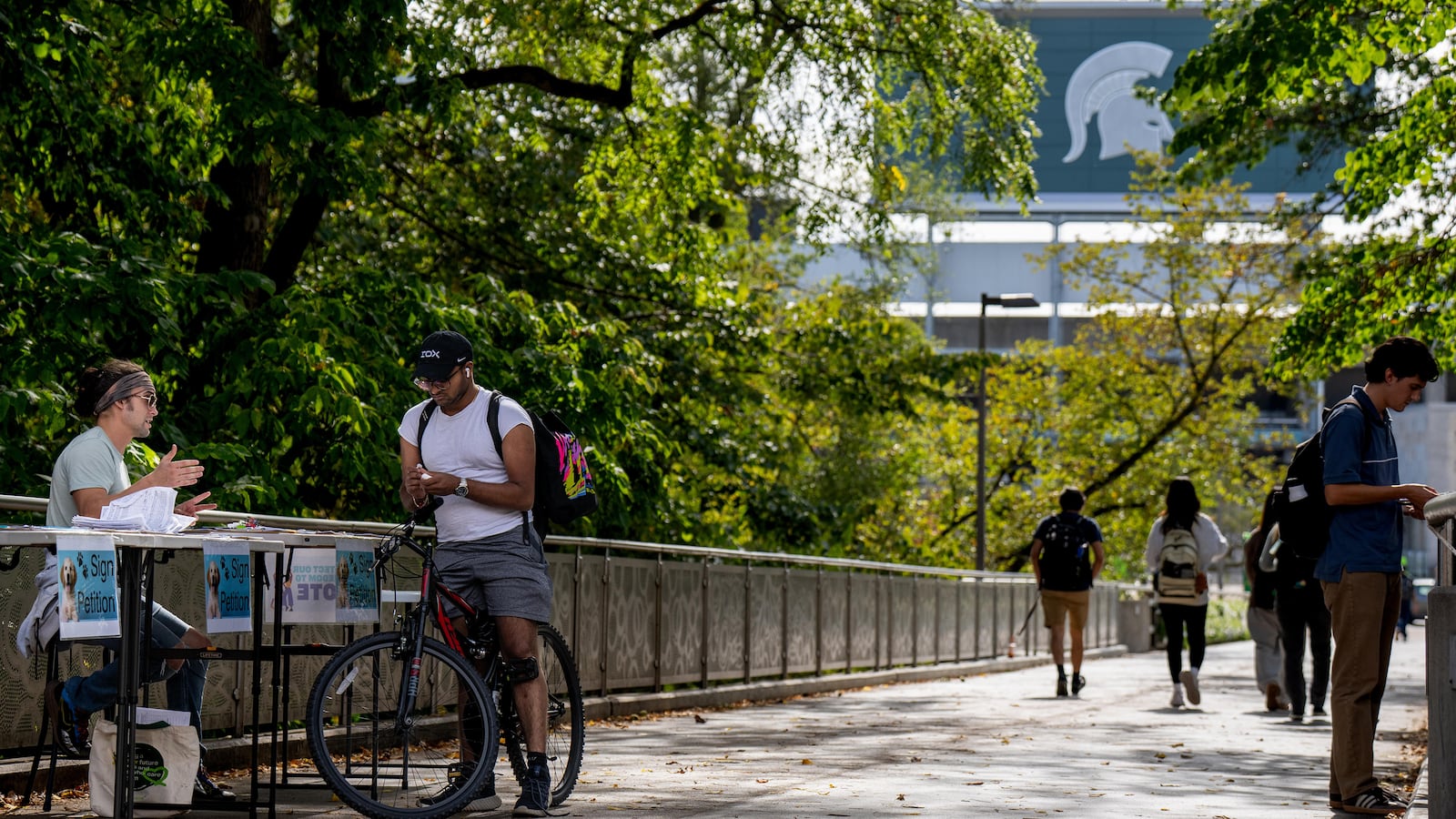
College students across the state say they have been lied to by petition circulators, who have descended on their campuses to gather signatures in support of requiring Michigan voters to prove their citizenship.
In August, Michigan State University freshman Abby Lindley was told the petition would make it easier for immigrants and transgender people to vote, she said. University of Michigan junior Aidan Rozema reported being told in September that it would make voting easier. In October, circulators told MSU freshman Hunter Moore it would expand absentee voting, he said.
No law in Michigan requires circulators — often paid per signature — to tell the truth about what’s on a petition, or to show prospective signers the full text. While some states try to ensure accountability by banning per-signature pay or requiring circulators to live in-state, rules across the country are a patchwork.
Michigan falls on the lax end of the spectrum, allowing paid, out-of-state circulators and placing virtually no limits on how they’re compensated. Voters, in repeated episodes over decades, have complained that they signed petitions only after being misled about what an initiative would do. In some past instances, candidates for local and statewide office have been kept off the ballot — or nearly so — after circulator-related problems with signatures.
In Michigan, anyone with an idea and enough signatures can put a law or constitutional amendment before voters. It’s one of the nation’s most accessible initiative systems. Twenty-four states, as well as D.C. and the U.S Virgin Islands, allow citizen-led initiatives, but fewer let residents directly amend their constitutions. The process has become central to Michigan’s political culture: The Board of State Canvassers approved language for more than half a dozen petitions in 2025 alone.
Lawmakers have repeatedly failed to fix a system that state Sen. Jeremy Moss said incentivizes fraud by paying per signature. “It is ripe for abuse,” he told Votebeat in September.
Nothing has changed, leaving a new generation vulnerable.
“I was being open with them and trusting them,” Lindley, the MSU freshman, said of the signature gatherers. “They were not being truthful and open with me.”
Petition organizers say they have zero tolerance for lying
Around October, students at MSU and at other schools began posting online about feeling misled by circulators and began warning each other to “be careful” when approached.
The petitions circulating on the campuses — based on the descriptions given by students and photographs showing petition language in The State News, Michigan State University’s independent student newspaper — appear to match the wording of a proposal backed by Americans for Citizen Voting.
ACV is an effort from the Virginia-based, libertarian-leaning group Liberty Initiative Fund.
Liberty Initiative Fund President Paul Jacob said that their team is running checks to ensure that signature gatherers are being honest. In a single instance, he said, a circulator was found to be lying to potential signatories and was fired. Organizers said they were unaware of any others being fired for misrepresentation.
“If anybody feels that they signed the petition and they weren’t told the truth, we’d want to hear from them,” Jacob said.
ACV hired contractors to manage its signature gathering, campaign finance records show. The group paid nearly $3 million to a Colorado-based company called Campaign & Petition Management for “petition management,” a category that includes signature gathering.
ACV also paid nearly $200,000 to Ludington-based Campaign Audit & Trust and $35,000 to Webberville-based Victory Field Operations for petition work, according to records as of Oct. 20, the most recent available.
Campaign & Petition Management and Campaign Audit & Trust directed Votebeat’s questions to Kristin Combs, a consultant for ACV. In an email, Combs said she did not work for or manage any vendors. Victory Field Operations did not respond to requests for comment.
Training materials, Combs said, make clear the company’s contractors are not allowed to lie, though she did not provide copies to Votebeat. She said both paid and volunteer circulators are held to the same standard.
“We have a zero tolerance policy for that,” Combs said. “If we catch them lying to us or to anyone else, they will be fired immediately. And frankly, with the popularity of this issue, they shouldn’t be saying anything other than the truth.”
Combs later said that the checks Jacob referred to involve calling some signatories to confirm they actually signed and through a “secret shopper” method.
Votebeat provided a list of five instances, ranging from late August to early October, when students said they were misled by signature gatherers. The complaints were forwarded to vendors, Combs said. More than 700 people collected signatures for the effort, she said, and organizers were aware of only three additional instances of concern.
It’s not clear exactly which group, if any, these signature gatherers were working with, though ACV is the only proof-of-citizenship effort currently collecting signatures using language approved by the Board of State Canvassers. By email, Combs said that one August incident occurred before the campaign had circulators on MSU’s campus, and that a canvasser pictured in The State News did not appear to work for ACV. She did not have information on any of the others.
A separate proof-of-citizenship amendment has also been approved but is not yet collecting signatures.
“Opponents of the measure have been clear that they intend to do everything possible to prevent it from appearing on the ballot,” Combs said in an email. “Given that context, we cannot rule out the possibility that some reported incidents involve individuals who were not affiliated with our campaign.”
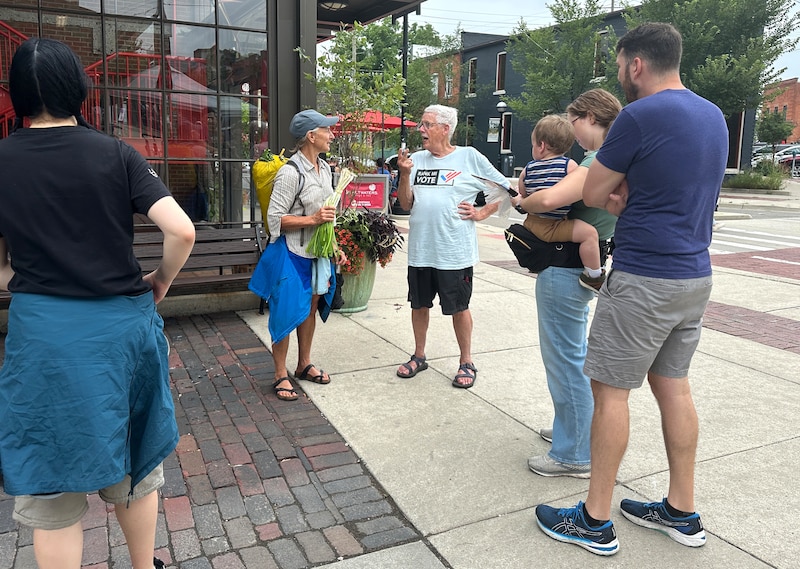
Potential signers may not know if the person handing them the clipboard is a politically active neighbor volunteering for a cause they deeply believe in or a contractor making up to nearly $15 per signature, the national average in 2024 according to Ballotpedia, though rates can vary widely. While Michigan courts have ruled paid petition gatherers must disclose this information, it typically appears in small font at the top of the petition and it’s difficult to assess compliance.
Lindley and Moore told Votebeat they signed the petition on campus but later realized they do not support it. Both said they’d take their signatures back if they could, but neither knew where those forms might be now or how to ask that their signatures be removed.
If those forms contain enough valid signatures gathered within a six-month period before July 6, the deadline to turn them in, Michigan voters will be asked to approve a measure that would force new Michigan voters to prove their citizenship before casting a ballot. Already-registered voters would also have to show proof if the state can’t verify their status.
Opponents say the requirements are unnecessary, and could make it harder for eligible Michiganders — such as college students — who have recently moved, or have changed their names. Supporters say it is a necessary protection against noncitizen voting.
Signatures are difficult to obtain in Michigan
Clearing the signature bar isn’t easy. The number of signatures needed for inclusion on the ballot keeps rising.
To be on the ballot for a constitutional amendment in 2026 will require nearly 450,000 signatures from registered Michigan voters — 10% of the number of ballots cast in the last gubernatorial race. That’s more signatures than everywhere but the more populous California and Florida. A decade ago, the required number was only 315,654 signatures — a major jump despite Michigan’s mostly stagnant population that’s due to the state’s improved voter turnout.
Not all of the signatures collected will be considered valid. Some signers won’t be registered voters, for example, or some names won’t be legible and thus, can’t be verified. Verification requires state elections staff to review petition sheets for obvious errors or fraud, then use a computer program to randomly verify about 1,000 signatures per petition to confirm voters are registered.
That’s plenty of work for signature gathering firms, but there’s more: Candidates also need signatures — at least 1,000 to get on the ballot as a congressional candidate, and at least 15,000 as a gubernatorial candidate.
There’s only so many people willing to sign petitions — whatever they’re for — and finding those people can feel like an arms race. It’s also expensive, and the number of signatures needed for almost everything means the competition is driving those costs up, said Mary Ellen Gurewitz, the vice-chair of the Michigan Board of State Canvassers.
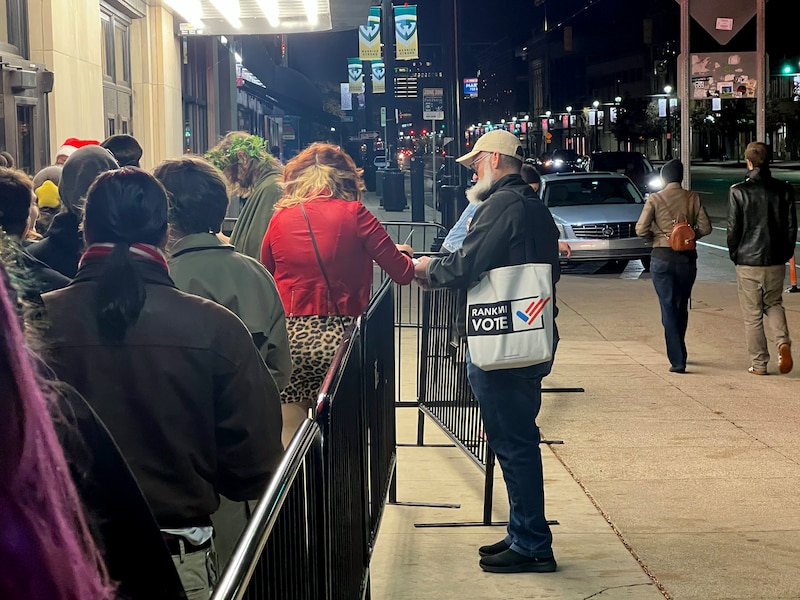
Groups with a lot of volunteers can try to bear this burden, but often fail. Rank MI Vote (the effort to change the state’s elections to a ranked choice system for many elections) boasted around 2,500 volunteers but still reportedly struggled to meet benchmarks before dropping out of ballot contention in December. Katherine Nitz, spokesperson for Invest in MI Kids (a proposal for a tax on particularly wealthy people to support local schools) declined to share specific numbers, but noted the campaign has “thousands of volunteers across the state.”
But some issues don’t draw a crowd of committed volunteers. Then, groups turn to private companies that will collect signatures for a fee, mostly relying on paid contractors. Authorities have repeatedly flagged issues.
In 2021, Attorney General Dana Nessel announced her investigators “found clear evidence of misrepresentations by petition circulators” but was unable to file charges in part because lying is “not in violation of any criminal statute.”
In 2017, a state representative said he approached circulators who were collecting signatures using false claims about lawmakers’ healthcare.
And back in 2006, circulators for the Michigan Civil Rights Initiative, aimed at banning affirmative action in the state, allegedly lied to a number of signers, telling them the amendment would protect affirmative action.
The legal fallout was detailed in a 2007 paper in the Fordham Urban Law Journal written by a then-professor at the Wayne State University Law School: Current Secretary of State Jocelyn Friedrichs Benson.
“An electorate that perceives fraud as an endemic presence in the electoral system — based on either their own experiences or the prevalence of allegations elsewhere — is likely to lose faith in the accuracy of an election’s results,” she wrote at the time.
She recommended solutions — deeper investigations into accusations of fraud, eliminating pay-per-signature, federal legislation — some of which have been unsuccessfully proposed by state lawmakers in the two decades since.
“There are a lot of other issues that I think rise to higher priorities for many folks,” Benson said in a November interview. She said officials and activists often need to remind people that the current system “is unjust and needs to be changed.”
Ironically, Benson said major changes may need to be the result of a citizen petition effort. She admits it’s a “heavy lift,” but pointed to the successful effort to get an independent redistricting commission as a sign that it’s possible.
Invalid signatures keep candidates off ballots
Signature gathering has also caused problems for campaigns.
In 2016, for example, a blogger in Western Michigan was sentenced to jail time for forging signatures he was gathering for a candidate.
In 2022, state elections officials found thousands of fraudulent signatures on petitions for five GOP gubernatorial candidates, all of whom had hired the same signature-gathering firm and were removed from the ballot. Three people tied to the firm have since been charged with fraud. Their trials are set to begin this month. One lawyer declined to comment and two did not respond.
Donna Brandenburg, a Republican gubernatorial hopeful, was among the five candidates kept off the ballot after relying on the company to gather the necessary 15,000 signatures. Her campaign submitted 17,778 signatures.
Of those, the Michigan Bureau of Elections found that only 6,634 were valid — pages of signatures were submitted with identical handwriting, or were purportedly signatures of those who had moved from their registered address.
It still upsets Brandenburg, who said she was denied her opportunity to challenge big names in a crowded field. “I think anybody has a chance,” she said.
Even more recently, Adam Hollier — a Democrat from Detroit now running to be Michigan’s next secretary of state — was kept off the 2024 primary ballot for a congressional seat after county officials rejected hundreds of his gathered signatures.
A handwriting review found “the same distinct handwriting and patterns” and suggested “ the same hand fraudulently signed every line of each petition sheet,” Wayne County Clerk Cathy Garrett wrote in an email.
Hollier, in a statement at the time, said he “put (his) trust in someone who let us down in the collection of signatures.”
“It is also clear that our state’s system of ballot access is sorely in need of reform,” he continued, “ so that future campaigns, as well as of the voters of this state, do not fall victim to fraud.”
Legislation to fix signature gathering in Michigan has repeatedly stalled
Last year, as in past sessions, legislators submitted bills to restrict some of these practices. One proposal from State Sen. Jeremy Moss, a Democrat from Bloomfield and chair of the Senate elections committee, would ban per-signature payment. He’s submitted another that would require a potential signatory to have a chance to either read a proposal or have it read to them before signing.
“I don’t think anyone wants to have lies and deception be the tool that people use in order to gain support for their ballot proposal,” Moss told Votebeat in September.
Moss filed the bills in September, and they passed in November with some bipartisan support, though state Sen. Ruth Johnson, a Republican and former secretary of state, questioned whether they were “really a good solution,” and warned enforcement could become partisan.
Republican leaders on the House Election Integrity Committee — the House counterpart of Moss’s Senate committee — did not respond to questions on whether they might take up the bills.
Even if these bills do pass, groups have sued elsewhere over similar laws. In a 1988 case from Colorado, for example, the U.S. Supreme Court unanimously ruled that outright banning signature gatherers from being paid violates the First and 14th Amendments.
And last January, Democratic Gov. Gretchen Whitmer vetoed a number of bills Gurewitz and other members of the state canvassing board supported to codify the way signatures are reviewed by the state, saying the bills “fall far short of the serious need to address this fraud.”
But those who have signed petitions they later realized they don’t actually support want to see action taken. Lindley, the MSU freshman, said she now warns others not to sign without reading. She’s frustrated that proposed fixes have stalled.
“I’m just really frustrated that it is totally legal for them to lie to people about what they’re signing,” Lindley said. “I know that’s a hot statement to make, that people should be truthful in politics, but it’s the least we can do.”
Hayley Harding is a reporter for Votebeat based in Michigan. Contact Hayley at hharding@votebeat.org.