Votebeat is a nonprofit news organization reporting on voting access and election administration across the U.S. Sign up for our free weekly newsletter to get the latest.
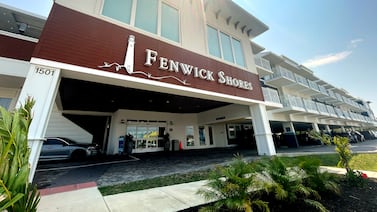
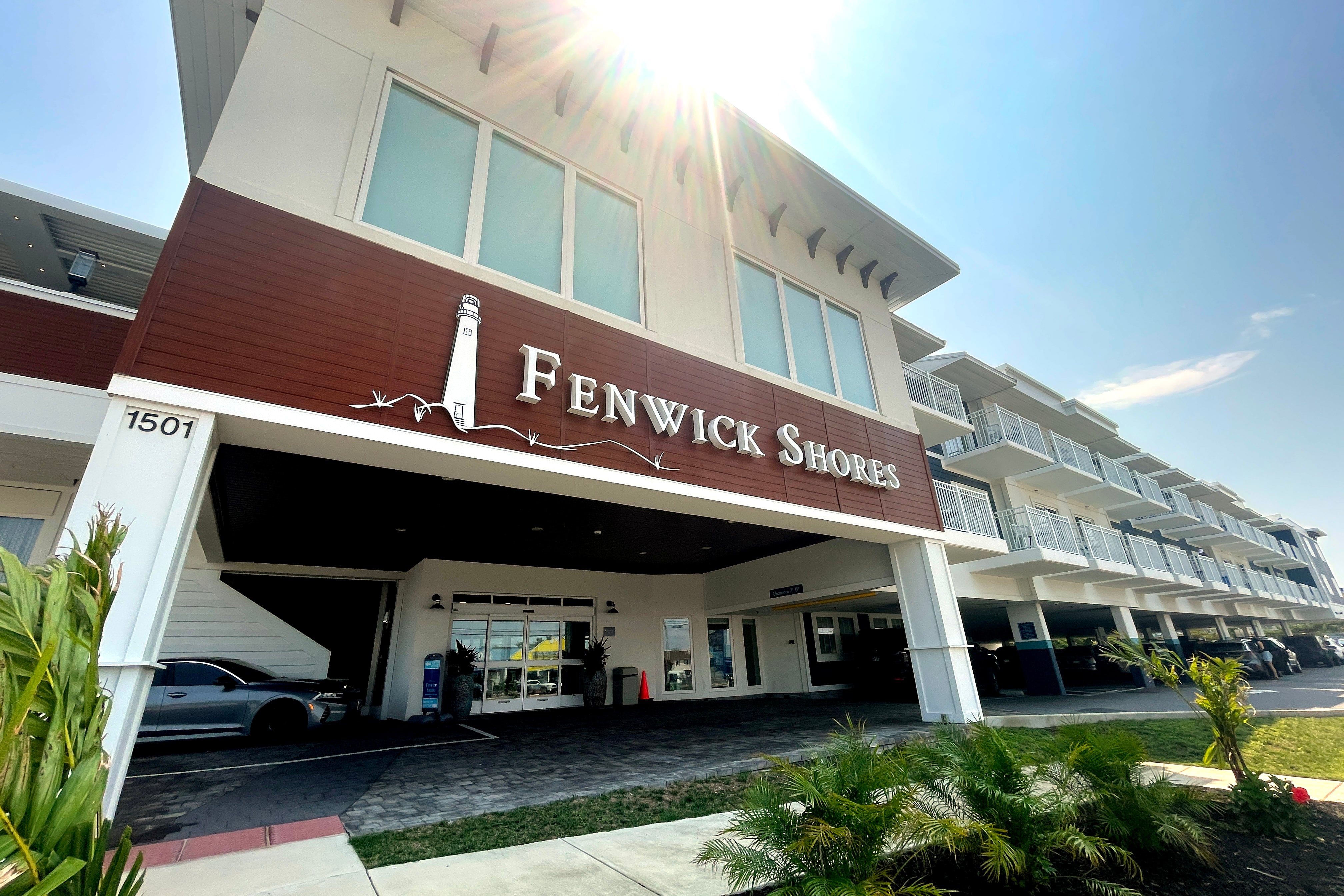
FENWICK ISLAND, Del. — The Fenwick Shores hotel on the Delaware coast carries a stamp of unusual privilege.
It’s not because the 65-room hotel claims to be Fenwick Island’s first upscale getaway, where the best suites can cost $2,000 per night during peak summer season. It’s not because the heated rooftop pool hosts Mermaid Tasha, one of the best known professional mermaids in the area.
Fenwick Shores is elite because it is a hotel with the right to vote.
The retreat a block from the beach is one of about 200 “artificial entities” — corporations, limited liability companies, trusts, and partnerships — allowed by the town charter to cast votes in local elections.
Delaware law has for decades given businesses more voting rights than any other state. Even by Delaware standards, the tiny town of Fenwick Island chooses to offer them to an unusually broad swath of business entities. It is one of a small group of municipalities that allows businesses to vote for local elected leaders and not just ballot referendums.
That has put the summer resort town at the epicenter of a debate over who — and what — should be allowed to exercise fundamental American democratic rights. The fight over whether a hotel should be allowed to cast a ballot is drawing new pushback as President Donald Trump campaigns to tighten voting access for other groups across the country.
Delaware lawmakers are considering a constitutional amendment that would eliminate business voting rights across the state. At the same time, the American Civil Liberties Union is asking the state Supreme Court to nullify Fenwick Island’s generous voting rights and declare the practice unconstitutional. And even residents of Fenwick Island are divided over which kinds of corporations should be allowed to vote in which elections.
“I think it’s important that they allow entities that own properties to vote,” said Spiro Buas, the owner of Fenwick Shores, who votes on behalf of the Hilton Hotel franchise. “People that own property in town have a vested interest” in what happens in the town, he said.
While many longtime Fenwick Island homeowners support the town’s expansive voting privileges, some think the rules should be more narrowly tailored to include nonresidents and families with vacation homes in trusts, not businesses like Fenwick Shores.
“I don’t agree that the businesses should have a vote,” Lisa Ryan, who lives and votes in Dallas, said one recent afternoon while sitting on her screened-in porch in Fenwick Island a few blocks from the beach. “I’m a business owner in Dallas, and I don’t get an extra vote.”
Dael Norwood, an associate professor of history at the University of Delaware, argues Delaware’s corporate voting policies have “damaged the legitimacy of government” and “turned away from democracy.”
“It’s undermining the fundamental legitimacy of governments by removing popular human sovereignty,” Norwood said.
Property rights and voting have been tied together since the country’s founding, and many states at one point restricted voting to property owners. It would take generations for America to broadly extend the franchise to women, most Black citizens, Native Americans and people that didn’t own property.
The debate over extending voting rights to corporations “may be disorienting,” but is not clear-cut, said Adam Winkler, a UCLA law school professor and author of “We The Corporations: How American Businesses Won Their Civil Rights.”
“There is an argument that these are stakeholders just like everybody else and to exclude them from voting means that people will be harmed because they have a stake in an outcome,” he said.
But voting rights for non-humans, Winkler said, should still have narrow guardrails.
“Corporations have a very narrow perspective,” he said. “They are focused on what will help enhance the bottom line and we think voters have a greater diversity of interests and a more balanced set of policy goals.”
Oligarchy or democracy?
Fenwick Island is a tiny town just down the coast from better-known Delaware beach resorts like Rehoboth and Bethany. With fewer than 400 permanent residents, it prides itself on being one of the “Quiet Resorts” in the area, away from the crowded boardwalks. It has building, alcohol, and noise restrictions meant to maintain the local reputation as a more family-oriented getaway spot. The mile-long main drag through town features a Viking-themed miniature golf course, a shipwreck museum, and a go-kart track.
It is one of just three towns in Delaware that offer the most expansive rights for corporations to cast ballots for local elected leaders. About 70 percent of the state’s cities and towns allow corporations to vote in more limited circumstances, for things like bond referendums or annexation issues, according to Norwood.
Delaware, one of the most business-friendly states in the nation, is perhaps best known now as the home of former President Joe Biden. In 1976, the state General Assembly gave corporations in the beach town of Rehoboth Beach a limited right to vote in special elections. (The town, now home to Biden’s summer retreat, revoked the right in 2019.)
It remains the only state that permits corporations to cast a ballot in public municipal elections, expressing their preferences for mayor or city council, though municipalities have the right to decide whether to exercise the option in their boundaries - with approval from the state legislature. A few others, including California and Florida, allow corporations to vote in very limited instances, such as in special districts.
Fenwick Island first expanded voting rights to nonresident property owners when the town was founded in 1953. In 2008, Fenwick Island became just the second Delaware town to expressly authorize in its charter voting by corporations and other artificial entities in regular municipal elections. The majority of entities that exercise the right are tied to families with deep roots in the town that put their summer vacation homes in trusts, said Mayor Natalie Magdeburger.
“We believe that it is important that all of our residents have a voice, or at least vote,” she said. “They are taxed and they are subject to our ordinances.”
Fenwick Island has about 960 registered voters. About 22% of them — 214 — are so-called artificial voters. The majority of those are family trusts; fewer than a dozen, Magdeburger said, are businesses like the Fenwick Shores hotel. In the 2024 election for town council, 109 of the 474 votes cast were from trusts, corporations, or LLCs — about 23%.
Artificial entities cast ballots only for local issues, not for state or federal races. Their leaders choose one person to physically cast a vote on their behalf. Voters who represent the businesses are typically registered elsewhere in more typical fashion, and cast those ballots in other places.
Fenwick Island cancelled its most recent local election, which had been scheduled for August, because there were only two candidates for three seats on the seven-member town council.
“Frankly, taking away the rights of our LLC or trusts, you’re trying to disenfranchise 200 voters for an election that has 900 on a good day,” Magdeburger said. “To me, it’s the antithesis of democracy, with a little ‘d.’”
Norwood called that defense “insultingly unserious” and a distortion of democratic values, pointing out the agents casting ballots on behalf of business entities also typically vote elsewhere on their own behalf.
“If you are insisting that every vacation home you own gives you voting rights you are insisting on oligarchy,” he said. “In some ways, it’s useful for people to just be bald-faced about it and say that, because I am wealthy, I deserve more say in government than anyone else, and I deserve more say than the people who live here.”
The practice is also ripe for abuse, Norwood said. The most problematic example came in 2018, when Newark, Delaware held a vote to approve a $27.6 million bond measure to fund parks, anti-flooding projects and other city development. At the time, the city allowed business owners to cast votes for each property they owned in the city. Eight developers cast 71 votes, including one who cast 31 ballots.
The measures sailed through, but the revelation about the developers’ votes prompted Newark to quickly revise its laws and end corporate voting there.
Voting laws create challenges
Fenwick Island’s decision to expand the vote has run into complications, challenges and questions.
Take the Hunter family. Four of them share a family summer home on Fenwick Island, and its ownership is split between two people and two trusts.
The town tried to restrict the family members to one vote because they collectively own only one property. But the family convinced Fenwick Island officials that the laws allowed all four of them to take part in local elections, said Gary Hunter, a retired highway construction engineer who lives in Tucson, Arizona, and is one of the owners.
“During elections, we’ve assumed all four owners were entitled to one vote each, as specified by the town charter,” Hunter said. “The two Fenwick Island attorneys claimed our assumption was wrong, until we encouraged them to read the charter.”
Magdeburger said the Hunter family home was a unique situation, but the case is emblematic of the concerns raised by the ACLU lawsuit now before the state Supreme Court.
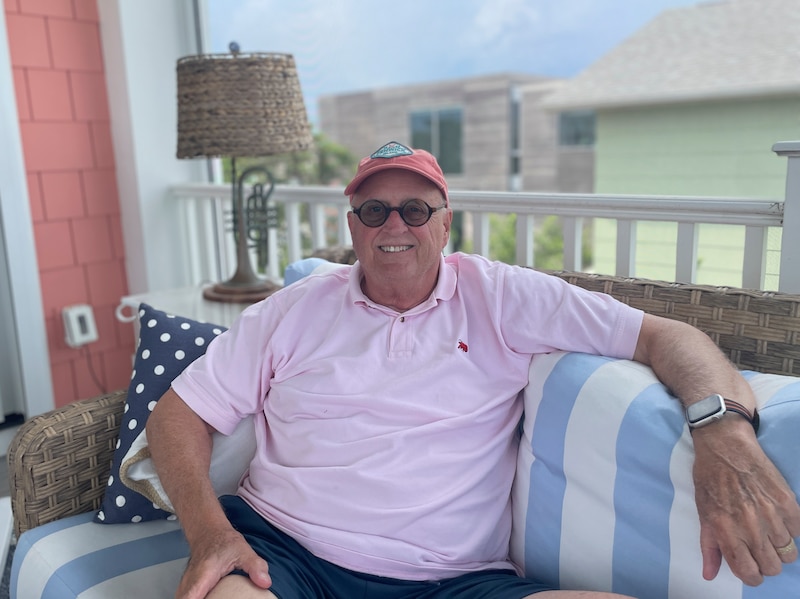
Jim Simpson, one of the town’s newest council members, criticized the ACLU, which brought the lawsuit challenging Fenwick Island’s voting rules pending before the state Supreme Court, and Democrats, who are proposing the constitutional amendment, for trying to constrict voting rights in Delaware. Simpson compared it to attempts by Republicans, especially President Donald Trump and his allies, to put stricter voting requirements in place.
“In this case it’s the opposite party in this state taking away voting rights,” he said one recent afternoon while sitting on his screened in porch overlooking the Atlantic Coast beach.
Andrew Bernstein, one of the ACLU lawyers leading the case, said it would be possible to rewrite the law to address the concerns of property owners without extending voting to companies.
“I think there is a way to capture the legitimate interests of summer vacationers who might own a property without creating this kind of broad-based scheme,” he said.
2026: Election Odyssey
The debate over corporate voting rights in Delaware has ebbed and flowed over the years. It flared again in 2023 when the town of Seaford (population: 8,000) looked at expanding voting rights to mirror those in Fenwick Island. Local opposition derailed the effort and it stalled in the state legislature but the debate caught the attention of the ACLU.
Last December, the ACLU sued Fenwick Island over its voting rules, the case that is now before the Delaware Supreme Court. Fenwick Island won the first round in May when Delaware Superior Court Judge Craig Karsnitz dismissed the ACLU lawsuit and said the group failed to prove the town’s voting laws were a problem.
Karsnitz cited the infamous computer system HAL that seizes control of a space ship in the 1968 film “2001: A Space Odyssey.”
“Visions of faceless large corporations, or even HAL, controlling a small town are frightening and the stuff of science fiction,” Karsnitz wrote in his ruling. “However, plaintiff has not demonstrated that this policy violates the principle of one person/entity/one vote.”
Bernstein said the group is working to make sure the practice does not become more widespread across Delaware.
“It’s kind of frightening to think about the precedent that could be set if this continues to march forward,” he said. “It’s easy to imagine it spiraling into other types of elections.”
Delaware lawmakers have had to approve every city and town provision that granted the rights in the first place. But they, too, are having doubts.
In June, state lawmakers took the first step towards outlawing the practice by approving plans for a constitutional amendment that would ban cities and towns from allowing businesses to vote. The state legislature has to approve the measure again next year before it becomes part of the constitution. Passage is far from assured.
“A vote is fundamental to our democracy,” said House Majority Leader Kerri Evelyn Harris, a Democrat and the bill’s sponsor. “Some communities have fought and died for the right to do so, whether it’s based on race, or gender, or even income. The ability to vote, the right to vote, is something that should be protected at all costs and should not be watered down in any way just because a person might have more money to start a business.”
Dion Nissenbaum is Votebeat’s senior national reporter and is based in Houston. Contact Dion at dnissenbaum@votebeat.org.