Votebeat is a nonprofit news organization reporting on voting access and election administration across the U.S. Sign up for Votebeat Texas’ free newsletter here.
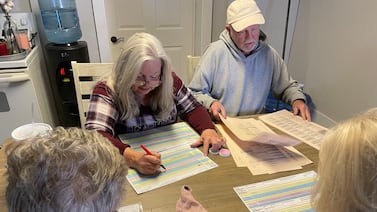
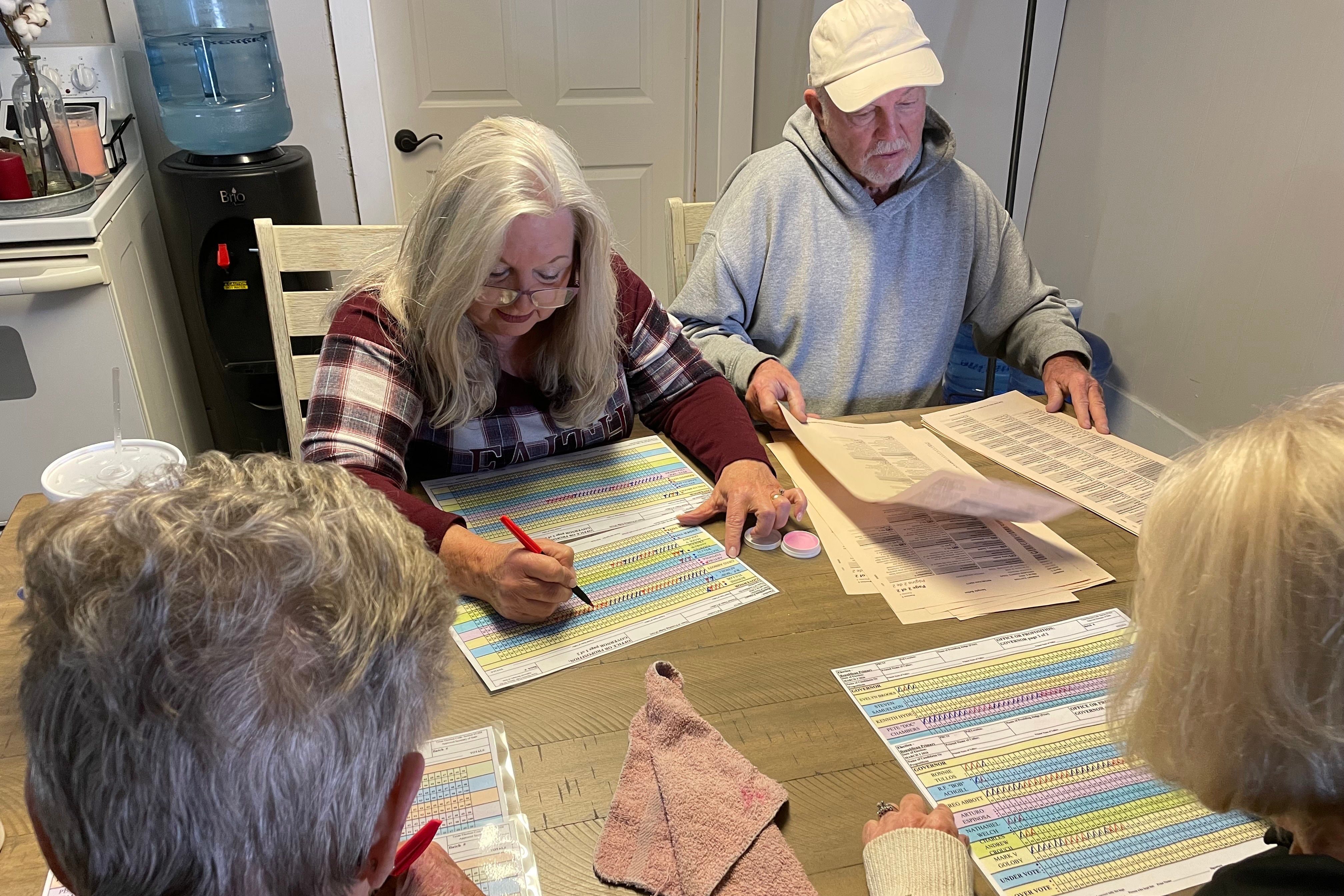
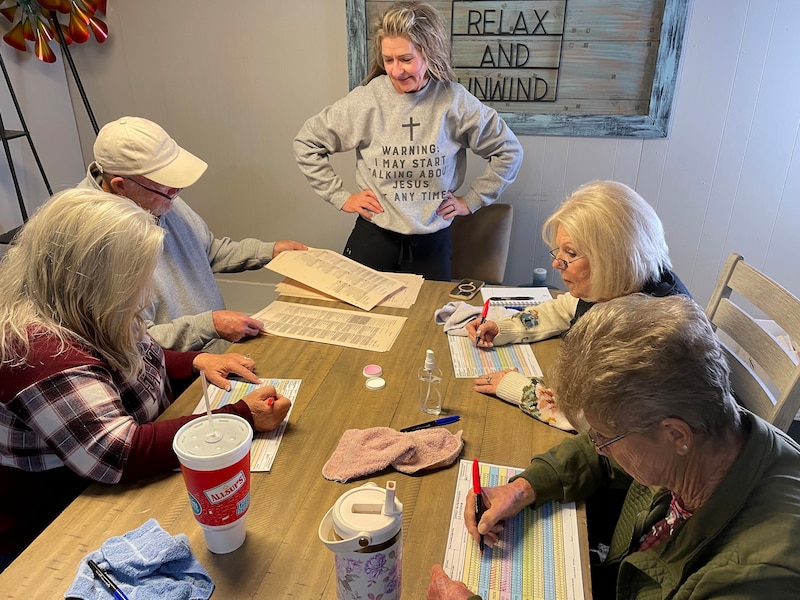
EASTLAND, Texas — On Monday, a group of four people spent more than an hour at a table inside a realtor’s office, hand counting the results of two races on 100 sample ballots. It was only a week before Tuesday’s primary election, and for this small group, it was their first time practicing to tally votes by hand.
They counted in batches of 25 and used different colored markers to keep track of where one counted batch ended and a new one began. They also used laminated tally sheets, which allowed them to erase and remark them if they made any errors. The group twice marked a vote for the wrong candidate, an error that meant they had to go back and start over and correct their laminated sheets.
But on Election Day, “you won’t be able to erase the errors on the sheet. That’s why we practice,” said Robin Hayes, the county’s GOP chair, who was training the group.
Hayes hasn’t yet participated in an official hand count herself, but said she’s attended trainings to learn how to do it and has been preparing and training other volunteers for months.
After the group finished, Hayes reminded them that on Election Day, when there will be at least 41 races on the Republican primary ballot, they’ll have to minimize the chatter and focus on counting. “This was only two races. Remember that there’s more,” Hayes said.
Donna Smith, one of the trainees, gasped at that. “Ok, we’re gonna have to stay on task,” she said.
Hand counting poses bigger costs, logistical challenges
Eastland County Republicans voted last fall to ditch electronic voting equipment and instead hand count all of their primary ballots. They’ll be using paper poll books to check in voters, and expect voters to hand mark their choices on paper ballots rather than using a ballot-marking device. And instead of having a joint primary with the Democrats, as they’ve done for years, Republicans have chosen to split everything: staff, equipment and materials. Democrats in the county are still planning to use the electronic voting equipment to cast and to tabulate their ballots.
Hand counting is no small endeavor. Election officials and voting experts have warned that hand counting large numbers of ballots is expensive, labor-intensive, slower to produce results, and more prone to human error than machine tabulation. But some Republicans across Texas have backed the method in recent years as President Donald Trump and others have pushed unsupported claims about the reliability of voting machines.
In Texas, political parties decide at the county level how their primaries will be administered. Other county Republican parties, including Dallas, considered hand-counting, but ultimately decided against it, worried about cost, finding enough workers, and a state law that requires results to be reported within 24 hours. Failing to do so could result in a misdemeanor charge.
The only two counties planning to hand count this year are Eastland and Gillespie. In 2024, Gillespie Republicans hand counted more than 8,000 ballots. That endeavour took nearly 24 hours and led to errors in tallies that officials later had to fix. Gillespie Republicans this month scaled back their plans and said they will only hand count ballots cast on Election Day because, officials said, they weren’t able to recruit enough workers to count ballots cast during early voting, which ends Friday.
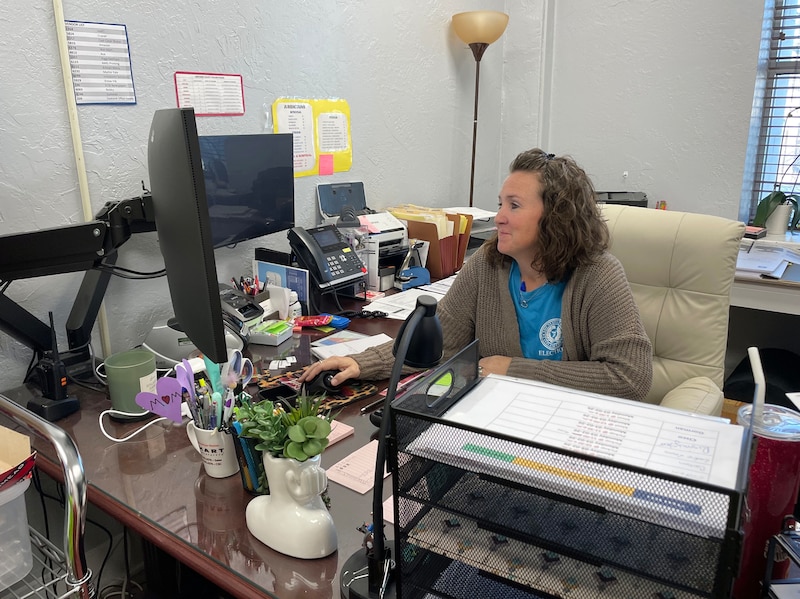
Eastland’s plan, meanwhile, has created major logistical problems, Temi Nichols, the county’s elections administrator, said.
Eastland County has used the state’s countywide polling place program — which allows voters to cast ballots at any polling place in the county on Election Day — since at least 2013. In addition, the local political parties had for years agreed to host joint primaries. Both of these methods allowed the county to save money by staffing and equipping fewer polling locations that all voters could use.
But Republicans’ decision to hand count and hold a separate primary from Democrats means that won’t be the case this year, since both political parties have to agree in order for the county to use countywide polling places. Voters casting primary ballots must do so at their local precincts. In addition, the county is struggling to comply with federal accessibility laws requiring that each polling location has at least one accessible voting machine available for voters who need it. That hasn’t been an issue in the past because both parties used the machines for all voters.
But Nichols said the county only has enough accessible voting equipment for the Democratic sites and three of the nine Republican precincts. Her attempts to attain more from neighboring counties or by leasing them from the manufacturer have so far been unsuccessful. As of Tuesday, Nichols told Votebeat she was continuing to seek help from the state and the manufacturer in an attempt to comply.
“I’m just trying to help both parties have an election. I don’t want to be in national news because Eastland County didn’t do this right,” Nichols said.
The Texas Secretary of State’s Office declined to comment on whether the lack of such equipment would be a violation of the law by the county or the party. The state plans to dispatch election inspectors to Eastland to monitor the election, Alicia Pierce, a spokesperson for the office, said. The U.S. Justice Department did not immediately respond to a request for comment Tuesday.
For her part, Hayes told Votebeat she’s aware there aren’t enough voting machines to have one available for disabled voters at all of the Republican precincts. When asked if she was concerned about potential legal challenges, she said, “Well, the Lord will have to prevail. It’s not intentional,” and added that voters who need assistance can request it from an election worker or any person the voter chooses.
“This country has too many laws anyway,” she said.
‘We’re going to end up getting blamed’
Eastland County has more than 12,500 registered voters and is around 100 miles west of Fort Worth. As of Tuesday, 651 Republicans and 92 Democrats have already cast primary ballots.
The county is known for honoring and preserving in a tiny coffin the remains of Old Rip, a horned toad that was believed to have been sealed in the cornerstone of the courthouse during its construction in the 1800s and found alive inside the stone 31 years later. Old Rip’s remains are on display in the county courthouse. These days, though, most of the county’s residents get around more than Old Rip.
Many Eastland County residents are commuters who travel to work in nearby cities of Weatherford, Stephenville, and Abilene. David Hullum, the county judge, said he’s concerned that voters could have to travel far out of their way to cast a ballot at their assigned precinct when they’re used to countywide sites. Hullum, a Republican, and Nichols have each made multiple TV and radio appearances and attended local community gatherings to urge voters to vote early to prevent confusion and potential disenfranchisement on Election Day.
Hullum also worries about the costs that additional workers and hours will impose on the county’s taxpayers. For example, during early voting, which the county is responsible for managing, the county is paying for six election judges: three Democrats and three Republicans. In a joint primary, where the parties shared staff, only three workers are needed.
Hayes did not respond to questions about Hullum’s concerns about the added costs. She said there won’t be a shortage of workers to hand count ballots, specifying that she has so far trained around 90 people who will be spread out on Election Day to hand count at each of the nine Republican precincts across the county and at a local county events center, where they’ll tally the ballots cast during early voting. The party will need at least two people to count at each precinct, as well as 26 people, who Hayes says she’s recruited, to count the early ballots.
“I’ve been praying for months,” Hayes said. “Of course I worry, because I won’t be able to be at each location watching, but I’m trusting the Lord. And they’re getting better each time,” she said, speaking about the group she was training on Monday.
Others were less sanguine about possible problems.
Nichols has been stressing over the Republicans’ hand-count plans for weeks. She has watched hours of online training by the Texas Secretary of State’s Office on how to conduct the hand count and what state law requires.
Appointed to the job last summer, this will be the first major election she and her deputy, Donna Fagan, will help the local parties run.
“If this doesn’t work on election night at midnight, am I supposed to step in and save the day? I really don’t know if I can do that,” Nichols said.
Hullum, the county judge, also expressed concern. If there are issues he said, “Everyone is going to look at the county for answers, not the Republican party … We’re going to end up getting blamed for the whole deal.”
Natalia Contreras is a reporter for Votebeat in partnership with The Texas Tribune. She is based in Corpus Christi. Contact Natalia at ncontreras@votebeat.org.