Votebeat is a nonprofit news organization reporting on voting access and election administration across the U.S. Sign up for Votebeat Texas’ free newsletter here.
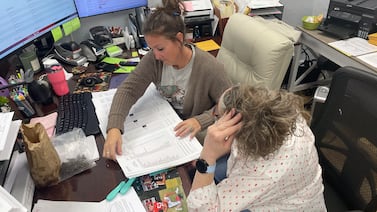
Just after midnight, as Election Day became Wednesday, workers at a polling place in the city of Rising Star called Eastland County election administrator Temi Nichols with a problem.
They told Nichols some workers tasked with hand counting the GOP ballots cast at that location had decided to call it quits, she told a reporter afterwards, and she tried to talk those on the phone out of joining them “Please don’t load up and take off,” Nichols said.
The workers on the other end of the phone said they weren’t sure how to read the tally sheets the other workers had left behind or fill out the required paperwork, among other things, according to Nichols. They asked her if they could go home and finish counting in the morning.
Nichols told them that according to state law, they could not stop once counting had begun. She told them to call Robin Hayes, the Eastland County Republican Party Chair, in charge of administering the county’s GOP primary election, and “tell her y’all need help.”
Eastland Republicans months ago decided to hand count primary ballots this year instead of using electronic voting equipment. Election officials and voting experts have found that hand counting large numbers of ballots is expensive, labor-intensive, slower to produce results, and more prone to human error than machine tabulation, though both methods can be accurate.
Supporters of hand counting say it increases public confidence, and some Republicans have backed the method in recent years as President Donald Trump and others have pushed unsupported claims about the reliability of voting machines.
Hand-counted results still not complete early Wednesday
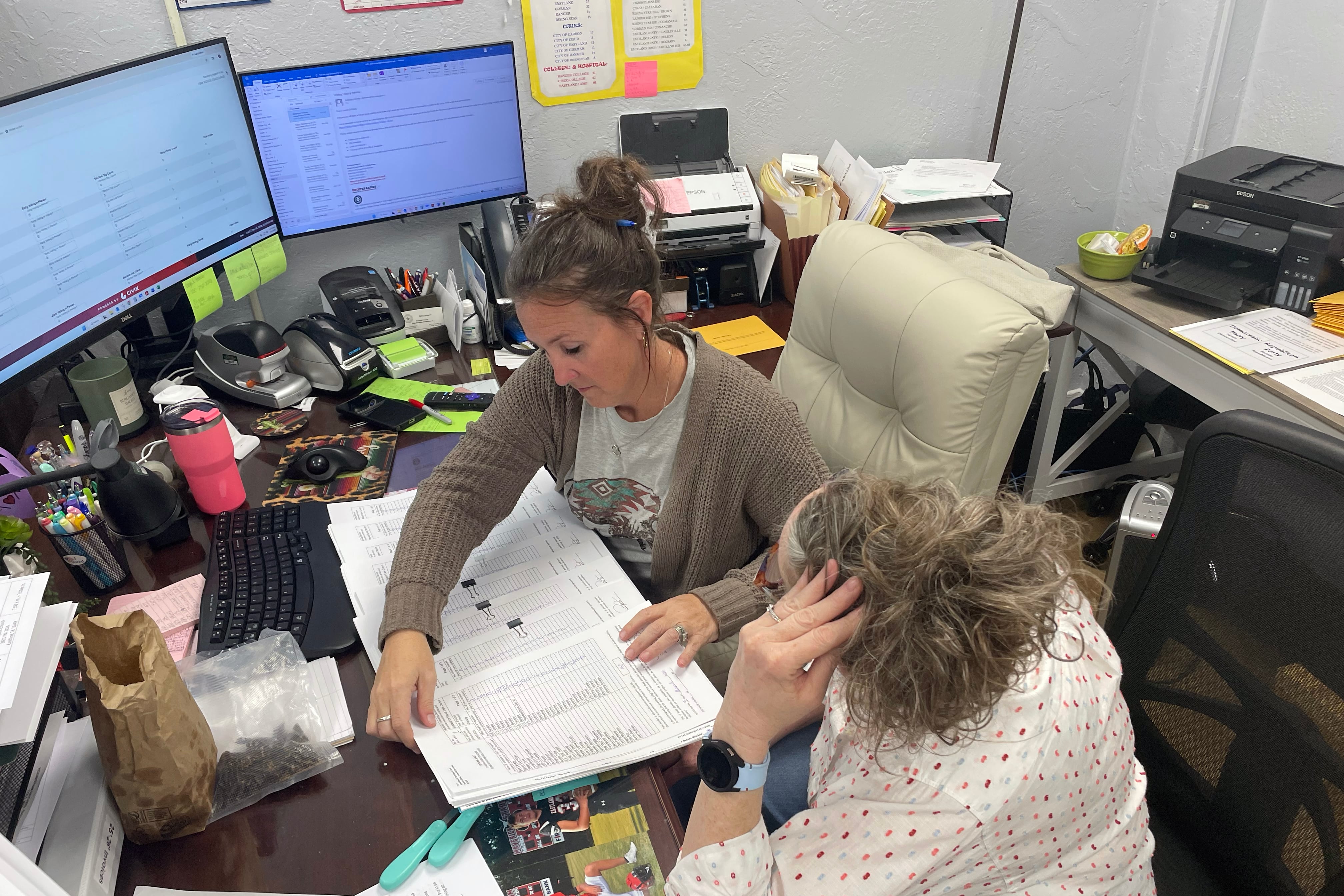
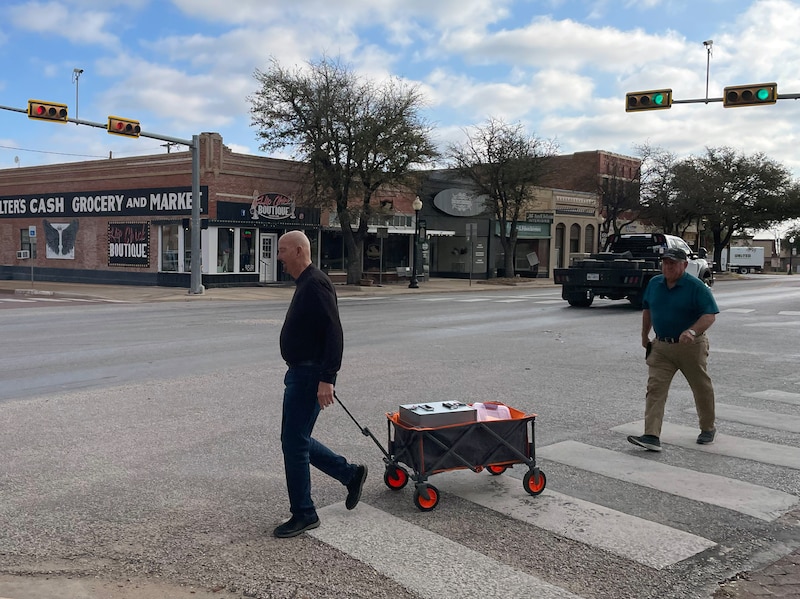
Nichols reported final machine-tabulated results for the county’s Democratic primary to the state by 11 p.m. Tuesday night. But hand-tallied results from the first GOP Election Day sites only began arriving at her office a little after 9:30 p.m. Shortly after 2:30 a.m. Wednesday, Hayes had delivered results from at least three sites, including the Rising Star location whose workers had called shortly after midnight.
As of 9 a.m. Wednesday, Nichols was still waiting for some GOP results, including or workers to finish tallying results from ballots cast early in person and from Election Day ballots cast at the county courthouse, the site that saw the largest number of voters in the county.
In addition, Nichols said, she had received a secured ballot box and other materials from a polling place in Cisco, but had not gotten the required form listing vote totals from that precinct with it.
At around 9 a.m., Nichols said the election judge from that site confirmed she had locked the form in the now-sealed ballot box because she had mistakenly believed that was what was required. By law, the secured box cannot be reopened for six months. Nichols said opening the box so the form can be retrieved will require a court order, but she needs to retrieve the form in order to report complete results.
The county’s election results must, by law, be returned to county election officials within 24 hours after polls close. “I can’t report anything to the state yet. I don’t have all the totals,” Nichols said.
Hayes, the Eastland County Republican party chair, did not respond to multiple texts and phone calls requesting comment from Votebeat on Tuesday and Wednesday. She declined to answer questions or comment on the party’s administration of the hand count while dropping off materials at the county’s election office at about 3:30 a.m. Wednesday. She last month told Votebeat she had trained around 90 people for the hand count effort.
Nichols, who became the county elections administrator last summer and was overseeing her first major election in the job, said the primary “feels like we ran two elections, double the work, double the time.”
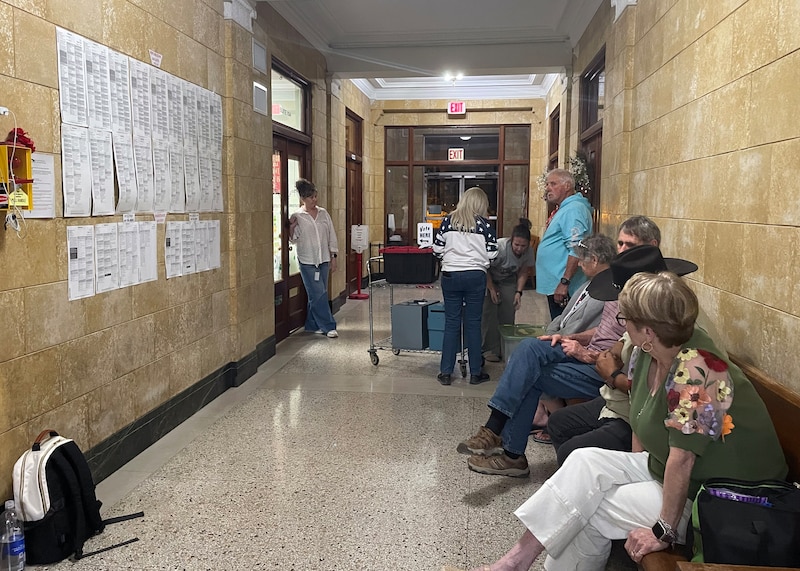
Hand counting causes logistical headaches
In Texas, political parties decide at the county level how their primaries will be administered. Several other county Republican parties considered hand counting but ultimately decided against it, worried about cost, finding enough workers, and a state law that requires results to be reported within 24 hours. Failing to do so could result in a misdemeanor charge.
Some of the state’s least populous counties use the method, and mid-sized Eastland and Gillespie counties also decided to go ahead. Gillespie County hand counted primary ballots in 2024, taking nearly 24 hours to tally roughly 8,000 ballots and finding they later had to fix errors between Election Day and the final canvass, after accuracy issues emerged.
This year, Gillespie decided to hand count Election Day ballots only, which took until around 3 a.m. In Calhoun County, in South Texas, Republicans also hand counted early voting and Election Day ballots, and Amy Ochoa, the county deputy elections administrator, said the count was still ongoing as of 6 a.m. Wednesday.
Eastland County has more than 12,500 registered voters and is around 100 miles west of Fort Worth. In 2022, the last midterm election year, 3,217 voters cast ballots in the Republican primary. This year, about 1,300 Republicans and about 185 Democrats voted early. On Tuesday, Nichols reported a total of 303 Democrats voted in the primary. That number for the Republicans isn’t yet available.
In addition to choosing to hand count, Eastland County Republicans also decided to use paper poll books to check in voters and have voters hand-mark their choices rather than use ballot-marking devices, though both methods use paper ballots.
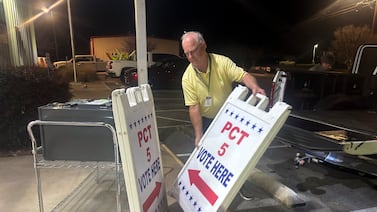
Eastland County had used the state’s countywide polling place program — which allows voters to cast ballots at any polling place in the county on Election Day — since at least 2013. In addition, the local political parties had for years agreed to host joint primaries. Both of these methods allowed the county to save money by staffing and equipping fewer polling locations that all voters could use. But Republicans’ decision to hand count forced all voters in the county, including Democrats, to cast primary ballots at their neighborhood precincts, instead of any location in the county.
The changes also created logistical problems, Nichols said. Federal accessibility laws require each voting site to have a machine with a ballot-marking device available for disabled voters, though anyone who asks to use it may do so. In the past, both parties used machines for all voters, and machine access wasn’t an issue.
But splitting the primary meant the county didn’t have enough accessible voting equipment. Nichols said the county only had enough for the Democratic sites, where all voters were relying on the machines, and three of nine Republican precincts. She tried unsuccessfully to obtain more from neighboring counties and the manufacturer. On Election Day, at least one voter, at a site in Gorman, asked for a machine and was told it was not available, Nichols told Votebeat Wednesday.
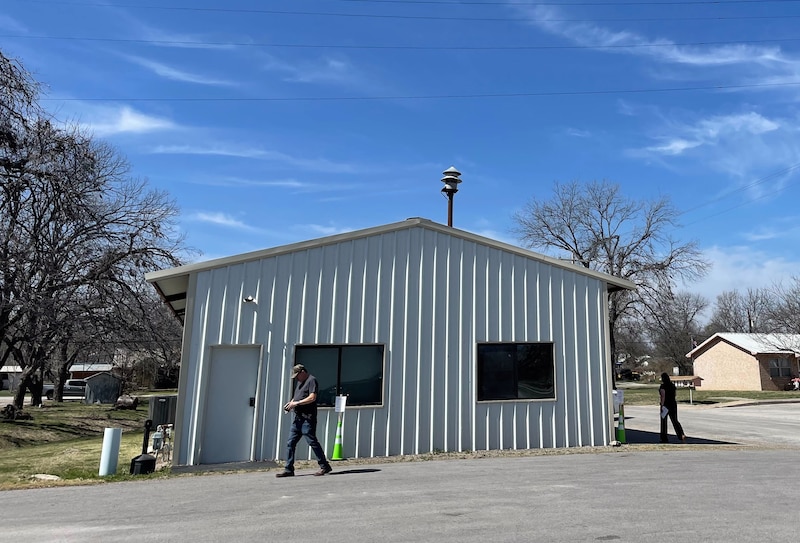
Confused voters went to the wrong voting locations
As in Dallas County, where Republicans also forced a switch from countywide to precinct-based voting sites this year, the changes appear to have confused many voters.
All morning and into the afternoon, Nichols and her deputy, Donna Fagan, fielded calls from voters confused about where to vote. They also answered call after call from election workers trying to help voters who had turned up at the wrong polling location and needed to be redirected to the correct one.
In Eastland, the county seat, election workers at the courthouse polling location said they told at least 89 voters that they were at the wrong polling location that day, from when they began keeping track at 10:30 a.m. until polls closed.
One of them, Mikalynn May-Hall, told Votebeat she’s just not going to vote. She works near the courthouse and her assigned precinct is 20 miles away in Gorman. After work, she said she’s traveling to Abilene. “I always try to do my civic duty, but I guess it just won’t happen this year,” she said. May-Hall added that she lost track of time and wasn’t able to cast her ballot early and she was unaware that everyone had to vote at their neighborhood precinct.
At the Rising Star polling site around noon, one Republican primary voter, James Bryant, had to call his job to let them know he would be late. Bryant, who works in Abilene, more than 50 miles away, told Votebeat he’d originally tried to vote in Cisco, 20 miles north of Rising Star.
Bryant said he “had no idea” the primary would require him to vote at an assigned precinct rather than a countywide site, as he’d done for years. He added he also thought it was “odd that I had to say whether I was a Republican or Democrat. It used to be all together.”
Deena Nichols and Patsy Copeland, both of Cisco, both said they had gotten used to voting on the machines and didn’t like having to hand-mark their ballot, which had 41 separate contests this year. Otherwise, they said, their voting experience went smoothly, “Everything was very well explained” by the election workers, Copeland said.
‘I don’t know how much longer I can hang on’
At one point late Tuesday night, Nichols said some workers contacted her to ask whether she could just take the ballots and tabulate them electronically.
But such a pivot would be difficult, and Nichols told Votebeat that Hayes assured her the party would complete the hand count.
Once the counting of ballots begins, under state law, it can’t stop. If there were somehow no one left willing or able to keep counting, then Hayes, the GOP chair, would need to seek a court order to switch the method of counting to electronic tabulation, said Alicia Pierce, a spokesperson for the Texas Secretary of State’s Office.
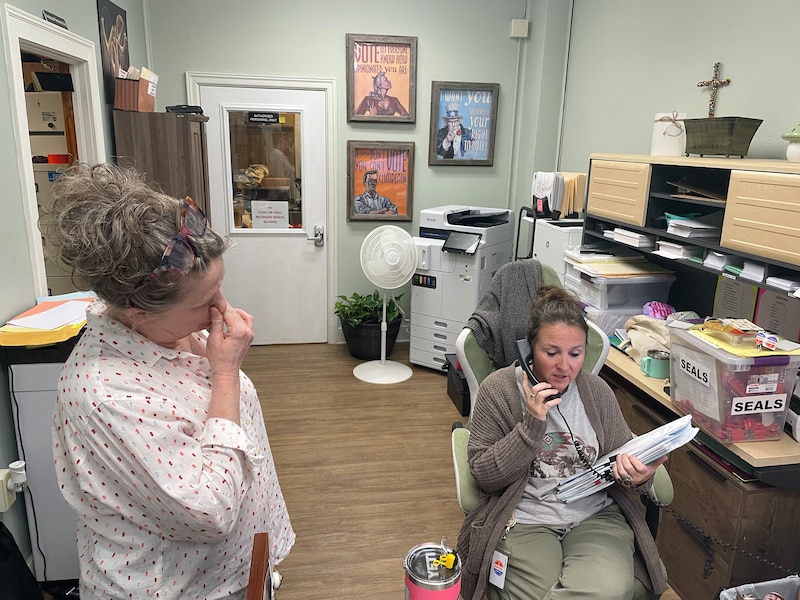
In addition, Nichols would then have to test the voting equipment for accuracy before tallying, as required by law before every election where electronic equipment is used to count votes. That’s true even though the county has already done the required testing for the Democratic primary, because the Republican primary is legally a separate election, Nichols said.
Once there are results, Texas law does not require an automatic post-election audit for these party-run hand counts. Any questions about accuracy would have to be resolved by the canvass on March 12.
Fagan had been making sure that Nichols stayed hydrated, ate, and took breaks in order to stay alert throughout the night.
“We’re gonna get through this, Temi,” Fagan told Nichols often.
Sleep-deprived and exhausted at around 7 a.m. Wednesday, Nichols stared at her computer screen, and said “I don’t know how much longer I can hang on.”
Natalia Contreras is a reporter for Votebeat in partnership with The Texas Tribune. She is based in Corpus Christi. Contact Natalia at ncontreras@votebeat.org.