Votebeat is a nonprofit news organization reporting on voting access and election administration across the U.S.
This is a breaking story.
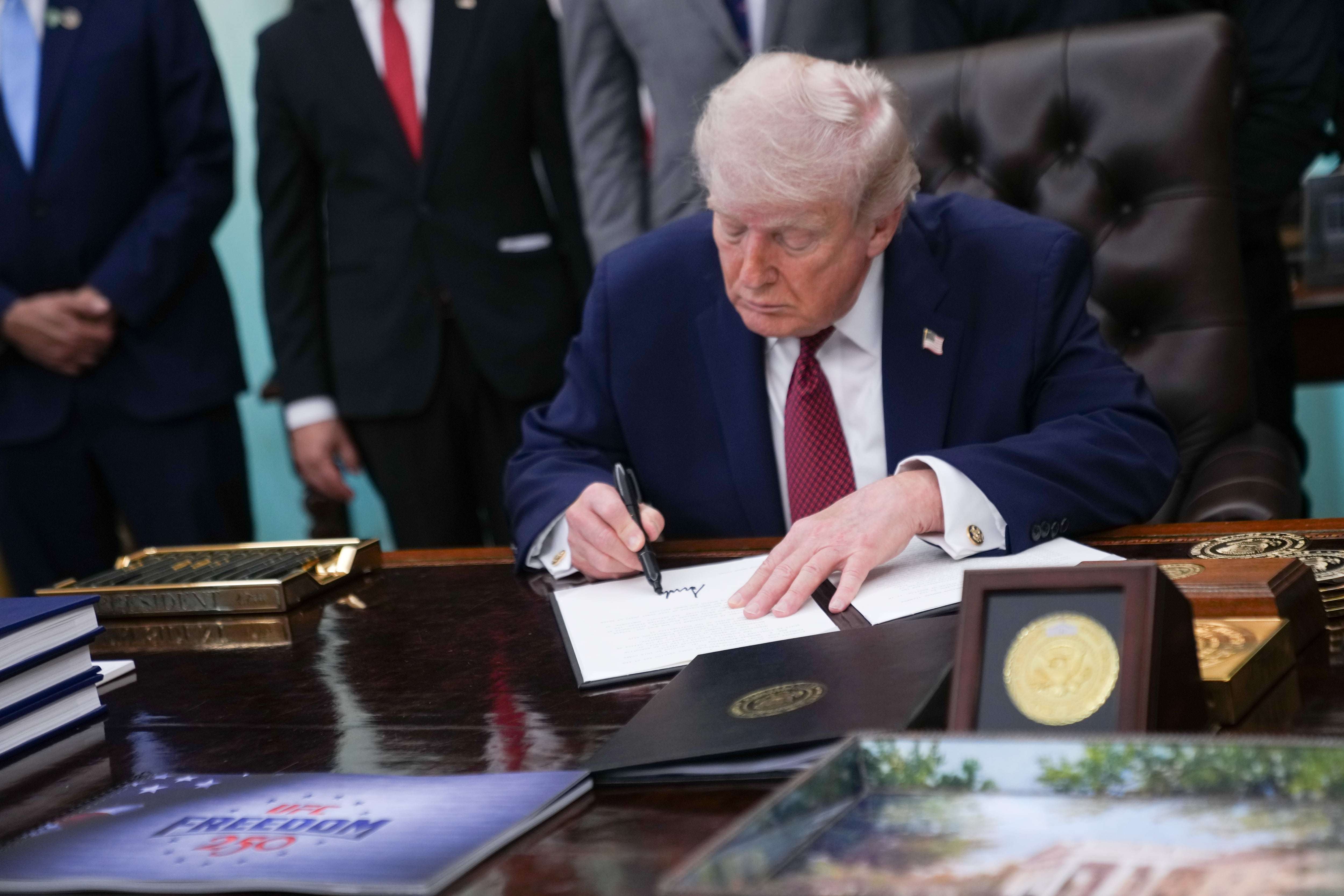
What happened? A federal court judge Thursday declined, for now, to halt two major provisions of President Donald Trump’s second executive order on elections, which would give the U.S. Postal Service sweeping new authority to regulate mail ballots and would force major changes to the administration of the midterm elections.
Judge Carl Nichols found that the U.S. Postal Service has not yet acted to implement the president’s order, and until it does, the nonprofit groups and Democratic Party committees that brought the legal challenge cannot show they had been harmed in a way that merited the court’s immediate intervention. He also declined to block a second provision that requires the U.S. Homeland Security Department to create lists of citizens eligible to vote in each state, saying it wasn’t yet clear the department would carry out the president’s order in a way that violated federal law.
But Nichols, a Trump appointee, signaled that once the agencies do act, the outcome in court could be different. “The Court recognizes that the Postal Service may ultimately issue a final rule that directly affects Plaintiffs or their members, or that the Government may develop State Citizenship Lists that omit specific individuals due to particularized flaws,” Nichols wrote. “Plaintiffs may, of course, renew their motions if and when those future actions occur.”
What’s the dispute? Multiple nonprofit groups, Democratic Party committees, and states sued Trump, the U.S. Postal Service, and other federal agencies over the president’s March 31 executive order on elections, which give the U.S. Postal Service unprecedented control over mail ballots. Some of those cases were consolidated before Nichols in federal court in Washington, D.C., and he is the first federal judge to address the order.
The plaintiffs argue the Constitution doesn’t give the president authority over elections.
The executive order works by requiring or asking for the creation of multiple lists of eligible citizens and voters who can use mail ballots, though it’s not always clear how the lists intersect. First, the order requires the U.S. Homeland Security Department to create lists of citizens eligible to vote in each state that, plaintiffs argue, cannot be assembled without violating federal privacy laws.
The order also says states may also create lists of voters and provide them to the U.S. Postal Service, which in turn would only be authorized to deliver ballots from people on a third list, to which states would be allowed “to routinely supplement and provide suggested modifications or amendments.”
Plaintiffs argued the DHS lists would inherently be inaccurate and unreliable, and that no federal law allows the U.S. Postal Service the ability to regulate mail-in voting. At a hearing before Nichols earlier this month, U.S. Justice Department lawyer Stephen M. Pezzi acknowledged that “no list is ever going to be perfect,” but said that states acting responsibly wouldn’t throw voters off the rolls just because they weren’t on the list provided by the federal government.
Pezzi argued that federal agencies have yet to take action on the order, and that their eventual actions could comply with federal law. Danielle Lang, a lawyer for the nonprofit watchdog group Campaign Legal Center who is representing some of the nonprofits, argued that the order’s timing, with primary elections underway, will cause chaos. And although the order does not require states to use the lists they receive from DHS, Lang said at least some will certainly feel pressure to do so.
The March 31 executive order is Trump’s second attempt to exercise oversight of federal elections. Federal courts blocked many provisions of Trump’s first executive order on elections.
What happens now?
The lawsuit remains pending before Nichols, and a separate case is pending in federal court in Boston. The executive order instructed the U.S. Postal Service to initiate a rulemaking on how it would carry out the order within 60 days of when it was issued, a deadline which falls at the end of May.
Read more Votebeat coverage of Trump’s March 31 executive order on elections:
Trump issues second executive order on elections, giving U.S. Postal Service unprecedented control over mail voting, March 31, 2026
Trump administration sued by states over mail voting executive order, April 3, 2026
We still have questions about Trump’s new executive order on elections, April 6, 2026