Votebeat is a nonprofit news organization reporting on voting access and election administration across the U.S. Sign up for Votebeat Wisconsin’s free newsletter here.
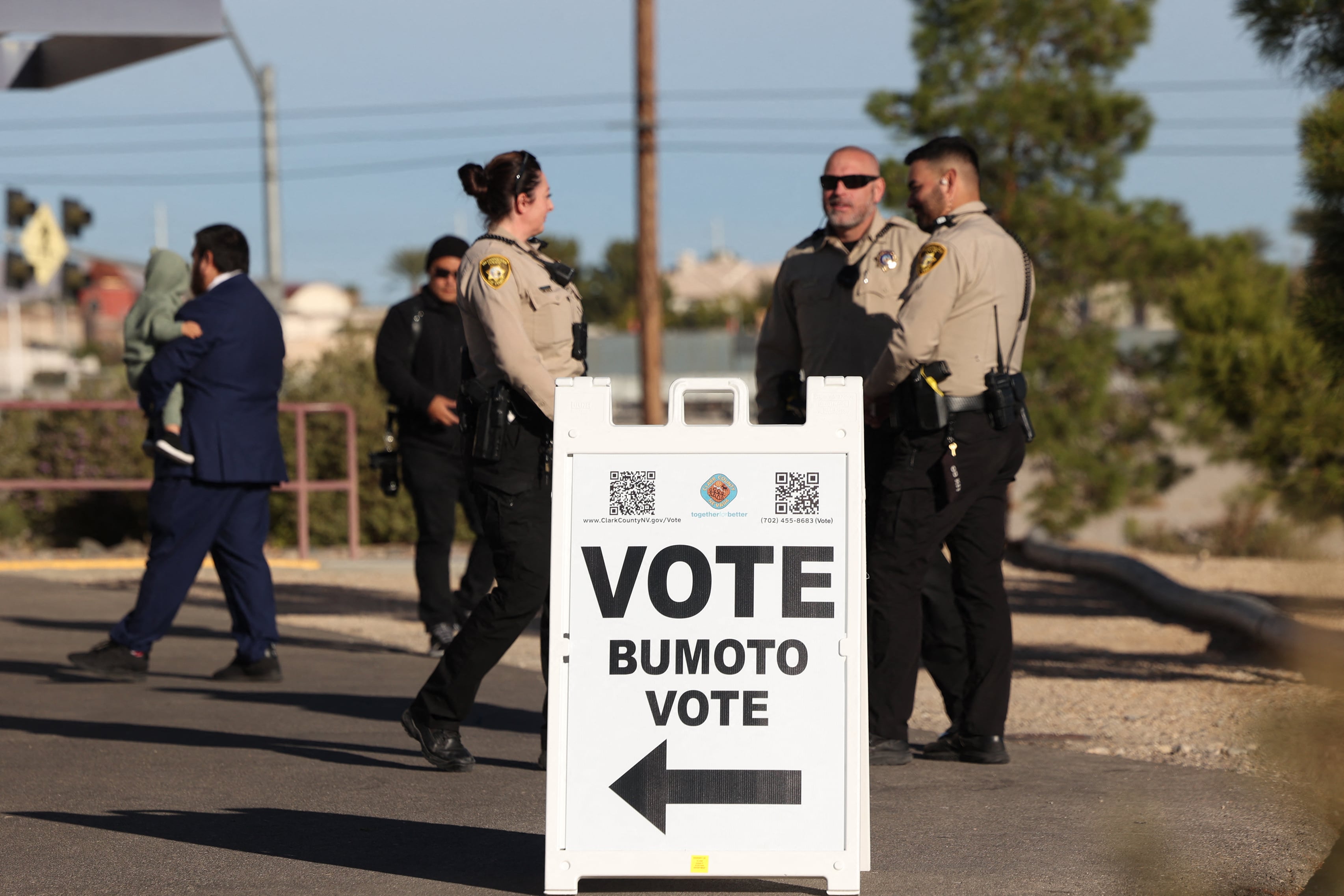
In the run-up to the November election, federal officials have sent conflicting signals about whether law enforcement agents could show up at polling places.
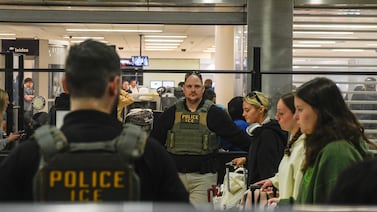
FBI Director Kash Patel declined to rule out deploying FBI agents to voting sites. The Department of Homeland Security has said ICE does not plan to patrol polling places, while leaving open the possibility that agents could respond to threats or serve warrants nearby. The Justice Department, meanwhile, has said it will continue sending federal personnel to polling locations as part of its election-monitoring efforts.
The mixed messages are already shaping preparations around the country: In Wisconsin, election officials are being trained on how to respond if armed federal agents appear at polling places, while in Michigan, the attorney general’s office has prepared agents, state police officials and legal filings to respond quickly to election-related incidents.
The uncertainty has left election officials preparing for scenarios they may never face and voters unsure what federal presence, if any, to expect in November.
A recent University of San Diego poll found that 40% of Americans said they think it’s likely that ICE agents will show up at the polls, and a third said their presence would reduce their trust in elections.
Federal law sharply restricts the deployment of armed federal agents at polling places, and experts say election officials have tools to respond if agents show up in violation of those restrictions.
Federal law prohibits U.S. officials from sending or keeping “troops or armed men at any place where a general or special election is held,” with only narrow exceptions for when those people are voting or if their presence is necessary “to repel armed enemies of the United States.”
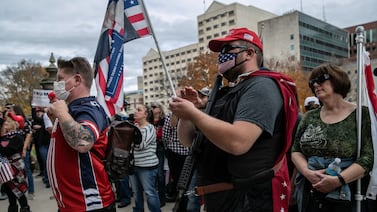
Another federal law prohibits voter intimidation, with up to a yearlong prison sentence for anybody who intimidates, threatens, or coerces somebody else with the purpose of interfering with another person’s right to vote.
“It’s low likelihood, and it’s certainly impossible that any sort of federal presence could be there at every polling site in America,” said Aaron Blacksberg, federal policy counsel at the Institute for Responsive Government. “But without knowing for certain, people are concerned.”
Blacksburg said that voters especially worried about the possibility of federal law enforcement at the polls could vote by mail, drop their ballot at a drop box or or use another alternative voting option available in their jurisdiction.
The prohibition on deploying armed federal personnel to polling places is a criminal statute, said Jonathan Diaz, director of voting advocacy and partnerships for the Campaign Legal Center. “The person who orders the agents or officers to the polls also would face criminal liability for doing that,” he said.
In most jurisdictions, Diaz added, election officials are empowered to remove people from the polls if they’re causing a disruption or violating polling place rules, and they can work with local law enforcement to enforce those rules. If a voter sees federal agents at polling places in a manner that may be illegal, Diaz said, they should alert their local election officials.
Federal agents could also end up near a polling place for reasons unrelated to the election.
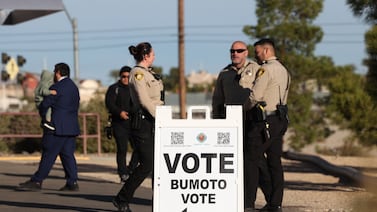
That happened in May, when a traffic stop led to a car being pulled over near a polling place, and ICE agents showed up to question the driver. Local law enforcement quickly showed up to tell the federal agents to leave the premises. County officials said voters weren’t questioned and polling places ran normally despite the brief ICE presence nearby.
Courts have confronted voter intimidation before
There’s little precedent for the possibility of federal agents at the polls, but courts have addressed other efforts involving law-enforcement personnel at polling places.
For example, in 1981 the Democratic National Committee took the Republican National Committee to court for allegedly seeking to revoke the registrations of minority voters in New Jersey and enlisting off-duty officers to intimidate voters by standing at the polls in heavily Black and Latino precincts. The Republican Party entered a consent decree that lasted over three decades, heavily restricting its planned election security efforts.
The decree is no longer in effect, but it could be cited in future cases “if something really grotesque were to happen in the area of voter intimidation by people looking like law enforcement” said Lorraine Minnite, a Rutgers University political science professor who served as an expert witness in the case.
She also said voters should feel confident that election officials are prepared to respond to federal interference.
Recent Votebeat reporting illustrates that around the country, top state prosecutors, secretaries of state and local election officials are preparing for scenarios like ICE showing up at the polls and preparing legal filings in advance. Some have rehearsed how to respond if federal agents seek access to polling places, ballots or voting equipment, while others are lining up attorneys and law enforcement who could act quickly.
The prospect of federal agents at polling places is already being litigated.
In September, nine groups filed a federal lawsuit against the U.S. Department of Homeland Security and several other agencies and officials over statements the groups say amount to threats to deploy federal agents to polling places. The groups argue such a deployment would violate federal law, including a section of the Voting Rights Act that bans voter intimidation. They are seeking an injunction blocking federal agents from being used in ways that unlawfully intimidate voters.
The Justice Department, which is named as a defendant in the lawsuit, has rejected its premise, arguing that federal officials have never said they would send law enforcement to polling locations. The Department of Homeland Security has said ICE is not planning operations targeting polling places. The case is still in its preliminary stages.
Local police have a different role at polling places.
Unlike federal law enforcement, local police routinely coordinate with election officials around polling place security.
In many cases, Diaz said, local law enforcement are at the polls at the request of election officials, who have received extensive harassment and threats since the 2020 election. Law enforcement often coordinates with election officials to keep officials and voters safe without their presence intimidating voters, he said.
“It’s far more normal for a county official or a state official from a law enforcement agency to be at or near the polls because usually they’re working with election officials, versus federal law enforcement, who have no role in the election process,” he said.
But even a lawful local police presence “can raise concerns about voter intimidation.”
In August, the Sheboygan County Sheriff’s Department in Wisconsin said they would be sending some deputies to polling locations to ensure a safe and secure election. That drew criticism from the ACLU of Wisconsin and other groups. The sheriff responded that deputies had conducted brief and routine polling place visits for years.
A few days later, legal groups sent the sheriff a letter saying that while local law enforcement can play a helpful role in elections, their presence can intimidate voters — and that intimidation may violate state and federal law.
Even when local law enforcement is working with election officials, officers are subject to the same voter intimidation restrictions as anybody else, Diaz said.
“It’s important for them to behave responsibly and transparently with election officials and with the public to reassure voters that they’ll be able to vote safely,” he said, adding that officers should carefully avoid inadvertently creating an intimidating presence for voters.
Alexander Shur is a reporter for Votebeat based in Wisconsin. Contact Alexander at ashur@votebeat.org.