

Get insider knowledge about how elections are run across the country. Sign up for Votebeat’s free weekly newsletter and never miss an update.
Gerrymandering was supposed to be Republicans’ secret weapon in the 2026 elections.
Last year, President Donald Trump urged GOP-led states to take the extraordinary measure of redrawing their congressional maps in the middle of the decade to create more Republican-leaning seats. Democratic-led states struck back with their own gerrymanders, but an April 2026 Supreme Court decision defanging the Voting Rights Act ensured that the national House map would be tilted in Republicans’ favor.
By Nov. 4, though, it was all an afterthought. Riding a wave of anti-Republican backlash, Democrats ended up winning at least 257 seats in the House — their highest total since 2008. Suddenly, Democrats weren’t so concerned about the ill effects of Republican gerrymanders; some even argued they were “dummymanders” that actually helped Democrats instead of hurting them.
But a closer look at the 2026 election results shows that Republicans still won more seats than they would have without mid-decade redistricting. And the cries of “dummymander” ignore the fact that the maps could very well yet give Republicans their desired outcomes in future elections.
How many seats did Republicans gain from redistricting?
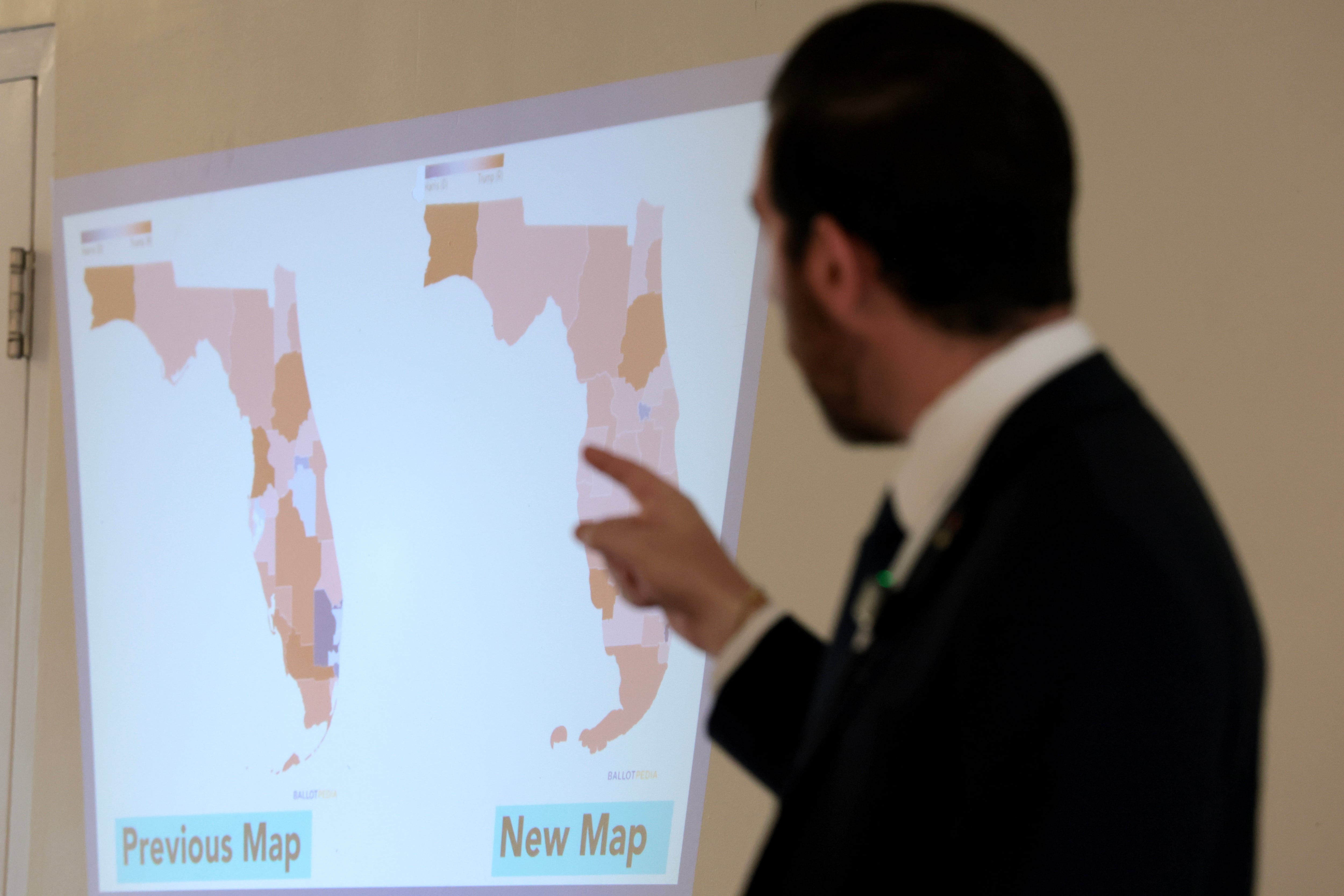
Nine states enacted new congressional maps for the 2026 elections — a modern record for an election year not ending in -2. (Redistricting is supposed to occur only after years ending in -0, when the census is conducted.) Six of those were Republican gerrymanders, one was a Democratic gerrymander, and two were more neutral. (Ohio and Utah were both legally required to redistrict this cycle, and their new maps were chosen by a bipartisan commission and a court, respectively.)
If you count how many House seats changed parties in those redistricted states, Democrats cleaned up. They flipped at least 14 Republican-held seats, and could flip as many as 19 depending on the final results in some unresolved races.
Not only did Democrats pick up the five seats they targeted with their California gerrymander, they also added a seat in GOP-drawn Texas and between six and eight seats in GOP-drawn North Carolina. Just as impressively, they successfully defended all the blue seats Republicans targeted with their gerrymanders of Alabama and Florida.
But this way of looking at things doesn’t account for whether Democrats won those seats because of redistricting or just because they had a really strong election cycle. Indeed, given that Democrats won the House popular vote by a whopping 14 percentage points, they probably would have flipped many of those seats regardless.
To estimate how many seats Democrats won thanks to redistricting alone, I looked at how much redder or bluer each redrawn seat got based on the results of the 2024 presidential election in its new configuration versus its old one. Then, I subtracted that difference from the 2026 House result.
For instance, if a district got 12 points more pro-Trump in redistricting and the Republican House candidate won it by 5 points, I estimate the Democratic candidate would have won it by 7 points had redistricting not occurred. This method is not exact — House elections can have different dynamics from presidential elections — but it provides a good ballpark estimate of who might have won the 2026 elections on the old maps.
By this measure, Democrats actually didn’t gain any seats from redistricting. Republicans did — between four and seven.
This exercise shows that, while Republicans’ gerrymanders may not have resulted in as many wins as they originally envisioned, they still helped the party overall.
For example, in Florida, Republicans may have failed to unseat any Democrats, but the defensive moves they made to shore up Reps. Anna Paulina Luna and Laurel Lee may have saved them from losing reelection.
In Texas, redistricting was unambiguously responsible for Republicans flipping the 32nd District, previously a safe blue seat. By contrast, Democrats’ two flips in the state didn’t have anything to do with redistricting. The two districts they flipped, the 15th and 23rd, weren’t significantly redrawn, so their results would have been nearly identical under the old map.
In Tennessee, Republicans successfully flipped the 9th District, a dark-blue, Black-majority seat that they redrew to be Republican-leaning after the Supreme Court weakened the Voting Rights Act. But in so doing, they removed a lot of Republican voters from the 4th District, and it looks as if Democrats may have flipped that seat as a result (the Associated Press has not yet called the race). What’s more, in a less publicized move, Tennessee’s new map also shored up the 5th District for Republicans, which may have been the only reason they held onto that seat this year.
Republicans even got a lucky break in states that they didn’t want redistricted. For example, Utah’s old congressional map consisted of four moderately red seats. Last year, a court ordered the state to adopt a map with one safely Democratic seat and three safely Republican seats to more fairly represent the state. But 2026 was such a strong year for Democrats that, without redistricting, they may very well have won three of those four moderately red seats under the old map.
Amazingly, it even looks like Democrats’ California gerrymander didn’t net them any seats. Four of the Republican-held seats they targeted (the 3rd, 22nd, 41st, and 48th) might have flipped even under the old map. Their win in the 1st District is the only one that can clearly be chalked up to redistricting. But, in a twist, the Democratic gerrymander may actually have saved Republican Rep. Jay Obernolte, whose 23rd District got 3 points redder in redistricting in service of making neighboring districts bluer.
Republican gerrymanders could help them win back the House
More than any other state, North Carolina is a perfect example of why it’s so complicated to grade wins and losses from redistricting.
Last year, Republican legislators made only a small adjustment to the state’s already-gerrymandered congressional map. The new map made the Democratic-held 1st District a bit redder while making the Republican-held 3rd District a bit bluer. The move backfired: Not only did Democrats hold onto the 1st District, but they flipped the 3rd as well.
But that was the least of North Carolina Republicans’ problems. The full gerrymander, originally passed in 2023, collapsed: Rather than electing 11 Republicans and three Democrats as intended, it probably elected 11 Democrats and three Republicans. (Two races, in the 5th and 10th districts, are currently being recounted, but recounts rarely result in lead changes.) As a result, the state is now the featured image on the Wikipedia article for “dummymandering.”
The gerrymander was drawn to be incredibly efficient: It spread North Carolina’s Republican voters out over as many districts as possible, while still keeping the seats just out of Democrats’ reach (or so Republicans thought). The result was 11 seats that Trump carried in 2024 by between 10 and 19 points and three seats that former Vice President Kamala Harris carried by overwhelming margins.
But when you put so many seats in the same range, on the rare occasion that your opponent hits that range, you’re apt to lose a ton of seats all at once. That’s what happened to Republicans this year, when they likely lost eight of the 11 Trump-won districts.
North Carolina is incredibly close to creating the most perfect, textbook example of a dummymander pic.twitter.com/zu0DhuO5zf
— Owen Winter (@OwenWntr) November 5, 2026
But just because their gambit failed in 2026 doesn’t necessarily mean North Carolina’s gerrymander was a dumb move for the GOP in the long term. That’s because the map would probably favor Republicans in all but the most Democratic of political environments. If you subtract just 5 points from Democrats’ margins in every House race — approximating a still-dominant 9-point Democratic national popular vote win — the GOP would have won 10 of North Carolina’s 14 seats.
Anything is possible, but odds are that Democrats will not match their 2026 numbers in the 2028 and 2030 elections — which will also take place under this map. So even though North Carolina’s Republican gerrymander backfired in 2026, it may also be a boon to their future efforts to take back the House.
The same is true with Republicans’ other gerrymanders that underperformed this year. All the redistricting of the last two years still moved the median House district from one Trump won by 3 points in 2024 to one he would have won by almost 5 that year. That may not have mattered much in 2026, but it could make the difference in a future election. It’s not hard to imagine a scenario where Democrats win the House popular vote by a slight margin, but it’s not enough to carry the light-red seats that determine the majority.
Republican gerrymanders also hurt Democratic candidates this year in less obvious ways. Representatives like Shomari Figures in Alabama or Darren Soto in Florida may have been able to win in spite of being targeted for defeat, but they had to fight tooth and nail for it — costing their party millions of dollars that could have been spent elsewhere. And long-tenured Democratic representatives like Al Green and Lloyd Doggett of Texas will see their congressional careers end in January after the new map left them nowhere to run.
In retrospect, in light of Democrats’ historic performance at the ballot box, redistricting may not end up being one of the main stories of the 2026 election. But it still mattered, and it could certainly still help Republicans in the long term.
Nathaniel Rakich is Votebeat’s managing editor and is based in Washington, D.C. Contact Nathaniel at nrakich@votebeat.org.