
Votebeat is a nonprofit news organization reporting on voting access and election administration across the U.S. Sign up for our free weekly newsletter to get the latest.
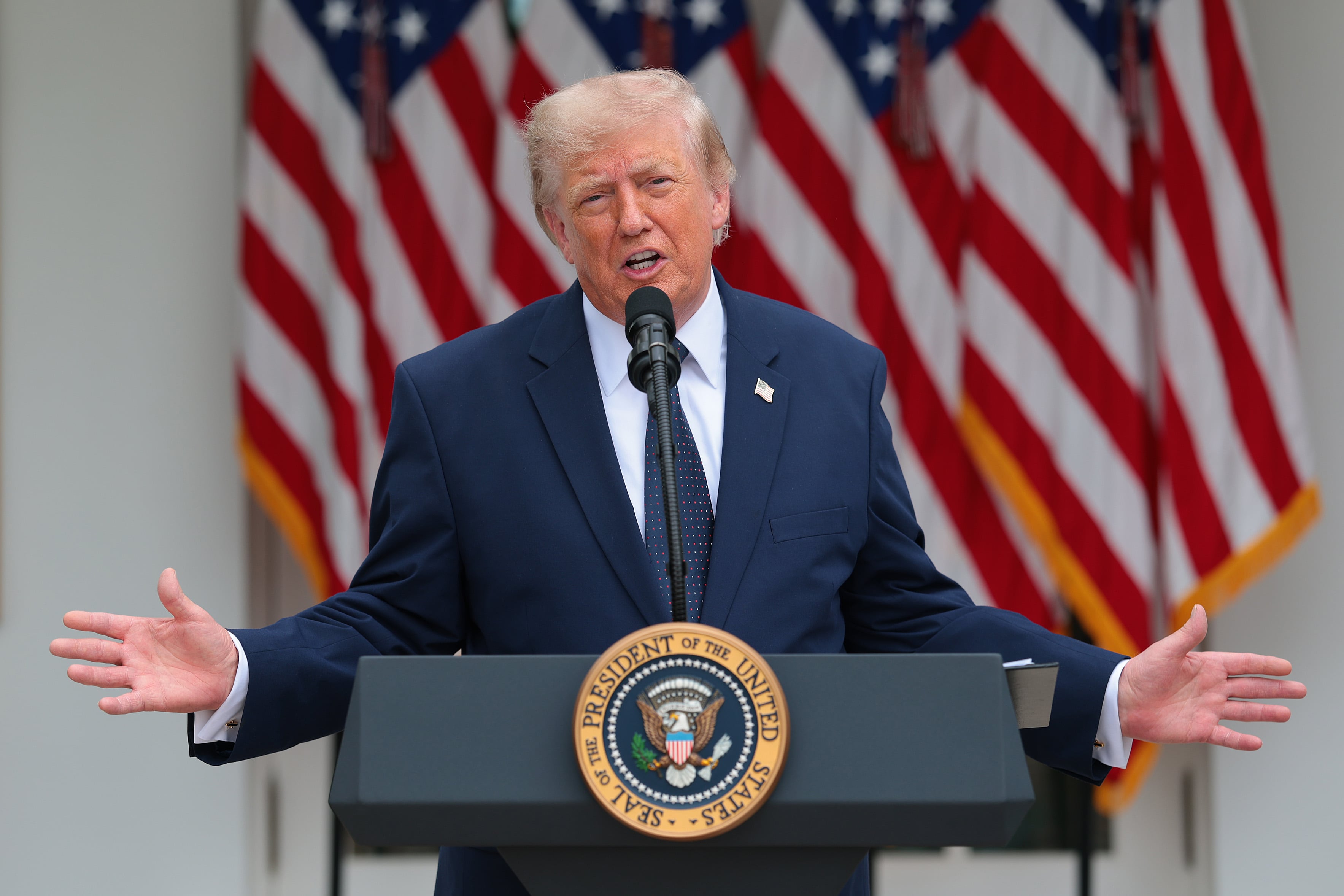
President Donald Trump’s abrupt removal Thursday of the three remaining members of the U.S. Election Assistance Commission leaves the agency unable to make key policy decisions, but is unlikely to disrupt preparations for the November elections, according to former staff members and election analysts.
Still, even though Trump’s move won’t bring the agency to a halt, it has created concerns that the president might take further steps to weaken the agency that distributes congressionally-apportioned election funding to states and certifies voting equipment.
The White House declined on Friday to give more detail on its reasons for dismissing the commissioners or explain what the president hoped to achieve by stripping the election oversight agency of its ability to enact changes to policy and voting system guidelines. But the move came at a time of rising concern over how the Trump administration could attempt to influence the outcome of November’s midterm elections.
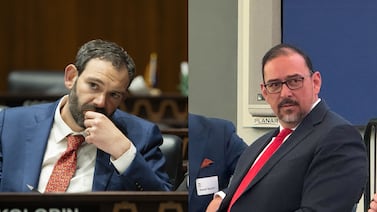
Benjamin Hovland, one of the two Democratic commissioners fired by Trump, said it would be “challenging to operate without commissioners or a quorum.” Because the agency is small and lightly funded, commissioners play a much larger hands-on role than they do at many other federal agencies, he added. Still, he said, “There is a great team there and they’ll keep doing this work.”
Hovland was sitting at an airport waiting for a cancelled flight on Thursday when he got an unexpected two-sentence email from the White House letting him know he had been fired. Hovland said no one from the Trump administration had been in touch with him since they took control in 2025.
When the U.S. Supreme Court last month gave the president unprecedented new power to fire leaders of independent agencies, Hovland said he figured he would be dismissed “sooner rather than later.”
What the EAC can still do
Ryan Macias, an election technology expert who oversaw federal certification of voting systems at the EAC from 2016 to 2019, said the dismissals were likely to have little or no impact on the day-to-day business at the commission.
States are still expected to get federal election funding already in the pipeline for the November election, which is disbursed according to already-set formulas. While many states rely on the EAC’s federal certification of voting systems, the testing and certification of voting systems does not require action by the commissioners, meaning voting systems can continue to be tested, updated and certified to the standards commissioners had previously adopted, Macias said. Three commissioners would have to approve any updates or changes to the current guidelines.
Commissioners do play a role in some parts of the certification process, at least theoretically. If a voting system vendor disputes the outcome or process of a certification decision, commissioners would hear the appeal. But, Macias said, that’s never happened.
Trump’s actions could also renew debate in Congress over shutting down the EAC, which has been the target of repeated closure efforts, though those have quieted in recent years.
The EAC was created by Congress in response to the disputed, chaotic 2000 presidential election, whose outcome was ultimately decided by a Supreme Court ruling. The agency provides support to states by distributing federal election funds, maintaining the national mail voter registration form, testing and certifying voting systems, and offering best practices and guidance to state and local election officials.
The agency has a four-member commission split between Democrats and Republicans, and most major decisions require an affirmative vote from at least three. Commissioners are nominated by the president and must be confirmed by the U.S. Senate. Hovland’s nomination process took around 9 months, and was on the shorter side. Even if Trump moves quickly to nominate replacements, the agency appears unlikely to regain a quorum before the November election.
This is not the first time the EAC has operated without a quorum, though it is the first time it has been left with no commissioners at all. Between 2010 and 2015, the agency lacked enough commissioners to take official action after the Senate stopped confirming nominees — and some congressional leaders stopped recommending them — as lawmakers debated whether the agency should continue to exist. That prolonged vacancy delayed updates to the federal voting system guidelines and left the commission unable to take many policy actions.
Election officials see little immediate disruption
For election officials, the consensus is that the firings are unlikely to disrupt this year’s elections. But several said the longer-term implications are harder to forecast, particularly if the administration takes additional steps to reshape or weaken the agency.
Minnesota Secretary of State Steve Simon, a Democrat who is a member of the EAC Board of Advisors, called the agency a valuable partner since it was created in 2002.
“I do not expect the changes at the EAC to have any immediate impact on the administration of elections in Minnesota or across the country,” he said. “Yet, the loss of the entire EAC leadership is another canary in the coal mine – and I urge Americans to take notice.”
Aaron Blacksberg, federal policy counsel at the Institute for Responsive Government, said Trump’s moves might not have a major impact on the upcoming elections, but suggested that they should be seen in the broader context of Trump’s widespread efforts to eliminate government election integrity programs and cast doubt on elections where Democrats fare well.
“In the short term, it’s another chilling effect,” Blacksberg said. “I don’t think there’s going to be an end to or a deescalation to these actions as the election gets closer.”
Hovland, who served seven years on the commission, defended the agency’s work.
“We weren’t perfect, and we weren’t a silver bullet, but we were someone in the federal government that was still trying to help,” he said. “I am so proud of the team and the agency.” He added, “I feel like people lose sight of why Congress created the EAC.”
Jessica Huseman contributed reporting.
Dion Nissenbaum is Votebeat’s senior national reporter and is based in Houston. Contact Dion at dnissenbaum@votebeat.org.