Votebeat is a nonprofit news organization reporting on voting access and election administration across the U.S. Sign up for our free weekly newsletter to get the latest.
This article is part of Votebeat’s reporting into the use of Walter Mebane’s work to question the result of the 2024 election. Click here to read our main story.
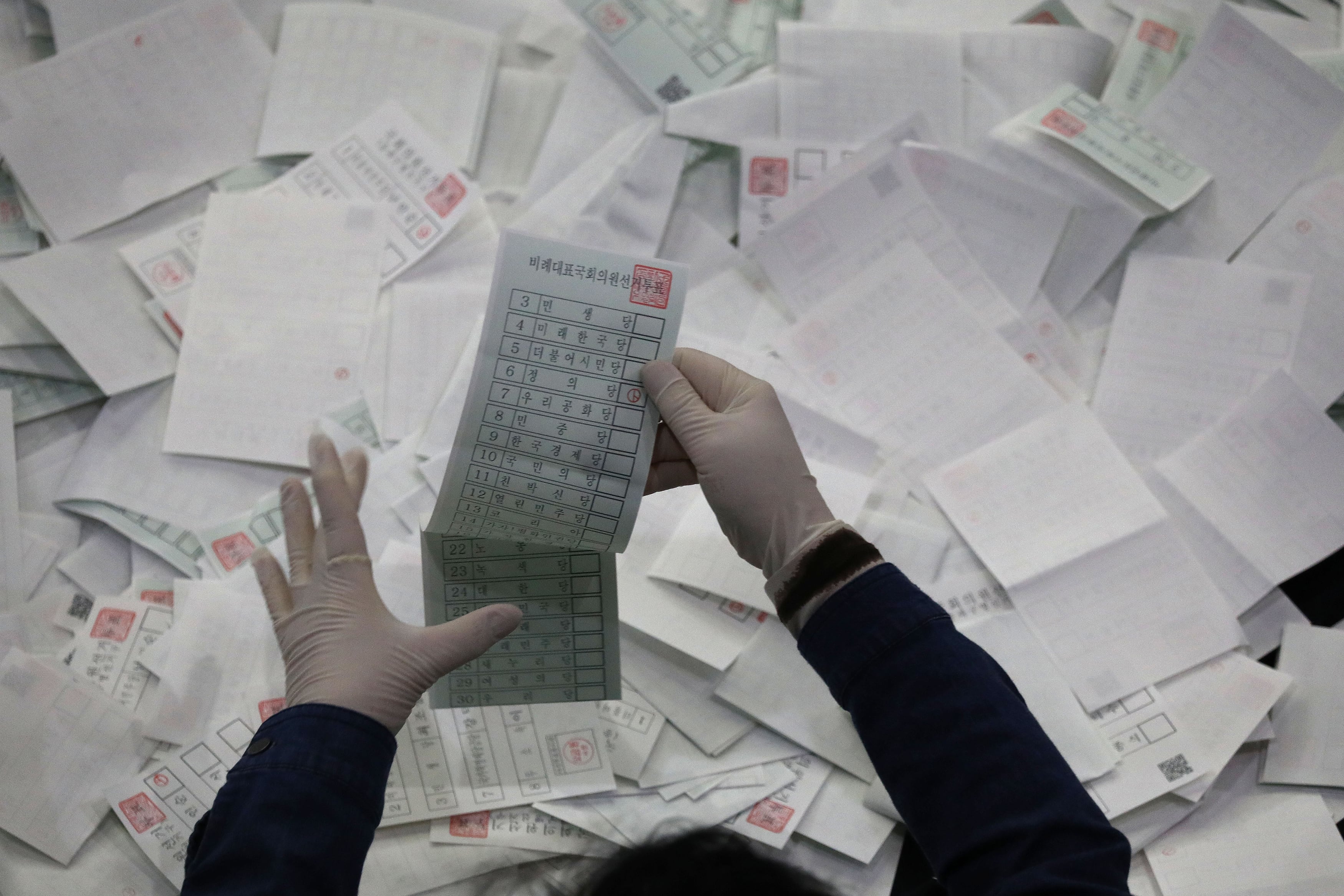
Shortly after the 2020 election in South Korea, University of Michigan political scientist Walter Mebane Jr. published his first version of a working paper estimating that a significant share of votes for the winning party may have been “fraudulent.” Mebane’s election forensics model pointed to statistical anomalies that it found could reflect votes being “manufactured” from nonvoters or “stolen” from opposing parties.
Local politicians and online commentators used the study to support their contention that the election was fraudulent.
There was just one problem: The election wasn’t fraudulent. An investigation by the country’s Supreme Court found no evidence of misconduct.
Mebane included cautions. “‘Frauds’ according to the eforensics model may or may not be results of malfeasance and bad actions,” he wrote, adding that statistical findings alone “cannot stand as definitive evidence about what happened in an election.”
But in South Korea, Mebane’s use of the term “fraud” was widely interpreted not merely as a technical classification, but as evidence of deliberate electoral manipulation, said Inbok Rhee, an assistant professor of political science at Yonsei University, in an email.
Korean terms used to discuss the analysis — including bujeong seongeo (부정선거), jojak (조작), and sometimes sagi (사기) — carry strong connotations of intentional wrongdoing, manipulation, or deception, Rhee said, adding that the framing helped the analysis gain traction in partisan online spaces.
To reach his conclusions, Mebane relied on data from what he called a “secret person” — an anonymous user associated with a Proton Mail address — that, he wrote at the time, appeared to be “missing about 100,000 votes and one entire constituency.” Local politicians and academics also said Mebane’s initial analysis misunderstood how the country reports election results.
Mebane said he did not gather the underlying data himself or confirm his understanding of South Korean elections with local election officials, citing his inability to speak Korean.
A 2024 study by Rhee and other political scientists later suggested that academic claims about election fraud can carry consequences even when they are not definitive. Rhee said the paper, which was modeled on the controversy surrounding Mebane’s analysis and similar claims, found that hypothetical claims of a substantial likelihood of fraud by a prominent foreign academic increased Korean voters’ belief that fraud had occurred, reduced confidence in the election, and increased support for an investigation.
The study was published in Public Opinion Quarterly, a peer-reviewed journal. In an interview, Rhee said Mebane’s analysis functioned as validation: People who already suspected something was wrong with the election, he said, were primed to accept it when an expert appeared to confirm their beliefs.
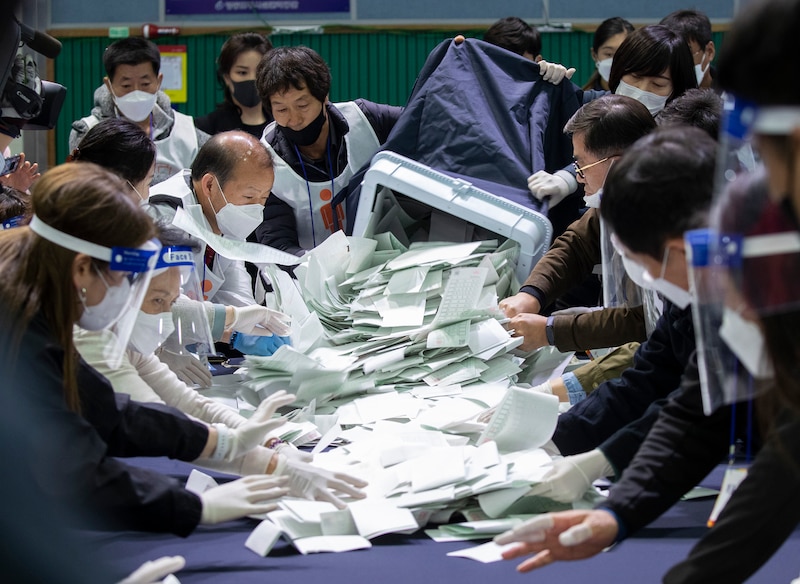
More than 30,000 people signed a national petition calling for a full recount, and election authorities chose to hand-count ballots in the 2024 election in part to address those concerns.
The South Korea working paper once appeared on Mebane’s University of Michigan website but has since been removed without acknowledgment. Asked about it, Mebane said in an email he recognized it contained some errors and, instead of taking the time to fix them, opted to take the paper down. He is aware the paper is still circulating online.
“It’s been years. I don’t really care,” he said in an interview. “It’s just a working paper.”
Carter Walker is a reporter for Votebeat in partnership with Spotlight PA. Contact Carter at cwalker@votebeat.org.
Jessica Huseman is Votebeat’s editorial director and is based in Dallas. Contact Jessica at jhuseman@votebeat.org.
Yeonseung Kim is a freelance reporter based in Seoul.