Votebeat is a nonprofit news organization reporting on voting access and election administration across the U.S. Sign up for Votebeat Pennsylvania’s free newsletter here.
For potentially the first time in decades, a razor-close Pennsylvania state House election may be heading to a full recount.
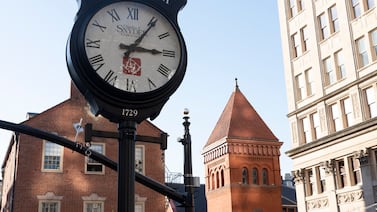
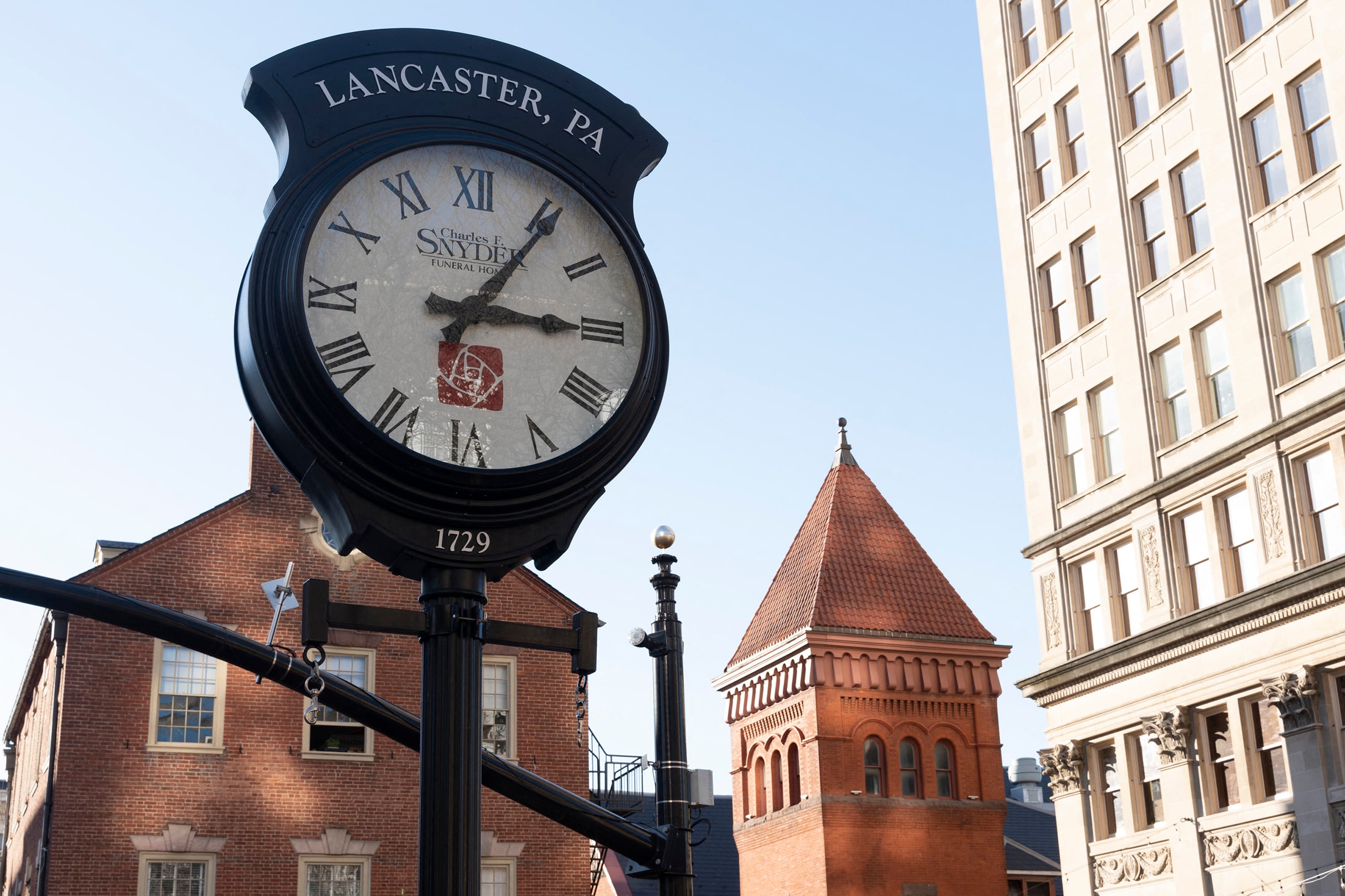
As of Tuesday, petitioners in all 32 precincts of Pennsylvania’s 41st House District had filed for a review of the Nov. 3 election result. Democrat Brad Chambers currently leads Republican incumbent Brett Miller 14,291 votes to 14,263 votes in the Lancaster County district.
Miller was initially leading Chambers on Election Day, but provisional and military and overseas ballots shifted the count in Chambers’ favor the Friday after the election.
Democrats are already assured of controlling the Pennsylvania House when it convenes in January. According to race calls from the Associated Press, Democrats won at least 111 House seats, Republicans won at least 89. The 41st House District and two others are still unresolved, though the margin in the 41st is the narrowest .
“Absolutely, I would accept the outcome of the recount,” Chambers told Votebeat Wednesday, though he said he is hopeful his lead will be maintained.
“I am looking forward to putting this behind me and working for the people of the 41st.”
Miller did not return a call seeking comment, but LancasterOnline has reported that he asked the petitioners to request the recount. Miller has not publicly conceded, and Chambers said the two have not spoken.
How do recount petitions work in Pennsylvania?
For a statewide election, a margin this close would automatically trigger a recount, but that law doesn’t apply to local races.
Instead, three voters in a precinct can request a recount of that precinct if they feel there was some error or fraud in the vote count.
The petitions are relatively easy to file, costing just $50. But it is logistically challenging to find enough voters in every precinct of a district to recount a full state House race.
Adam Bonin, a Democratic election attorney who is working for the House Democratic Campaign Committee on Chambers’ behalf, has been involved in recount petition cases before and is not aware of any state House election or larger race where petitioners successfully filed for a recount in all precincts.
In 1978, a judge ordered a recount in a tied state House race in Adams County. The Lancaster County contest, however, may be the first time in state history that a legislative recount was initiated by petitions filed by voters in all precincts.
Full recounts are more common in smaller school board or township supervisor races, Bonin said.
Pennsylvania’s recount law dates back to a ballot-box-stuffing scandal in the machine politics era of 1920s Philadelphia. In 2022, a flurry of recount petitions caused certification delays in several counties, leading to calls to make it harder to file them.
Legal disputes over those 2022 petitions led the state Supreme Court to rule that, in order to prompt a recount, either the petitions must make a specific allegation of fraud or be filed in all precincts in the district where the recount is sought.
Could a recount change the outcome?
It is not impossible for a recount to change an outcome, but the margin between Chambers and Miller — 28 votes, or 0.10 percentage points — makes it unlikely.
According to a study of statewide recounts by FairVote, a nonprofit that advocates for ranked choice voting, recounts have changed the winner of only three elections this century — and all three occurred when the initial margin was less than 0.06 points.
Votes sometimes shift during a recount because the marks on a ballot may be interpreted differently by a human than by the machine tabulator that did the initial count.
“We have complete faith that all the election staff in Lancaster, and in all 67 counties, did their job,” Bonin said. “If Republicans want to go through the effort of a recount, we will go through that, and I think it will only demonstrate how strong and accurate our elections are.”
Brian Adrian, a Pittsburgh-based attorney who is representing the petitioners, did not return a call seeking comment. Votebeat and Spotlight PA also reached out to roughly a quarter of the petitioners and received either no response or no comment.
When will we know who won Pennsylvania’s 41st House District?
The case has been assigned to Lancaster County President Judge Leonard Brown III. A hearing on the petitions is scheduled for 1:30 p.m. on Thursday.
If a recount is granted, Lancaster County will need to move quickly to meet the state’s Nov. 23 election certification deadline, although the Pennsylvania Department of State has in the past said counties could delay certification if there were pending recount petitions.
The requesters are asking that the recount be done by hand, but the law does not require it be done that way.
In the 2022 primary election, petitioners also sought a hand recount of a state House race in one precinct, but a judge rejected that part of the petition and the county recounted the votes by machine.
Carter Walker is a reporter for Votebeat in partnership with Spotlight PA. Contact Carter at cwalker@votebeat.org.