Votebeat is a nonprofit news organization reporting on voting access and election administration across the U.S. Sign up for Votebeat Texas’ free newsletter here.
FREDERICKSBURG, Texas — When Gillespie County Republicans abandoned voting machines and hand-counted ballots in the 2024 primary election, it took until 4 a.m., required corrections in nearly every precinct, and fractured the local Republican Party. And in 2026, they did it again.
On Tuesday, election workers once again gathered in this Hill Country county to tally Republican primary votes by hand. This time, the counting and tallying stretched until nearly 3 a.m., and county election officials did not send their report to the Texas Secretary of State’s Office until after 5 a.m. Whether the results are accurate may not be clear for days.
Research shows hand-counting ballots typically takes more workers and time than machine tabulation and produces more discrepancies, though both methods can be accurate. Supporters say it increases transparency and confidence. Republicans here — and in Eastland County, which also hand-counted its primary ballots this year — opted into the more laborious process amid mistrust of voting machines in the wake of claims by President Donald Trump and others that they manipulated votes in the 2020 election. No evidence has emerged to support that.
The Gillespie County GOP’s undertaking this year, though, was not as ambitious as two years ago. After determining they did not have enough workers to hand-count every ballot cast in this year’s primary, party leaders scaled back their plan. Unlike in 2024, when early votes were also counted by hand, this year those ballots were tabulated by machine. Only Election Day ballots were counted by hand at each of the county’s 13 precincts.
Amid a fiercely fought primary for U.S. Senate, along with more than 40 other contested races, just under 3,000 ballots were ultimately hand-counted — far fewer than in 2024, when more than 8,000 ballots were counted entirely by hand. Everyone involved — including county officials — said things went more smoothly this time, with fewer of the reconciliation errors that made the 2024 canvass frustrating for all involved.
Even so, the process stretched nearly as late as it did in 2024.
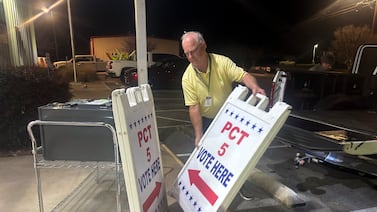
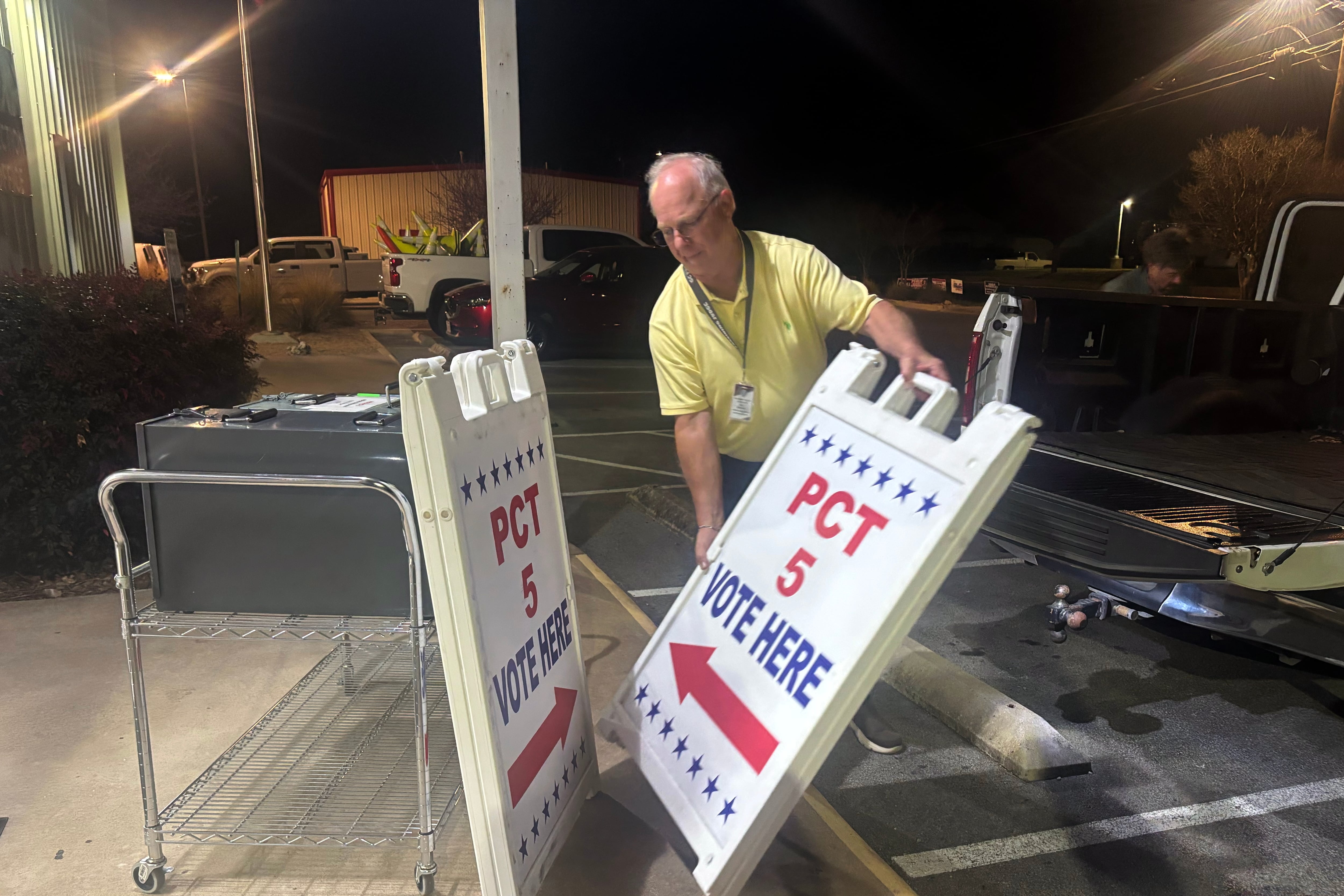
Some precincts began counting Tuesday morning. By 11 p.m., most of the county’s votes had been reported. But results from the final precinct — Precinct 5, in Harper — did not arrive at the central elections office until 2:47 a.m.
“Sorry to keep y’all waiting,” a bleary-looking Neill Northington, the Harper precinct’s chair, said as he sat down with county election officials to review his paperwork. He and his teams finished counting around midnight, but completing the form and checking the math kept him there for longer.
Northington had backed hand-counting in 2024 — he said he was the first to propose it — but opposed it this year. Two years ago, he wanted a way to test the county’s systems. When it showed no meaningful difference in race outcomes, he felt the point had been made.
“I don’t need the bank to keep a paper ledger for me,” he said. While he’d like hand-counting to be an option for auditing electronically tabulated results, he said he’s satisfied the systems in Gillespie County are trustworthy.
After Republicans turned in their tally sheets, county staff still had nearly two hours of work left.
Unlike electronic tabulation, which automatically generates the reports required by the state, hand-counted results arrive as separate tally sheets from each of the 13 precincts. The totals for more than 40 races then had to be entered manually and added together.
Manpower — or lack thereof — was likely why it took so long for precincts to deliver their results to the county. The 2024 effort involved roughly 350 people working in shifts. This year, party leaders said about 60 people had signed up as of a few days before Election Day. It was unclear Tuesday how many ultimately showed up. Final totals are expected to be available in the coming weeks after each worker submits the paperwork to get paid for their efforts.
To Bruce Campbell, the county GOP chair, the timeline told its own story. With significantly fewer ballots to count than in 2024, he said, the fact that results again stretched toward the early morning hours underscored what he had warned for months: The party did not have enough manpower to sustain the effort at the scale some activists envisioned.
Campbell disputes claims from some hand-count supporters that ample numbers of workers were available and that lists showed sufficient staffing. He said he never received documentation that the county had enough trained counters to conduct a full hand count.
Republicans divided on hand-counting
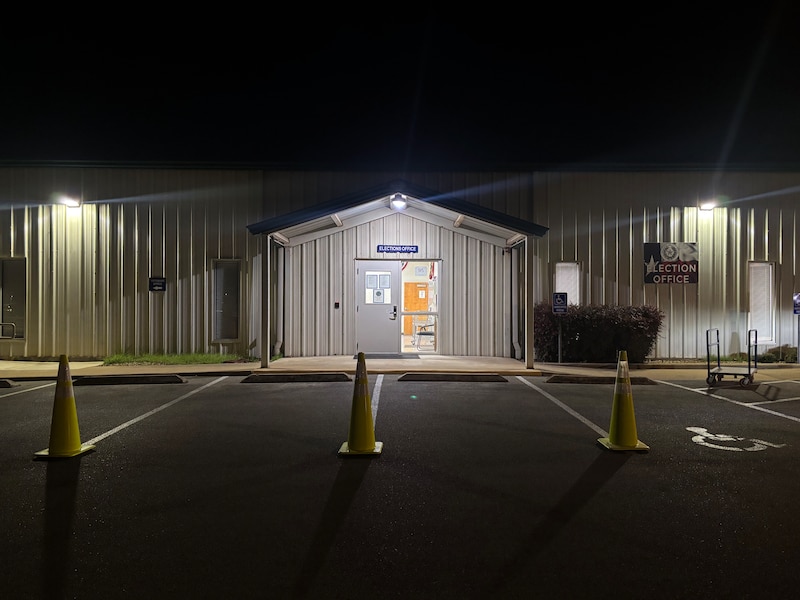
At the county elections office Tuesday night, the divide over hand counting showed in small moments.
Brock Graef, 25, arrived to observe the process on behalf of his mother, who is running for county treasurer. Daniel Herbort, 35, came for his wife, a candidate for district clerk. Neither had served as a poll watcher before.
Just after 8 p.m., as Democratic ballots were tallied inside — Republican ballots would not start arriving for more than an hour — Graef called hand-counting “kind of stupid.”
“We’re out here trying to modernize this county,” he said, “and here we are hand-counting ballots like it’s 1952.”
Herbort was more sympathetic — “kind of,” he said — but appeared less certain after hearing about 2024’s discrepancies.
Across the county, views remained sharply divided.
Sheila Scuggs, a captain in Precinct 3, called the night a good experience. In Precinct 12, poll worker Cody Lawson said they had “plenty, too many” counters. Tom Marshall, the chair of Precinct 1, argued that redesigned tally sheets helped prevent the transcription mistakes he said caused most of last cycle’s errors.
“I myself made four of them,” he said, referring to the 2024 errors.
Others were unconvinced.
Betty Hahn, the precinct chair for Precinct 9, was against the hand count, as she was in 2024. That year, her precinct was the only one that reported no discrepancies. “If I’m going to do something,” she said, “I do it right.”
Scott Netherland, the election judge for Precinct 6, called hand-counting “less secure” than machine tabulation because it lacks built-in safeguards and clear chain-of-custody protections. In 2024, he told Votebeat his “heart sank” after he realized in the hours after finishing the count that he’d miscounted the totals in seven separate races.
“That was our trial [run],” he said of last cycle’s hand count. “We could have been done three hours ago” if the ballots had been scanned instead, he said at around 11 p.m. while waiting for county officials to process his tally.
Charlotte Belsick, the precinct chair for Precinct 8, called hand-counting “unnecessary in Gillespie.” As she spoke Tuesday night, an official from the Gillespie County Democratic Party approached Belsick to say goodbye. That party had already finished its machine-tabulated count and reported results to the state. “Oh, you mean they got done quickly because they scanned the ballots?” Belsick replied.
The hand count has become a proxy for a broader struggle inside the county GOP. Campbell, who says the practice is unnecessary, faced a challenge in Tuesday’s primary from a candidate aligned with the pro-hand-count faction. With all precincts reporting, Campbell was trailing 39% to 61% in unofficial returns.
Whether this year’s scaled-back effort avoided the discrepancies seen in 2024 will not be clear until the results are canvassed in the coming days. Last cycle, adjustments were required in 12 of 13 precincts.
Texas law does not require an automatic post-election audit for these party-run hand counts. If mistakes were made, they will surface only if someone identifies them during canvass — or if candidates request scrutiny.
Jessica Huseman is Votebeat’s editorial director and is based in Dallas. Contact Jessica at jhuseman@votebeat.org.