
Votebeat is a nonprofit news organization reporting on voting access and election administration across the U.S. Sign up for our free weekly newsletter to get the latest.
The polarizing debate over noncitizen voters escalated last week when New Jersey Gov. Mikie Sherrill announced that an apparent software glitch had led to the unintended registration of 6,600 noncitizens between June 2023 and June 2024, 400 of whom voted in recent elections.
In a hastily called press conference, Sherrill placed the blame on her predecessor, fellow Democrat Phil Murphy, and said she was taking immediate steps to fix the problems.
Sherrill’s 20-minute briefing raised as many questions as it provided answers. How did a software glitch at the state’s motor vehicles agency lead to adding people who said they weren’t citizens to the state’s voter rolls? Who discovered the problem back in 2024? Why didn’t state officials alert the public when they first learned about the mistake? And what did state officials do about the people who were improperly registered at the time?
Sherrill, who took office in January and said she learned about the problems the week of July 13, said she’s ordered an independent investigation. That’s not good enough for Republicans in Washington and Trenton.
The U.S. Department of Justice is demanding that New Jersey hand over the names of the 6,600 people by Tuesday. New Jersey Republicans question Sherrill’s software glitch explanation and are calling for a legislative investigation.
The New Jersey issue isn’t coming in a vacuum. President Donald Trump has long argued that ineligible noncitizen voters cost him the 2020 election, though no evidence has emerged to support that. His second administration has been focused on rooting out any noncitizen voting, and his top legislative priority is election legislation that he says will block it.
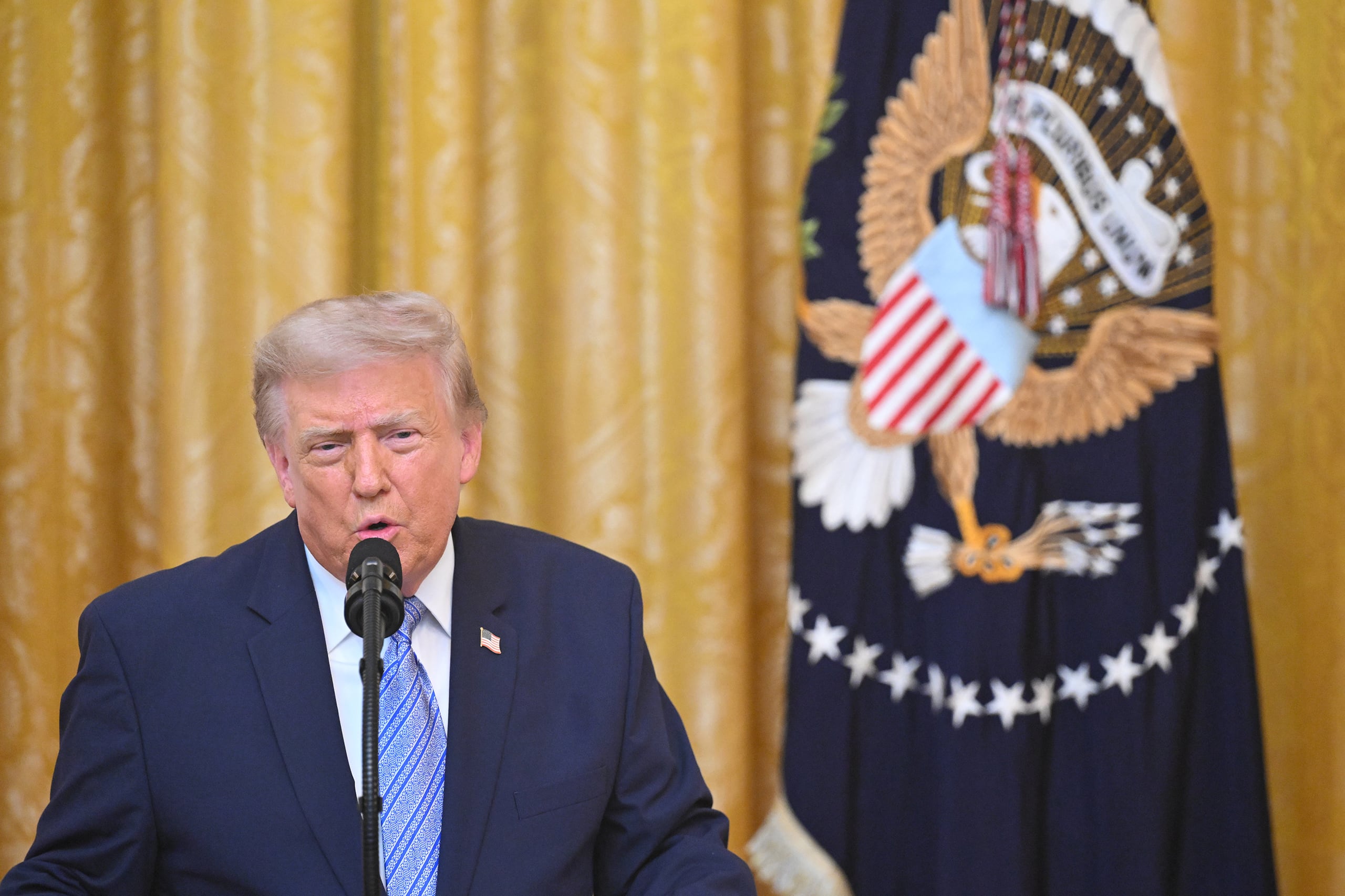
In a televised primetime speech on July 16, Trump said his administration had found 250,000 noncitizen voters on the voter rolls of four states: New Jersey, California, Pennsylvania, and Nevada.
Officials in all four states pushed back on Trump’s claims, and said they didn’t understand how the administration arrived at those numbers.
Nevada Secretary of State Francisco Aguilar called the numbers “wildly speculative.” Pennsylvania Secretary of State Al Schmidt said that “all evidence has shown that noncitizen voting is extremely rare across the country.” Even in New Jersey, the 6,600 noncitizen voters discovered by the state did not come close to the 35,152 that the Trump administration claimed to have found in the state. “Do I think that the latest round that he has put out is in some way an attempt to undermine our elections in this country? Yes I do,” Sherrill said at her press conference.
How did the Homeland Security Department come up with the estimates? The Trump administration isn’t saying. But the letters the Department of Homeland Security sent to the four states to notify them of the findings provide some interesting clues.
For instance, the letters qualify the numbers in ways that Trump and Homeland Security Secretary Markwayne Mullin did not in their public statements.
“We’ve identified 250,000 noncitizens registered to vote in just four states,” Mullin said in a briefing the day after Trump’s speech.
But the letters are more careful in making that claim.
In California, for example, the letter from Mullin said there “may be as many as 190,832 non-citizens registered to vote in California.” The letter then went on to say that the government found 81,336 registered voters in California’s public voter registration database with names, dates of birth, addresses and Social Security numbers that match those of noncitizens in federal files. That’s less than half the overall estimate; the letter doesn’t explain where the extra 109,496 came from.
In Pennsylvania, Mullin’s letter said the government matched the data of 8,594 registrants to a noncitizen, out of a total of 14,576 potential noncitizens it identified. Nevada’s letter said there were 8,576 matches out of 15,903 potential noncitizens. And according to the Shore News Network, New Jersey’s letter said there were 19,497 matches out of 35,152 potential noncitizens.
Altogether, these numbers in Mullin’s letters say the department has matches for just 118,003 of the 256,463 noncitizens the government is asserting have registered to vote.
The letters specify that Trump officials relied on each state’s public data files. All four of these states are among the 30 that have gone to court to block the federal government from getting access to unredacted versions of their voter rolls, which would include sensitive personal information, such as driver’s license numbers and Social Security numbers.
The public versions of the voter rolls only include basic information about individual voters, such as their names and addresses, so it’s unclear how the government could have matched individuals based on social security numbers as it says it did.
It’s likely that even the 118,003 number is too high. States that have audited their own voter rolls for noncitizens or checked them against federal databases by using the Department of Homeland Security’s Systematic Alien Verification for Entitlements, or SAVE, program have found noncitizen totals that are far less concerning.
Upon further investigation, several states have also found that SAVE — which works similarly to the methodology that Mullin apparently used — overestimated the number of noncitizens on their rolls, leading experts and elections officials to warn that the system was unreliable.
Aaron Blacksberg, federal policy counsel at the Institute for Responsive Government, called the 250,000 estimate “puzzling and concerning” and said there was no reason to believe the number of noncitizens on the voter rolls is actually that high.
“There are all sorts of reasons why you would get a huge number of false positives,” he said. “There is no reason to trust anything in the order of that 250,000 number. That will absolutely fall apart under any scrutiny.”
Correction, July 31: An earlier version of this story misstated the date of President Donald Trump’s primetime address on election issues. It was on July 16.
Dion Nissenbaum is Votebeat’s senior national reporter and is based in Houston. Contact Dion at dnissenbaum@votebeat.org.