Votebeat is a nonprofit news organization reporting on voting access and election administration across the U.S. Sign up for our free weekly newsletter to get the latest.
For years, Khalwinder Singh Bhengura lived an unassuming life in Arlington, Texas, where the 69-year-old Indian immigrant works a graveyard shift preparing passenger meals for an airline catering company.
Bhengura moved to the U.S. and spent 18 years working toward becoming a legal resident, securing his green card in 2022. It was a cause for celebration in the Bhengura family. Then things took an unexpected turn.
In 2024, according to a federal indictment, Bhengura registered to vote and cast a ballot in the November presidential election, even though he’s not allowed to do so without being an American citizen.
Bhengura’s case is part of a Trump administration campaign to prioritize prosecuting noncitizen voters.
On Sept. 10, federal authorities arrested Bhengura and charged him with voting as an alien in a federal election and making a false statement about being a U.S. citizen in order to register to vote. That makes him one of 70 people the Trump administration has charged in voting fraud cases this year, according to Acting Deputy Attorney General Trent McCotter.
The list includes noncitizens from all corners of the globe, residing in all corners of the U.S. It features everyone from a 20-year-old college student from the Philippines accused of voting in Hawaii to a 39-year-old New Jersey restaurant owner from France. And an examination of the defendants and the filings in their cases found no sign of any organized efforts to cheat the American electoral system.
Votebeat reviewed Justice Department press releases and news accounts since June 1st and identified 41 recent cases involving noncitizens accused of voting. At least 23 defendants are legal residents holding green cards. Those charged range in age from 19 to 73 and come from at least 18 different countries, including Russia, Mexico, Australia, Israel, and Nigeria. Eight of the cases involved undocumented immigrants. About half of the cases come from Texas and New Jersey, with others popping up in a dozen other states, from Alaska to Louisiana.
Lawyers for most of the defendants did not respond to requests for comment. The list contains an eclectic assortment of alleged voter fraud cases. For example, one suspect in Massachusetts is accused of falsely impersonating his landlord to vote as part of a long-running feud between the two Chinese nationals.
The Justice Department has also charged American citizens in connection with the crackdown on fraudulent voting. One Pennsylvania man is accused of voting in both Alaska and Pennsylvania in the November 2024 presidential election. A city manager in Oklahoma is accused of signing voter registration forms for 11 residents.
But most of the cases involve immigrants like Bhengura who were on the pathway to U.S. citizenship when they voted in elections over the past decade. Bhengura’s lawyer says he acknowledged voting, but many of the cases involve nonresidents who secured their green cards, voted in elections, and then denied doing so when they were filling out paperwork or doing interviews to get their American citizenship, according to the legal filings.
Joshua Ferrer, an assistant professor of government at American University, said many legal residents charged with improperly voting don’t realize they weren’t supposed to do so.
“It’s likely most of this is the result of confusion on the part of voters or election officials,” Ferrer said.
The fact that there are no indications that these voters were connected as part of any larger scheme “is another sign that the president’s claims of widespread voter fraud aren’t true,” he added.
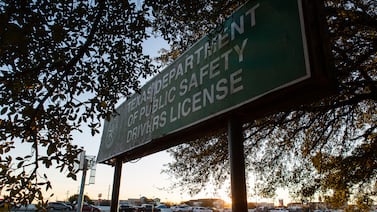
Bhengura’s case raises a number of unanswered questions. Federal prosecutors said Bhengura registered to vote in 2024 when he applied for a driver’s license. But Texas law requires proof of citizenship or lawful presence to get a license, so it’s unclear how he could have been registered to vote if he had provided the documentation.
Knox, Bhengura’s attorney, defended him as “an honest, hard-working taxpayer and proud U.S. resident. He is terrified to face the government of the same nation that promised liberty and freedom. He prays that justice will prevail.”
Carol Lam, who served as U.S. attorney for the Southern District of California under President George W. Bush, questioned the Justice Department’s choice to prosecute these people. In her opinion, the government shouldn’t try to deport green card holders who didn’t know they couldn’t vote until they became American citizens.
“Our justice system was not created to terrorize people,” she said. “I think voting in national elections when you are not a citizen is a bad thing, but how you deal with these things is the question. If there is good evidence that the person didn’t intend to vote, that would be a slap-on-the-wrist kind of situation, and it’s instead being used to leverage people to be deported.”
Lam acknowledged that every administration has the leeway to decide what crimes to prioritize. But she questioned the Trump administration’s decision to devote so much time and energy to cases like Bhengura’s.
“Taking a 69-year-old grandfather with a green card with no apparent intent to violate the law who may have voted based on bad information and using it as a jumping-off point to deport a person would be at the bottom of my pile,” she said. “We had suspects who actually committed acts of violence, so there were so many more cases where life and limb were actually at stake.”
Dion Nissenbaum is Votebeat’s senior national reporter and is based in Houston. Contact Dion at dnissenbaum@votebeat.org.