
This news analysis was originally distributed in Votebeat’s free weekly newsletter. Sign up to get future editions, including the latest reporting from Votebeat bureaus and curated news from other publications, delivered to your inbox every Saturday.
One underrated consequence of Democrats’ strong performance in the 2026 midterms: The party will now control the top election office in a plurality of states — including most major swing states — heading into the 2028 presidential election.
According to race calls by the Associated Press, Democrats flipped at least three top election offices on Tuesday and gained the power to appoint the leaders of two more in the coming months. Starting in 2027, the party will run, or have the ability to choose who runs, at least 21 state election offices, while Republicans will control at least 17. Two 2026 contests for top election official remain uncalled as of Sunday night. (The other 10 states’ elections are run by unelected boards or commissions.)
Although state legislatures enact election laws, states’ top election officials — usually, but not always, the secretary of state — can be quite influential in how elections are administered. They maintain the state voter rolls, deciding how aggressively to clean them and, in recent years, whether to share them with the Trump administration. They often fill in the gaps in state election laws with directives. And they enjoy a powerful bully pulpit from which they can emphasize voting rights, amplify claims of election fraud, and anything in between.
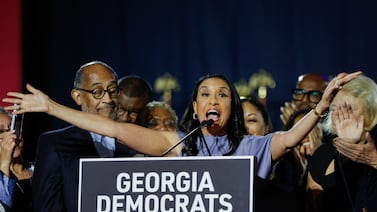
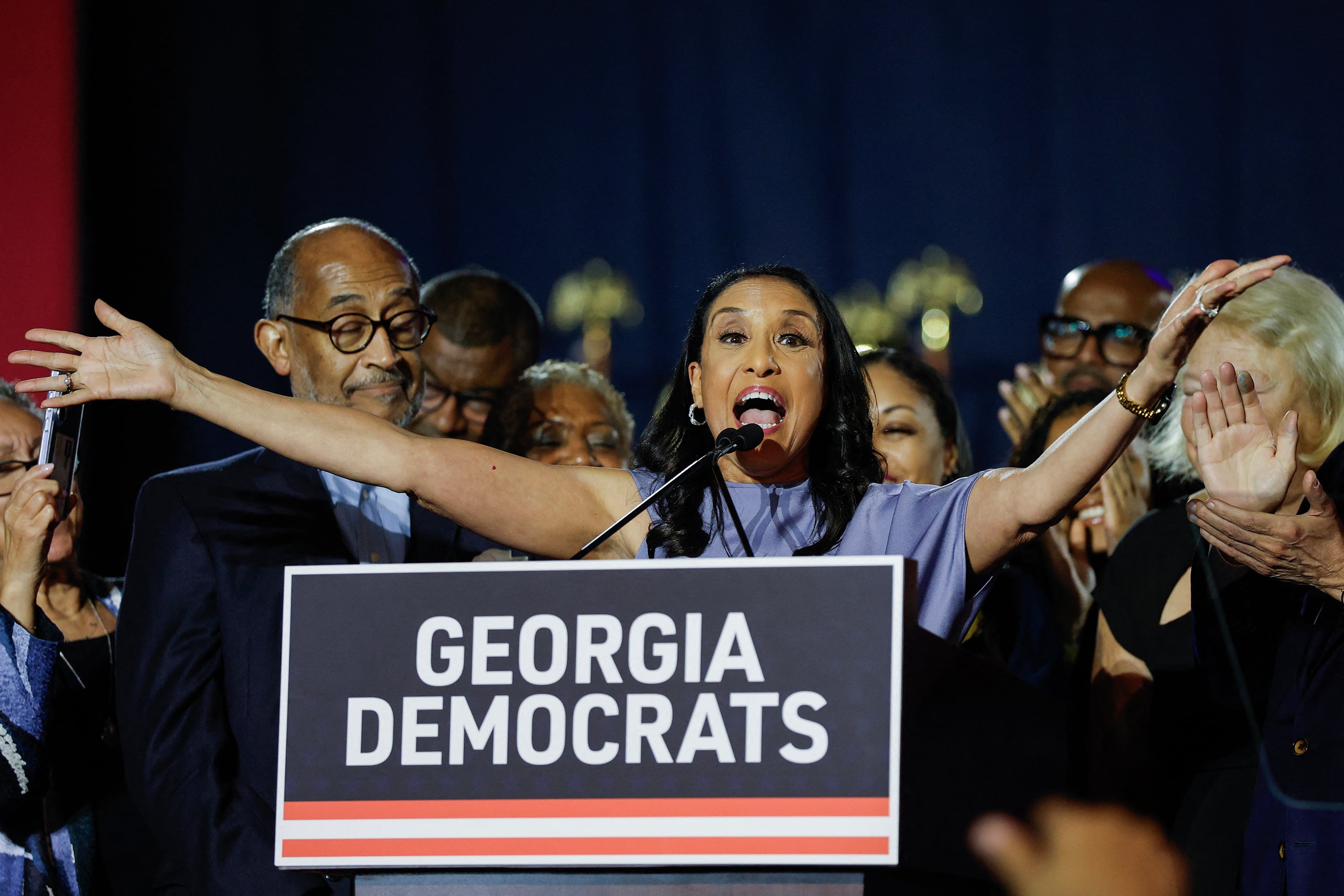
This year’s highest-profile race for a top election official was probably in the presidential swing state of Georgia, where Democrat Penny Brown Reynolds defeated Republican Tim Fleming. Brown Reynolds, a former judge, will succeed Republican Brad Raffensperger, who famously resisted President Donald Trump’s efforts to overturn the 2020 election in the state.
On the campaign trail, Brown Reynolds promised to stand up to Trump as secretary of state. She will also be responsible for overseeing the implementation of a new voting system, as the state is phasing out equipment that relies on QR codes on ballots for tabulation.
Democrats also held onto the secretary of state’s office in other traditional presidential battleground states. In Arizona, incumbent Adrian Fontes was elected to a second term, as was Secretary of State Francisco Aguilar in Nevada. And in Michigan, Garlin Gilchrist defeated Anthony Forlini in the race to succeed Secretary Jocelyn Benson, who was elected governor.
In Pennsylvania, where the governor appoints the secretary of state, Democratic incumbent Josh Shapiro won reelection, and he is expected to retain Secretary Al Schmidt in the role. Schmidt is a Republican but has rebuffed the Trump administration’s criticism of the state’s elections.
The governor also appoints the secretary of state in Texas — a state that will now likely enjoy a lot of attention in 2028 after turning blue on Tuesday for the first time in 32 years. As a result, Democratic Gov.-elect Gina Hinojosa could appoint a new secretary of state to replace Republican Robert Howden.
In New Hampshire, the secretary of state is not popularly elected, but instead is elected by a joint session of the state legislature in December. Democrats are on track to win around 300 of New Hampshire’s 424 state legislative seats, which could spell trouble for Republican Secretary of State David Scanlan. However, New Hampshire famously has an independent streak and Scanlan has admirers on both sides of the aisle, so don’t count him out quite yet.
Democrats also took control of the secretary of state’s office in some normally Republican-leaning states. In Ohio, Democrat Allison Russo defeated Republican Robert Sprague for the office being vacated by Republican Secretary Frank LaRose. And in Indiana, Democrat Beau Bayh, the scion of a famous Indiana political dynasty, defeated Republican Max Engling. Scandal-plagued incumbent Diego Morales, a Republican, lost renomination to Engling in June.
Democrats could still pick up two more state election offices. In Alaska, elections are run by the lieutenant governor, who is elected on a ticket with the governor. The AP has not yet called that race, which may need ranked choice tabulations to resolve. The AP has also not issued a call in the Kansas secretary of state race, in which Republican Pat Proctor leads Democrat Jennifer Day by less than 1 percentage point. Both seats are currently held by Republicans.
Despite Democrats’ good night, Republicans did win a few closely watched races. In Iowa, Republican Secretary of State Paul Pate won a fifth term against Democrat Ryan Peterman. Pate is seen as more mild-mannered than a bomb thrower, but Peterman had criticized him for sharing Iowa’s voter roll with the Trump administration.
In Nebraska, Republican Scott Petersen defeated Democrat Sarah Slattery, six months after also defeating the state’s incumbent Republican secretary in the primary. Petersen has questioned the security of voting machines, opposes mail voting, and says “a lot of weird things went on” in the 2020 election.
Finally, South Dakota elected Republican Heather Baxter, who supports counting election results by hand rather than by machine. She, too, defeated the current Republican secretary for renomination by challenging her from the right, prompting the incumbent to endorse Baxter’s Democratic opponent.
Petersen and Baxter are likely to be the nation’s two farthest-right secretaries of state next year.
Nathaniel Rakich is Votebeat’s managing editor and is based in Washington, D.C. Contact Nathaniel at nrakich@votebeat.org.