Votebeat is a nonprofit news organization reporting on voting access and election administration across the U.S.
This news analysis was originally distributed in Votebeat’s free weekly newsletter. Sign up to get future editions, including the latest reporting from Votebeat bureaus and curated news from other publications, delivered to your inbox every Saturday.
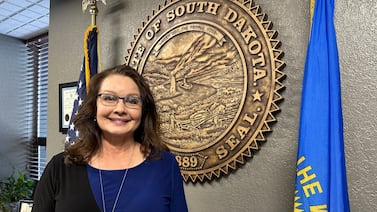
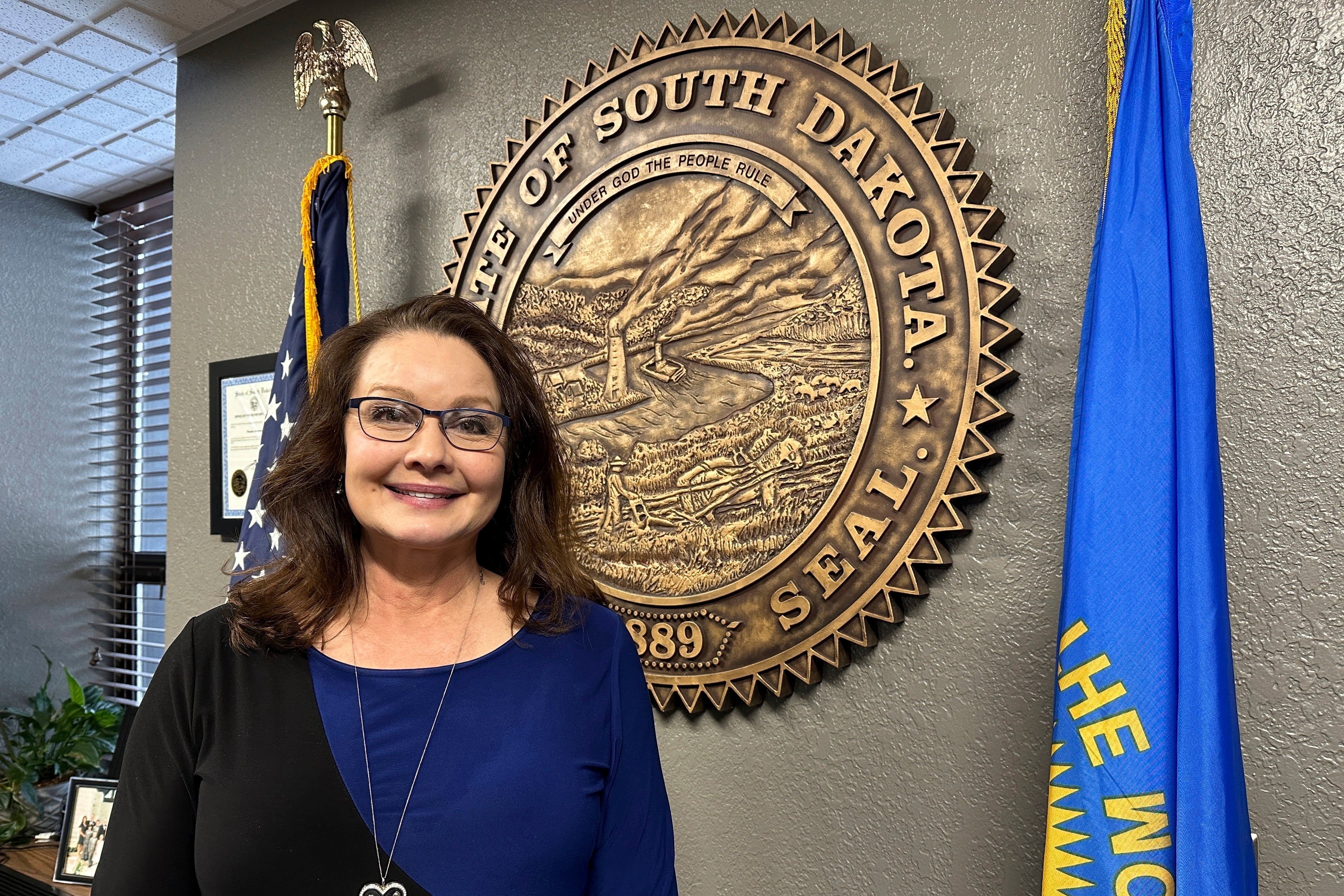
Four years after far-right Republicans helped elect Monae Johnson as South Dakota secretary of state, she’s backing a Democrat to replace her.
The cross-party endorsement is unusual. But the more interesting story is how Johnson got to this point.
Johnson ousted a GOP incumbent in 2022 with support from activists who distrusted electronic vote-counting machines and wanted South Dakota to rely more heavily — or entirely — on hand-counting. Her own rhetoric was plenty skeptical too.
In a fundraising letter that spring, Johnson wrote that “all across America we’ve seen questionable results in national, state, and local elections.” Asked that fall whether Joe Biden legitimately won the 2020 election, she would not say yes: “I’m not going to acknowledge that.” After she won, she said “anything can be hacked,” citing warnings from “IT people, military people,” and floated restricting the use of vote-counting machines.
But once Johnson became responsible for running elections herself, her views started to change. By 2024, she was publicly expressing confidence in tabulators and saying South Dakota’s election system had safeguards “built in throughout the process.” And this summer, Johnson told Republican convention delegates, “I trust the county auditors to do their jobs, and I fully support the use of secure, tested ballot tabulators.”
Former Pennsylvania Secretary of State Kathy Boockvar, a Democrat, said she has seen the same evolution play out among poll workers and county officials: People sometimes get involved in elections because they are skeptical of how they work. Then they discover that the problems they expected to find are not there and that some of the fixes they imagined are not workable.
“It’s a brave thing to admit,” Boockvar said. She said she could not recall another example of a statewide election official doing so.
More common are local versions of the same story.
For example, Michelle Burchill — a Republican and supporter of President Donald Trump — went to work for Yavapai County, Arizona, in 2020 after absorbing many of Trump’s claims about rigged elections. On her first day, she watched workers stop when two parts of the operation were off by a single ballot, then search until they found two ballots stuck together. “I was an election skeptic, for sure,” she told Governing Magazine last month. Watching the process “very humbly woke” her up. Today, she serves as one of the county’s top election officials.
In Pennsylvania, registered Republican Jay Schneider signed up to work elections after 2020, still suspicious that there had been “shenanigans.” After serving as a poll worker and training to become a judge of elections, he told Votebeat that seeing the safeguards firsthand changed his view.
In California’s Shasta County, Tom Toller took over an elections office that had spent years at the center of post-2020 conspiracy fights. He arrived with no election experience, skeptical of voting machines and willing to consider hand-counting — or even undertake a legal fight with the state over it. Four months later, after “getting underneath the hood” of the system, he said his views had changed: Hand-counting was slow and expensive, while properly run machines were fast and accurate.
These stories are not about people changing their politics. They are about what happens when a campaign promise becomes an administrative problem.
Johnson appears to have confronted that gap early.
One of Johnson’s first major projects was turning her campaign promise of post-election audits into something counties could actually carry out. She chose Jennifer Morrell, who runs The Elections Group, to help lead the work, despite criticism from some of the conservative activists who had helped put Johnson in office.
Johnson also assembled a team of people who had already taken opposing sides on election policy. For example, activist Vicky Buhr had testified in favor of banning ranked-choice voting, while Democratic state Rep. Kameron Nelson was one of just five House members who voted against the ban. Over three meetings, the group worked out how the audits would function and eventually conducted a mock audit.
The system they helped implement required counties to hand count ballots in 5% of precincts and compare them with machine results. When counties carried out those audits in 2024, the results repeatedly corroborated the tabulators. “The accuracy and transparency demonstrated by this process highlight the strength of our election system,” Johnson said in a statement announcing the results.
Hand-counting had become a way to corroborate the machines rather than an argument for eliminating them.
Many of the activists who helped elect Johnson in 2022 remained unconvinced. This summer, they backed state Rep. Heather Baxter, whose campaign had called for hand-counted paper ballots and eliminating machines, for secretary of state instead. Republican convention delegates chose Baxter over Johnson, 59% to 41%. Johnson is now backing Democrat Terrence Davis in the general election, who says he trusts South Dakota’s current election system and opposes statewide hand-counting as the primary method of tallying ballots.
In explaining her endorsement, Johnson wrote that she now knows “the difference between campaigning for this office and carrying the responsibility of leading it.” The job, she wrote, requires “the humility to listen to professionals” and “a willingness to review new information and change course when the evidence supports doing so.”
Nearly 200 candidates who have promoted false or unsupported claims about elections are on the ballot this fall for Congress or statewide office, reports Wired. Some are seeking jobs that would put them much closer to the machinery of elections themselves.
Johnson’s story suggests that proximity can do something an argument sometimes cannot: replace assumptions with the tedious, technical reality of how elections actually work.
We’re about to get more chances to see whether others will be as willing to change course when the evidence demands it.
Jessica Huseman is Votebeat’s editorial director and is based in Dallas. Contact Jessica at jhuseman@votebeat.org.