Votebeat is a nonprofit news organization reporting on voting access and election administration across the U.S. Sign up for Votebeat Arizona’s free newsletter here.
For decades, Arizona’s election and voting policies have been shaped largely by Republicans.
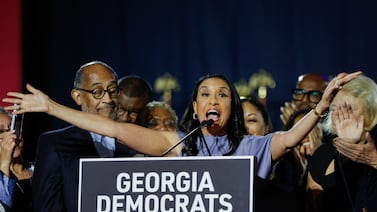
After Democrats’ earth-shattering wins in the 2026 election, that’s about to change.
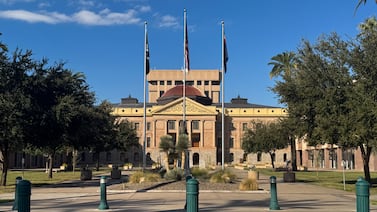
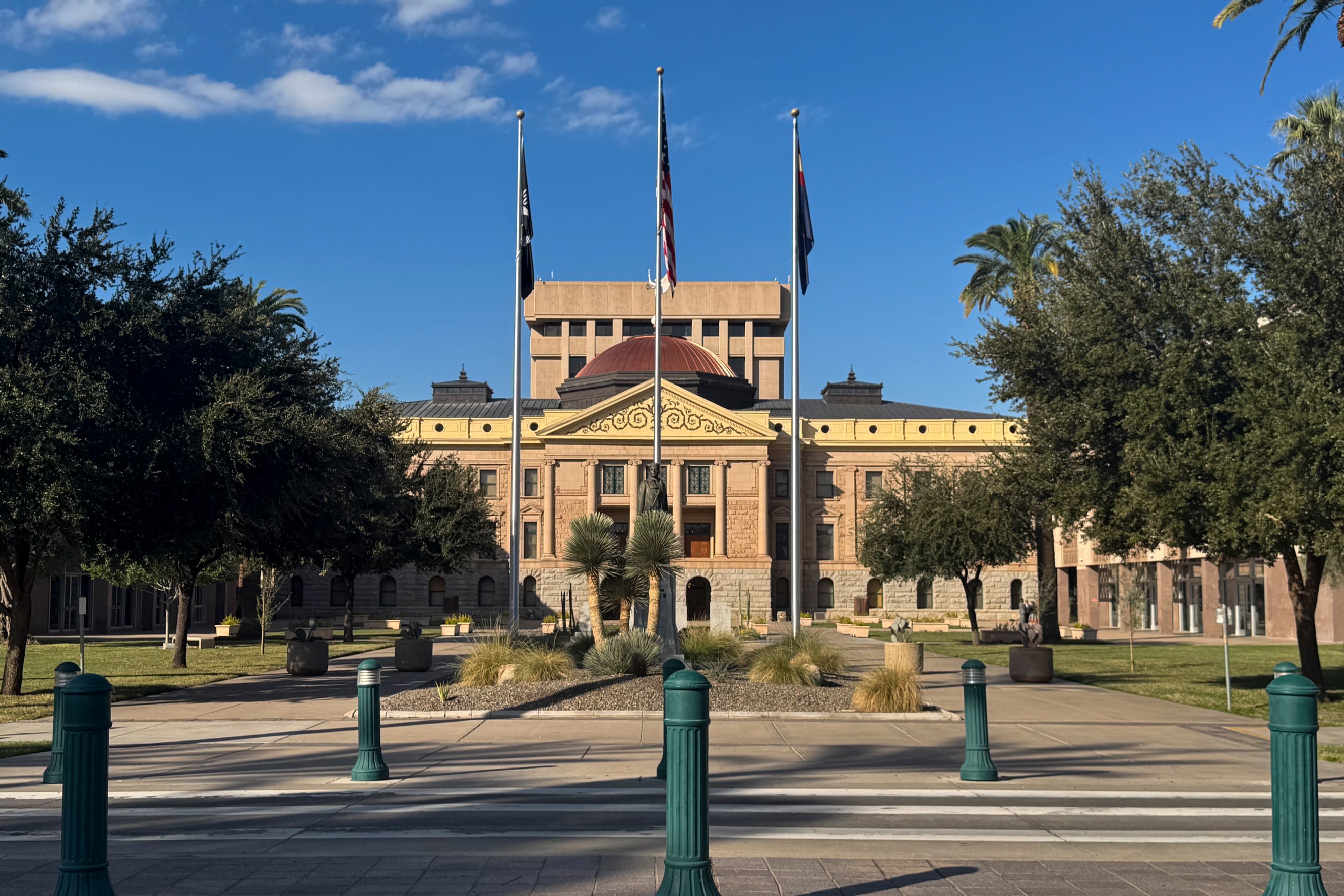
Democrats have flipped the Arizona Legislature, with control of at least 37 of 60 seats in the House of Representatives and 20 of 30 seats in the Senate, according to the Associated Press. Meanwhile, Democratic Gov. Katie Hobbs sailed to a second term on election night, alongside Democratic Secretary of State Adrian Fontes and Democratic Attorney General Kris Mayes.
It’s been six decades since the party held both legislative chambers and the governor’s office. In recent years, a GOP legislative majority has pushed a slew of election laws aimed at improving voter confidence by speeding up vote counting, restricting mail voting, and tightening registration rules. Those changes often found inspiration from election conspiracies that proliferated in response to President Donald Trump’s loss in 2020.
The new majority is likely to have a vastly different agenda.
Votebeat spoke to legislators with experience on election-related committees, party officials, and voting rights advocates to piece together what election policies might become priorities for Democratic leaders during the next legislative session, which starts on Jan. 11.
They indicated lawmakers have a lot of ideas aimed at improving voter access and convenience — starting with repealing or rewriting some GOP-backed bills that passed after 2020 and considering bills that were proposed in prior sessions but that Republicans never even brought to committee hearings.
Democrats and liberal groups have also pitched several election policy packages in recent years that have gone largely untouched. That includes a 2022 initiative kept off the ballot by a court, recommendations from a 2023 report by a bipartisan elections task force, and a legislative package pushed unsuccessfully last year by Fontes and minority leaders. Democratic Sen. Lauren Kuby, who has previously served on her chamber’s elections committee, called it “a backlog of voter-friendly legislation.”
“Looking forward, it comes down to key aspects of access, ease of voting, and more collaboration with our election workers and officials to really strengthen our democracy,” said Democratic Rep. Brian Garcia, who previously served on the House of Representatives’ election committee.
Alex Gulotta, state director for All Voting is Local Action, said all of that previous work could serve as “building blocks” of the legislature’s elections agenda. He and Fontes suggested that legislators and key stakeholders were already starting to discuss immediate election and voting policy priorities on the day after the election.
“We’re working those issues out right now,” Fontes said on Wednesday, adding that he’d “likely be on the phone with a lot of folks” that afternoon.
But the new majority may face some challenges. Recent federal and state tax policy changes mean that funding to implement any new laws will likely be limited. Democrats’ election priorities will have to compete with the needs of education, social programs, and more.
Democrats will also need to contend with the idea that they might not be able to hold their majority in 2028 — and decide whether that incentivizes them to go hog wild with their proposals or take a more cautious approach.
Eric Limbs, executive director of the Maricopa County Democratic Party, said he expected legislative leaders to move quickly on bills.
“The agenda’s long, and they’re going to work on it, because frankly, we don’t know how long this is going to last,” he said. “This could be two years, could be more than that, but because we don’t know, I think they’re going to seize the moment to a degree.”
New majority eager to improve voting access in first session
A handful of issues appear poised to rise to the top of legislators’ elections agenda.
Perhaps most pressingly, lawmakers would like to restore the state’s Permanent Early Voting List. PEVL was a list of voters who opted in to automatically receive a mail ballot in every election. As the name suggests, voters generally stayed on the list unless they requested removal. Officials could also scratch them off if they moved, died, or their registration was moved to inactive status or canceled.
But a law signed in 2021 by former Gov. Doug Ducey, a Republican, rebranded the list as the Active Early Voting List, or AEVL. The law required county recorders to remove voters from the list if they didn’t cast a mail ballot in federal, state, or certain municipal elections for two consecutive cycles — a four-year period.
Those removals are set to begin in January 2027, meaning voters who have not cast mail ballots lately will get taken off the list unless the legislature moves quickly to walk back existing state law.
“I think there’s statewide appetite to restore PEVL,” Garcia said, adding that he saw the issue as one of his top priorities. “People like the accessibility of the early voting list.”
Some have even called for lawmakers to go further and implement a full vote-by-mail system similar to neighboring California, Nevada, and Utah. There, all registered voters are automatically mailed a ballot ahead of each election, and there’s no formal opt-in list like PEVL or AEVL.
Garcia and Kuby said that they’d also like to see changes to the state’s voter registration rules that could remove barriers for marginalized groups of voters.
That includes proposals like same-day or automatic voter registration. Currently, prospective voters must register at least 29 days before an election or they’re out of luck. The state also doesn’t automatically register eligible citizens to vote upon being issued a driver’s license or state ID. Rather, Arizonans have to opt in by filling out a registration form.
“That should be an easy one, an easy piece of legislation for us to start off with,” said Raquel Terán, a former state lawmaker and executive director of Proyecto Progreso, a group that helps Spanish-speaking voters navigate the ballot. “That would help people who are not usually part of the decision-making process make sure that they’re registered and that if they’re willing to vote, that they get to vote on Election Day.”
It may also mean repealing statutes like Arizona’s proof of residency requirement, which mandates that new voters provide documents proving where they live or risk being barred from voting in state and local contests. Voting rights experts say the law has been challenging for tribal voters to navigate because many people living on reservation land lack standard street addresses.
“You don’t have regular neighborhoods and roadways,” said Maria Dadgar, executive director of the Inter Tribal Association of Arizona, adding that reducing barriers to voting has been a “long-standing goal” for her organization. She said she was excited to lobby for changes to the state’s voting laws under the new legislative majority and noted it “benefits everyone when we’re all on the same playing field.”
In addition, legislators may pursue broader proposals to improve voter access. Kuby introduced a bill last session requiring election officials to provide ballot drop boxes and voting locations on public college campuses. Garcia, a member of the Pascua Yaqui Tribe, previously proposed legislation requiring election officials to consult with local tribes about voting sites on their land. New Mexico has similar law, and some tribal officials have proposed Arizona should implement one, too — particularly in light of long-standing problems with disenfranchisement on Navajo Nation.
“I think, at its core, it’s really about making democracy more accessible,” Garcia said.
Kuby added that she’s interested in a number of voter protection and transparency proposals, including strengthening campaign finance disclosure requirements.
“I think we’ll do very popular, pro-voter bills and hopefully usher them through the finish line,” Kuby said, adding that she is “laser-focused on a lot of election issues” and that “there’s a lot of work to be done to strengthen and protect vote by mail and protect the voting process.”
Will Arizona see new voting infrastructure?
In the long term, stakeholders say lawmakers will need to figure out how to better fund election operations and find money for infrastructure improvements.
Fontes said there are several reforms and mechanisms that he’d “like to see funded without question.” That includes IT and cybersecurity improvements, as well as money to build a new statewide voter registration system. The state’s contract for its current system — called the Arizona Voter Information Database, or AVID — is at the end of its life, and Fontes previously told Votebeat that the system is “unwieldy.”
“I’ve been beating the same drum for several years, and if I am anything, I am consistent,” he said on Wednesday. “I’m hoping we can have those reasonable conversations during the regular budget process.”
Kuby expects that some of Fontes’ asks will be priorities for the legislature — even if not all of them were fulfilled in 2027.
“We don’t have a budget that’s bursting with resources, but the secretary has identified real concerns about cybersecurity and fortifying their whole website, so that’s going to be important to me and, I believe, the caucus,” Kuby said.
Gulotta said county election offices have also struggled with unfunded mandates. Ultimately, he said election operations across the board need more money.
“Most of these things cannot be done well without some support,” he said. “Our elections have historically been grossly underfunded. I think the people who are going to be in a position to change that understand it.”
Garcia said lawmakers will “have to be creative to find additional funding sources to be able to provide for our counties.” One possible workaround: repealing a 2021 law that prohibited counties from accepting private funding, including grants, for election administration. That law, passed by a GOP-controlled legislature, was described as a way to improve voter confidence in the integrity of elections, but it came as state lawmakers began making increasing demands of county election officials.
“There are nonpartisan organizations that help the counties with additional funding and available monies,” Garcia said. “I think that could have helped a lot in, for example, Apache County in the last few cycles … so I certainly will be taking a look at that and pushing that within our caucus.”
Democrats hope to make the most of their majority — while it lasts
With no guarantee of holding their majority in 2028, Democrats will almost certainly want to make the most of their two years in power.
Gulotta suggested the caucus is likely to spend its first legislative session as a majority prioritizing some type of democracy and voting access package.
“There’s going to be change,” he said. “It’s going to happen, and it’s going to start this session.”
But new laws can be easily undone if Republicans retake control of the legislature and governorship in the future. That means legislative leaders may begin thinking about ways to protect their policy gains.
Kuby indicated lawmakers may seek to do that by referring state constitutional amendments codifying their changes to a public vote. If voters were to pass such referrals, changes would be extremely difficult to walk back, even under a Republican-controlled legislature.
“We haven’t really spoken too directly about that, but I’m sure there’ll be referrals that will strengthen voter-friendly proposals that will come forward,” Kuby said, adding that there was “plenty of time for that.”
Terán, who spent decades fighting civil rights battles in Arizona, suggested she viewed that as the right approach.
“Make it solid,” she said. “Make it solid.”
Sasha Hupka is a reporter for Votebeat based in Arizona. Contact Sasha at shupka@votebeat.org.