Votebeat is a nonprofit news organization reporting on voting access and election administration across the U.S. Sign up for Votebeat Texas’ free newsletter here.
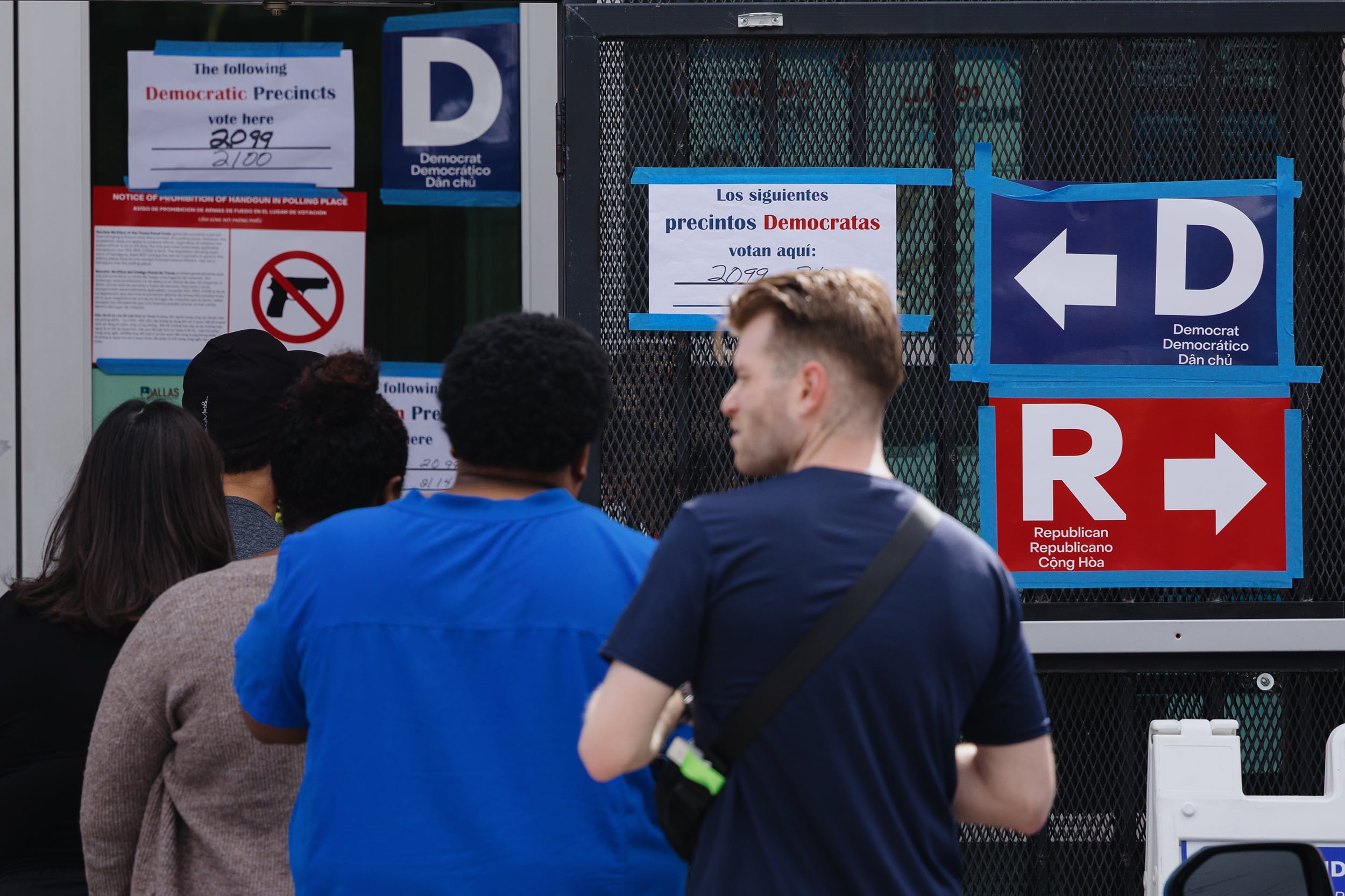
Dallas County Republicans will agree to allow voters to cast ballots at countywide voting sites for the May 26 runoff election after a switch to precinct-based voting sites caused chaos, the county party chair said Tuesday.
Dallas County Republican Chairman Allen West supported the use of precinct-based sites earlier this month, but said using precincts again for the runoff would expose the county party to “increased risk and voter confusion” because the county is planning to use countywide sites for upcoming municipal elections and early voting.
“To then shift for the one day runoff election to precincts would bring about large scale disruption,” West said in a statement.
That’s what critics say resulted from the Dallas GOP’s decision to use precinct sites on Election Day for the primary on March 3.
Under Texas state law, county political parties have the authority to choose how they administer their elections. During the primary, Dallas County Republicans wouldn’t agree to participate in the countywide polling place program, which the county has used for years.
Because both parties must agree in order for countywide sites to be used, both Democrats and Republicans in the county instead had to cast ballots at assigned neighborhood precincts on the day of the election, though the county was still able to offer countywide sites during the early voting period.
Experts and election officials warned the change was likely to confuse voters, and on Election Day, hundreds, potentially thousands, of voters had to be redirected after finding out they were at the wrong polling locations. As polling hours were extended in the wake of the confusion, at least 1,756 Democratic primary voters in Dallas cast late ballots that ultimately weren’t counted. It’s not clear how many Republican primary voters were impacted by the shift. West did not immediately respond to a request for comment.
Republicans still want a separate primary — which means the parties won’t share poll workers and voting equipment — so runoff voters will likely still see separate lines for Republicans and Democrats, according to West’s statement. West said he plans to sign a contract with the county elections department this week to make the change official. He also signaled it isn’t permanent, saying the party successfully executed the primary and can assess lessons learned “and improve upon the process and procedures for March 2028.”
The move by Dallas Republicans and other county parties to eliminate the countywide polling place program for the primary follows a years-long push by Republicans to ditch it entirely.
Republican critics of countywide voting claim it makes elections less secure because it could allow people “to double or triple vote,” though there’s no evidence that countywide voting is less secure. In addition, Texas election officials have procedures in place to prevent double voting, including the use of technology that helps officials know in real time who has voted and where.
The countywide voting program, which has been in use in Texas for more than 20 years, has allowed counties to save money by using fewer polling locations (and fewer workers and equipment) that are centralized for all voters to use.
Natalia Contreras is a reporter for Votebeat in partnership with The Texas Tribune. She is based in Corpus Christi. Contact Natalia at ncontreras@votebeat.org.