Votebeat is a nonprofit news organization reporting on voting access and election administration across the U.S. Sign up for Votebeat Texas’ free newsletter here.
What happened?
Primary ballots cast by Democratic voters in Dallas who got in line to vote after 7 p.m. won’t be tallied, after the county Democratic party Thursday withdrew a lawsuit seeking to have them counted.
Dallas County officials had told Votebeat 1,756 Democratic ballots were in limbo pending the resolution of the lawsuit.
Dallas County Democrats said the party had determined the Texas Supreme Court “is no longer a viable forum for seeking a fair and independent application of the law regarding this issue.”
The Texas Supreme Court has yet to rule on a lawsuit involving ballots cast after 7 p.m. at two Williamson County polling places. That ruling will determine whether 12 ballots in the Democratic primary and 4 ballots in the Republican primary should be counted, county officials said.
What’s the dispute?
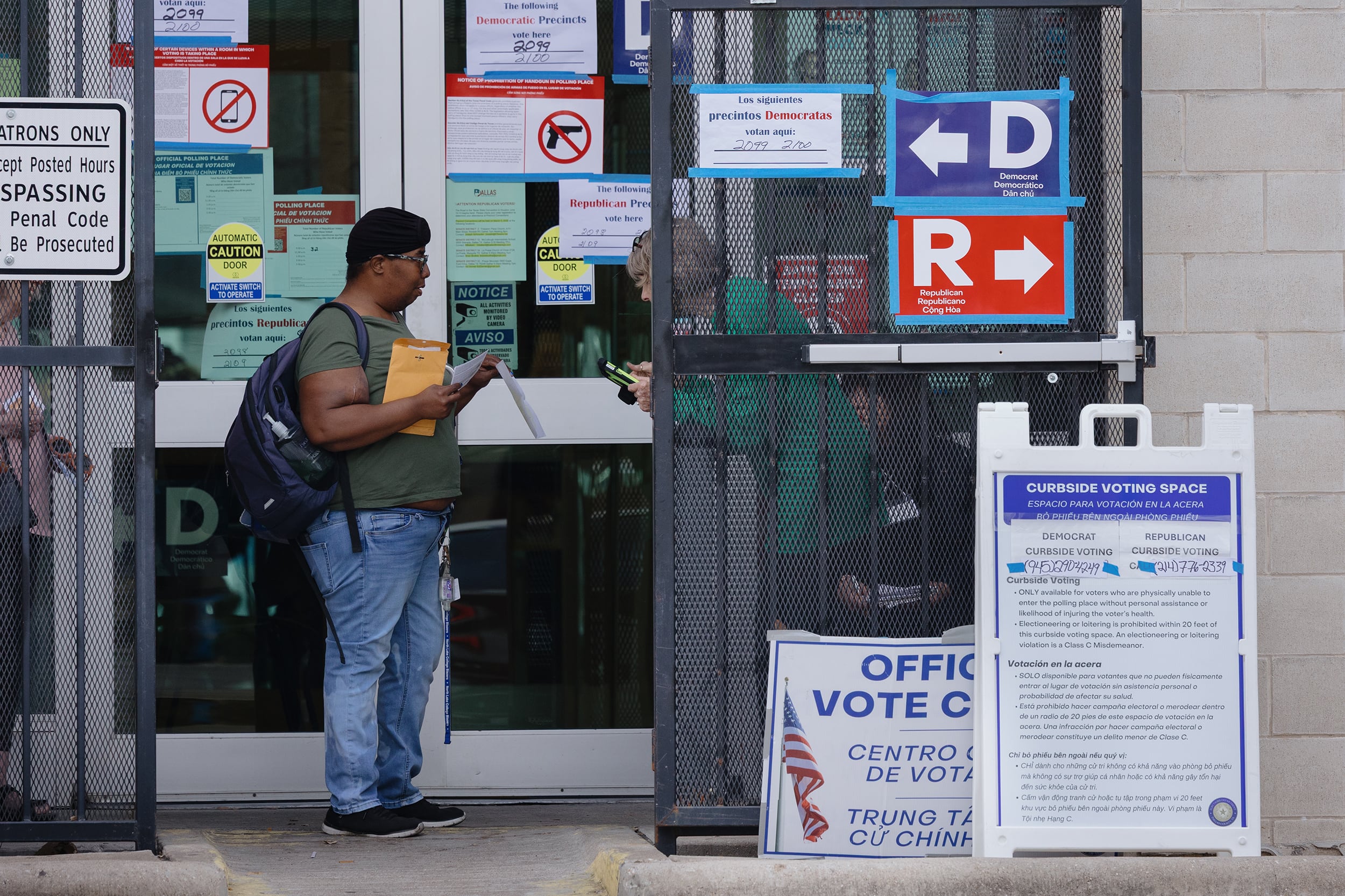
This year, Republicans in Dallas and Williamson counties chose not to use centralized countywide voting locations, as had long been both counties’ practice. That decision came as Republicans statewide have made unfounded claims that countywide voting makes elections less secure. As a result, all voters in those counties — Democratic and Republican — were required to cast ballots at their assigned neighborhood polling places on March 3.
The change confused and frustrated many voters who went to the locations where they typically vote and found themselves being redirected, sometimes to polling places a considerable distance away.
Democrats in both counties asked courts to extend polling place hours, and judges in each county granted the extension. In both counties, voters who got in line after 7 p.m. at polling places covered by the orders were allowed to cast provisional ballots. But Paxton’s office intervened, arguing his office had not been properly notified of the request, and later on March 3, the Texas Supreme Court issued orders instructing the counties to separate any ballots from voters who were not in line by 7 p.m. Those votes were not included in the unofficial results released so far.
Why it matters
The temporary order by the Texas Supreme Court had left unclear whether votes cast by people who arrived after 7 p.m. in both counties would be part of the final vote count.
Read more Votebeat coverage of the Texas primary:
- 2026 primary elections start off with a Texas-sized mess, March 9, 2026
- Calhoun County hand count delayed election results until Friday, March 6, 2026
- Republicans in Eastland County, Texas, hand counted primary ballots well into Wednesday, March 4, 2026
- Hand count leads to primary election result delays in Gillespie County, Texas, March 4, 2026
- Dallas County voters confused by polling place changes for Texas primary election, March 3, 2026
Natalia Contreras covers election administration and voting access for Votebeat in partnership with the Texas Tribune. Natalia is based in Corpus Christi. Contact her at ncontreras@votebeat.org.