

Get insider knowledge about how elections are run across the country. Sign up for Votebeat’s free weekly newsletter and never miss an update.
After two years of worries about whether the Trump administration would interfere with the midterm elections, nothing extraordinary happened on Election Day. The problems that surfaced across the country were largely sporadic and manageable, even typical.
Flooding and severe weather forced a handful of polling places to close and officials to extend voting hours in some areas, while administrative mistakes caused disruptions in places like Milwaukee and Leavenworth County, Kansas. In Westchester County, New York, a programming error disrupted vote tabulation across the county, though voters continued casting ballots.
Those disruptions stood in contrast to the more extraordinary threats that had dominated the run-up to the election. For months, state and local election officials had fought federal intervention, and worried it would escalate. But courts blocked several key administration efforts before Election Day, limiting their impact, including a last-minute attempt to force California to set aside ballots cast by voters the administration suspected were noncitizens. And by Tuesday evening, the most disruptive scenarios officials had contemplated — including concerns that federal agents might appear at polling places — had not materialized, though federal agencies continued issuing warnings about illegal voting Tuesday.
Ultimately, poll workers and election administrators carried out their myriad tasks without federal intervention many feared. DOJ observers, despite a few reports of overstepping in Michigan and New Mexico, did not disrupt polling locations.
“I think this is a partial victory for the reality-based world. The fever dreams never had a realistic possibility of working,” said Justin Levitt, a law professor at Loyola Marymount University in Los Angeles, said of the more audacious assertions of federal authority. Election officials, he said, made that a reality.
“They never should have had to work that hard, and we owe it to them (and us) to make sure it’s never this hard again,” he said in a text message.
In Pennsylvania, Mercer County Election Director Thad Hall called the day “very boring, but with very good turnout.”
That seemed to describe much of the country. In Wisconsin, Milwaukee saw small, fixable errors while the rest of the state reported normal proceedings. In Texas, high interest led to long lines in places like Fort Worth and Denton County, but voters ultimately cast their ballots. And in Arizona, those parts of the state unaffected by severe weather carried on as normal.
The real test of today may be in the weeks ahead. In an interview with the New York Times Tuesday night, Trump said he is “absolutely willing to accept those results.”
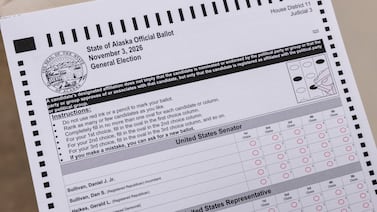
Nonetheless, the U.S Department of Justice has already threatened further litigation over disputed ballots and launched investigations into alleged noncitizen voting, voter-registration records, and possible violations of federal election law connected to the Alaska Senate contest.
And it remains unclear whether Democrats’ strong showing Tuesday will affect the Trump administration’s willingness or ability to pursue its election-related legal challenges and investigations.
“I think it would be really hard to see fraud claims having any traction,” said Joshua Douglas, election law professor at the University of Kentucky. “The voters are speaking pretty clearly.”
There have already been signs of resistance from within the president’s own party.
In New York, Republican Rep. Mike Lawler emphasized bipartisan cooperation to resolve widespread ballot-scanning problems in Westchester County, rather than questioning the legitimacy of the vote. And in Alaska, Republican Sen. Dan Sullivan said he would accept the results even if he lost, despite the Justice Department’s attempt to delay certification of the race. Alaska’s Republican-led state government also opposed that lawsuit, which a federal judge dismissed Sunday.
Jessica Huseman is Votebeat’s editorial director and is based in Dallas. Contact Jessica at jhuseman@votebeat.org.