Votebeat is a nonprofit news organization reporting on voting access and election administration across the U.S. Sign up for Votebeat Wisconsin’s free newsletter here.
A small Wisconsin town whose leaders chose not to use federally required accessible voting machines in two federal elections in 2024 has agreed with the U.S. Department of Justice to use that equipment going forward, the agency announced on Dec. 12.
The town board of Thornapple, a town of 700 people in northern Wisconsin’s Rusk County, made the decision in 2023 but previously declined to elaborate on the reasons behind the decision. Distrust of voting machines, which has grown on the right following false claims about the 2020 election, has fueled a movement to ban them. The Thornapple case, however, shows that municipalities still have obligations under federal law to allow voters with disabilities to cast ballots on electronic machines.
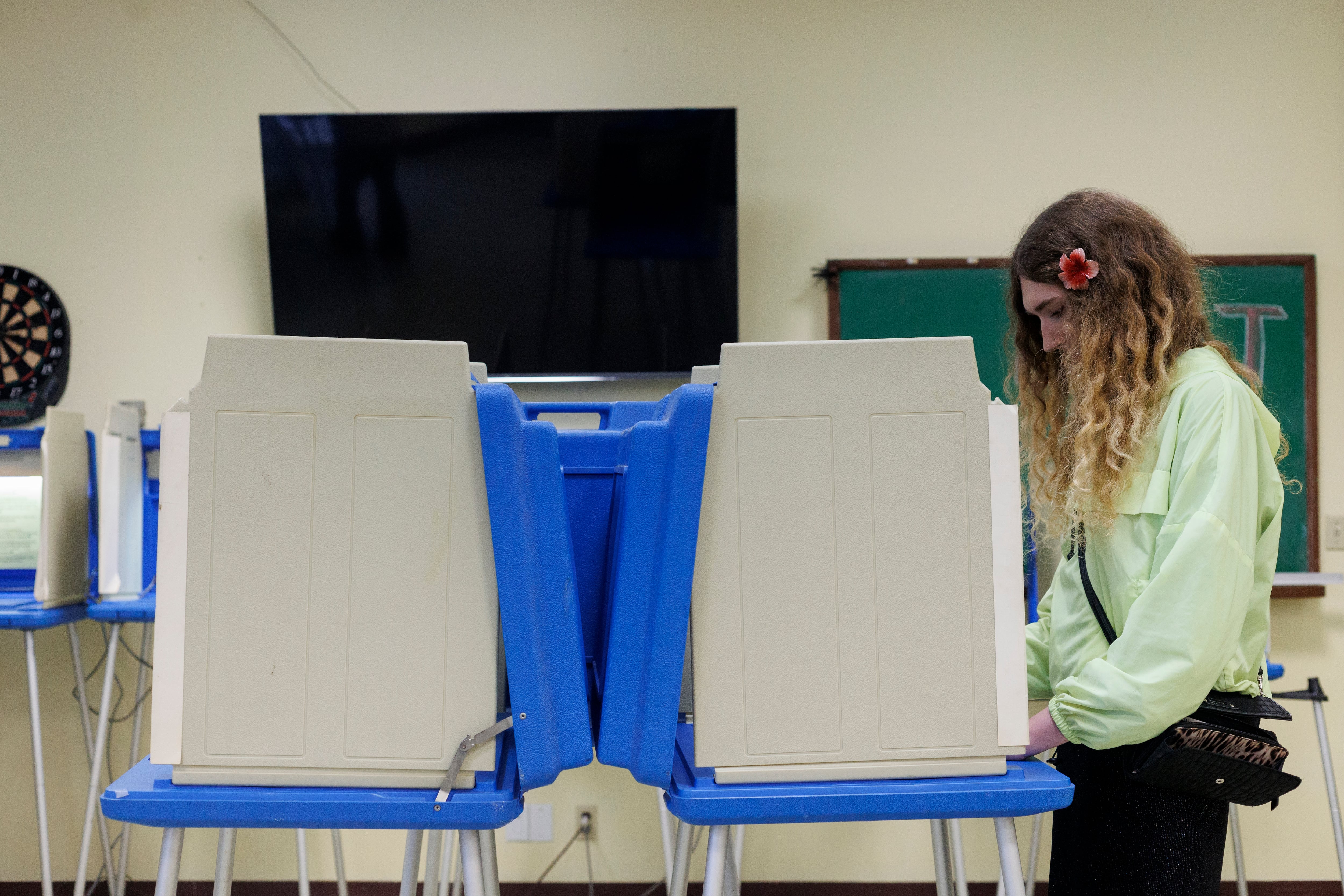
The Justice Department, under then-President Joe Biden, a Democrat, sued the town in September 2024, arguing that its decision violated the Help America Vote Act. The law requires accessible machines be available in every precinct, allowing voters with disabilities to hear the options on the ballot and use a touch-sensitive device to mark it.
The town initially fought the case, arguing that it wasn’t subject to the federal law’s accessibility provision because its use of paper ballots didn’t constitute a “voting system.”
Thornapple officials lost an appeal in July, after the court heard testimony from Thornapple Chief Inspector Suzanne Pinnow about a blind woman who relied on her daughter’s assistance to fill out a ballot, and from a man who had a stroke and who needed Pinnow to guide his hand so he could mark a ballot.
The town settled the case by agreeing to use an accessible voting machine in every federal election. The town also agreed to certify to Justice Department officials after each election that it continues to follow the settlement agreement.
Since President Donald Trump, a Republican, took office in January, the DOJ has withdrawn from multiple voting-related cases and shifted its priorities to suing states, including Wisconsin, for access to unredacted versions of their voter lists, which it has said it needs to ensure compliance with federal law. The department remained in the Thornapple case, however.
Alexander Shur is a reporter for Votebeat based in Wisconsin. Contact Alexander at ashur@votebeat.org.