Votebeat is a nonprofit news organization reporting on voting access and election administration across the U.S.
This news analysis was originally distributed in Votebeat’s free weekly newsletter. Sign up to get future editions, including the latest reporting from Votebeat bureaus and curated news from other publications, delivered to your inbox every Saturday.
Republicans, led by President Donald Trump, have had a lot to say about the rules and laws that govern our elections. Changing them, though, is harder.
House Republicans are signaling plans for legislation to inscribe at least some of the party’s election-administration wish list into federal law, including changes to the landmark National Voter Registration Act that would make it easier to remove ineligible voters from the rolls.
Republicans have long accused states of failing to appropriately clean their voter rolls, and the U.S. Justice Department has filed a host of lawsuits seeking access to unredacted state voter rolls in what government lawyers have said is an effort to make sure states are complying with their obligations under federal law.
Trump issued a sweeping executive order on elections in March, and the White House said last month he is working on a second. But major provisions of the March order have so far been halted by the courts after federal judges found the president lacked the constitutional authority to enact them.
Congressional legislation would be on far firmer constitutional footing, but so far, efforts have stalled. Republicans’ highest-profile election bill — the SAVE Act, which would require documented proof of citizenship from anyone registering to vote — passed the U.S. House in April but has languished in the Senate.
Trump has repeatedly urged senators to eliminate the filibuster, a legislative procedure that effectively requires bills to secure the support of 60 senators rather than a simple majority, in order to pass voter ID requirements and what he described as “voter reform.” So far, though, senators have shown no interest in doing so, meaning election legislation cannot reach Trump’s desk without at least some Democratic support. (Republicans have a 53-47 majority in the Senate, including two independents who caucus with Democrats.)
Witnesses at a congressional hearing on potential updates to the NVRA on Wednesday suggested a different approach that lately has seemed somewhat out of vogue: bipartisanship.
“There was a time when election laws were viewed as an area of cooperation” between the political parties, said Mark Braden, an election lawyer with the firm BakerHostetler who is also a former chief counsel to the Republican National Committee and the Ohio Election Commission. That cooperation, he said, “is vital to the confidence in the process.”
Sophia Lin Lakin, director of the American Civil Liberties Union’s Voting Rights Project, echoed the sentiment, though the two weren’t advocating for the same policies. “I urge Congress to return to its bipartisan tradition of strengthening our voting system by advancing measures that expand access and improve accuracy,” such as same-day and automatic voter registration and more federal funding for election administration, she said.
Despite those calls, there have been no signs of an emerging bipartisan bill on elections. Rather, Republican members of Congress at the hearing repeatedly highlighted what they said is the need to clarify and tighten the standards election officials around the country use to remove ineligible voters from voter rolls.
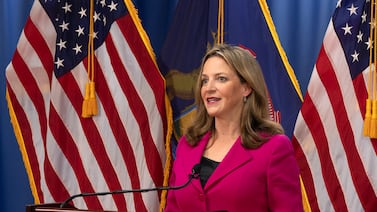
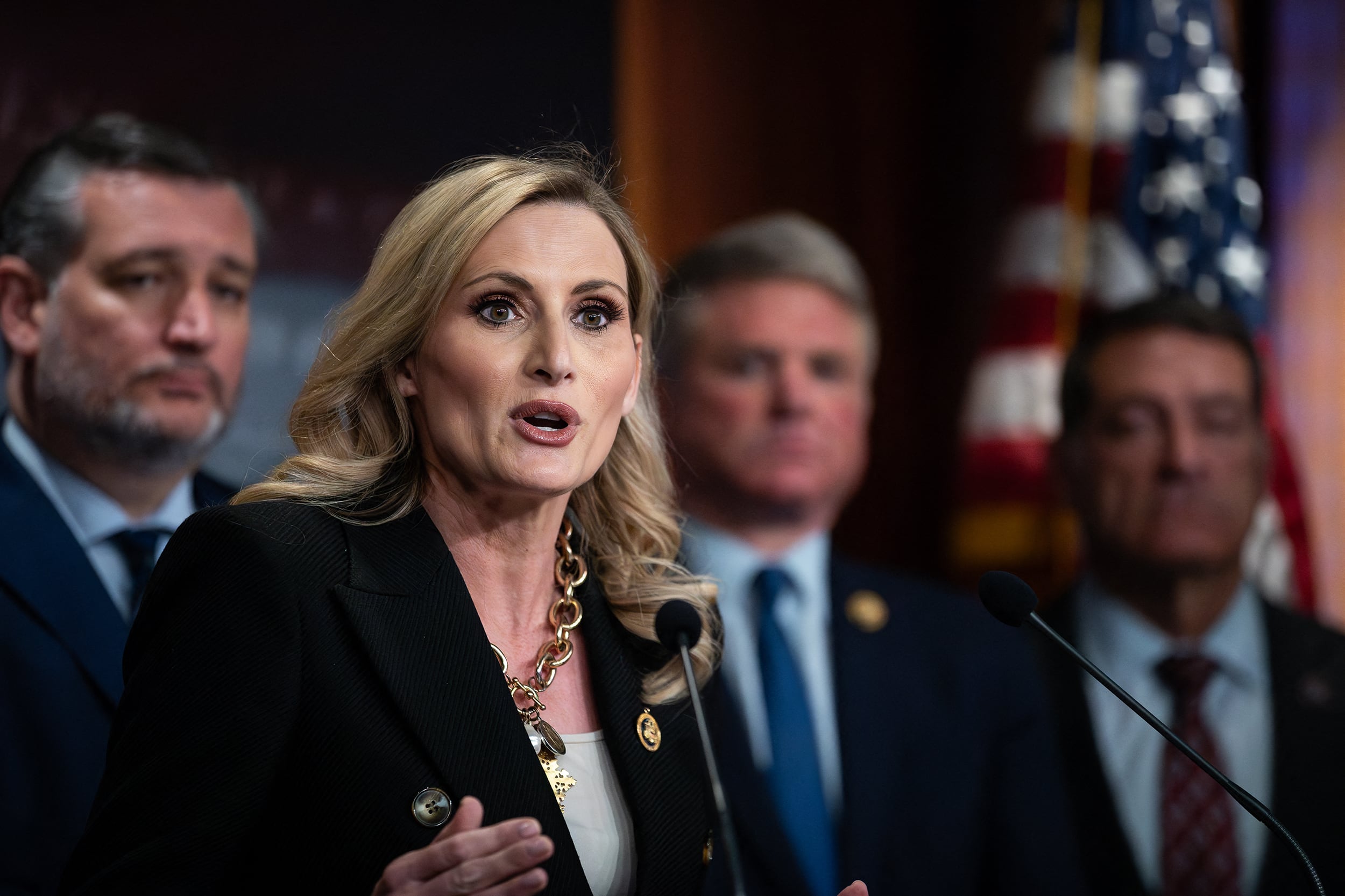
“Election officials benefit from clear and unambiguous laws which will help them to carry out their duties and to ensure voter lists are accurate and up to date,” said Rep. Laurel Lee, a Republican and former Florida secretary of state who chairs the election-focused House subcommittee that held the hearing.
Another witness, Michael Morley, a professor at the Florida State University College of Law and the faculty director of the FSU Election Law Center, brought up potential changes to the NVRA that could eventually wind up in legislation.
While many people exaggerate the extent to which noncitizens vote, he said, “it is reasonable for the public to expect steps to be taken to ensure noncitizens are not inadvertently added to the voter registration rolls.” The NVRA could be amended to allow states to request information reasonably related to confirming an applicant’s eligibility, he said. He also suggested that states could be required to use a database maintained by the U.S. Citizenship and Immigration Services to search for potential noncitizens on voter rolls. Although several states have taken advantage of the database, which the Trump administration recently overhauled and made easier to use, they are not currently required to do so, and some election officials have raised questions about its accuracy and privacy protections.
The NVRA currently prohibits state election officials from systemically removing ineligible voters within 90 days of a federal election. Morley said that between the primary and general elections, that restriction adds up to a considerable portion of time and could potentially be shortened.
Witnesses also touched on a host of other things, including the importance of clean voter lists in states that use mail ballots, and it isn’t clear what might ultimately make it into legislation. Or, without the bipartisan support that witnesses talked about, law.
Carrie Levine is Votebeat’s editor-in-chief and is based in Washington, D.C. Contact Carrie at clevine@votebeat.org.