Votebeat is a nonprofit news organization reporting on voting access and election administration across the U.S. Sign up for our free weekly newsletter to get the latest.
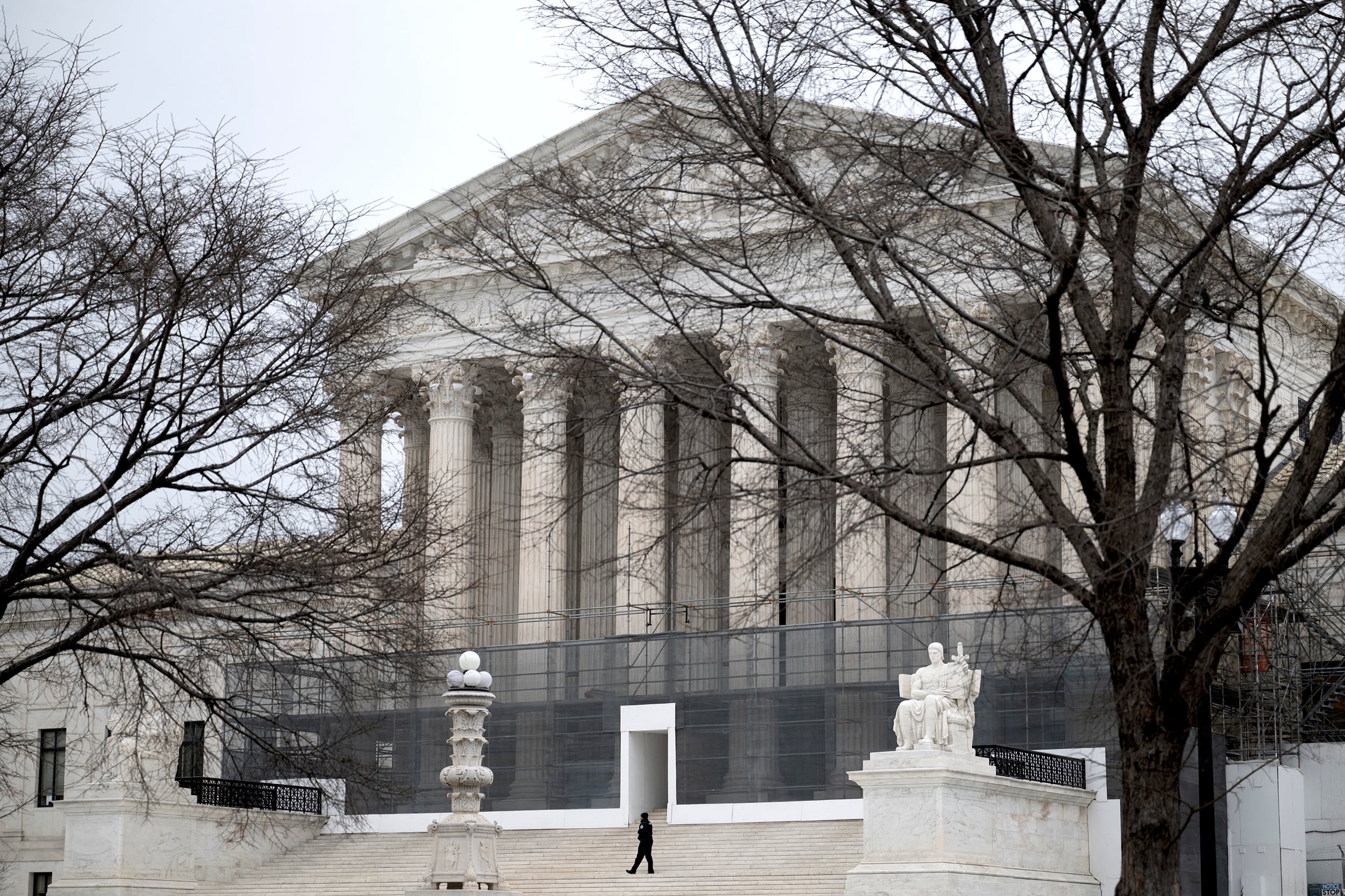
Candidates for office are entitled to challenge the rules governing how votes are counted in their elections, the Supreme Court ruled in a 7-2 decision Wednesday, making it easier for candidates to bring such lawsuits.
“Candidates have a concrete and particularized interest in the rules that govern the counting of votes in their elections, regardless whether those rules harm their electoral prospects or increase the cost of their campaigns,” Chief Justice John Roberts wrote in the majority opinion.
Roberts wrote that requiring candidates to show “a substantial risk” that an election rule would cause them to lose an election could force them to wait until closer to an election to bring a lawsuit, which causes other problems.
The Supreme Court, he wrote, has repeatedly said lower courts should not alter rules close to an election. “Such late-breaking, court-ordered rule changes can result in voter confusion and undermine confidence in the integrity of electoral processes. The democratic consequences can be worse if courts intervene only after votes have been counted.”
Multiple legal experts said the ruling is likely to increase the already skyrocketing number of election law cases. But they stressed that, more importantly, it should prompt candidates to bring any legal challenges well before the election, as opposed to close to Election Day or afterward.
“Candidates shouldn’t sit on complaints about an election and see how it goes,” said Rick Hasen, a professor at UCLA Law School and an expert on election law. “They should sue as early as they can if they see a problem.”
Derek Muller, an election law professor at Notre Dame Law School, agreed. “We should want to make sure the rules are fair and known ahead of time,” he said.
The ruling is a victory for U.S. Rep. Michael Bost, an Illinois Republican who sued over a state law allowing the counting of mail ballots received up to two weeks after Election Day, as long as they are postmarked by Election Day. Bost argued the Illinois statute violates a federal law setting a uniform day for federal elections.
A lower court had dismissed the case, ruling that Bost, who easily won his election, did not have standing to sue because he had not suffered a “concrete” or “particularized” injury.
The justices ruled only on the question of whether Bost could sue, not on the merits of his case about counting mail ballots. The Supreme Court is expected to rule directly on whether mail ballots can be accepted after Election Day in a separate case out of Mississippi later this term.
Justices Samuel Alito, Clarence Thomas, Brett Kavanaugh, and Neil Gorsuch joined Roberts’ majority opinion. Justice Amy Coney Barrett, joined by Justice Elena Kagan, wrote a concurring opinion agreeing with the outcome, but saying they would have found Bost had standing “because he has suffered a traditional pocketbook injury” — specifically, the costs his campaign incurred in tracking the late-arriving ballots — and not because of his status as a candidate. Justices Ketanji Brown Jackson and Sonia Sotomayor dissented.
Outside the court, sentiment about the case did not break down neatly along ideological lines. Several civil rights groups usually identified with liberal causes, including the League of Women Voters and the American Civil Liberties Union, had urged the justices to side with Bost and find that candidates do have standing to sue.
Carrie Levine is Votebeat’s editor-in-chief and is based in Washington, D.C. Contact Carrie at clevine@votebeat.org.