Votebeat is a nonprofit news organization reporting on voting access and election administration across the U.S. Sign up for Votebeat Arizona’s free newsletter here.
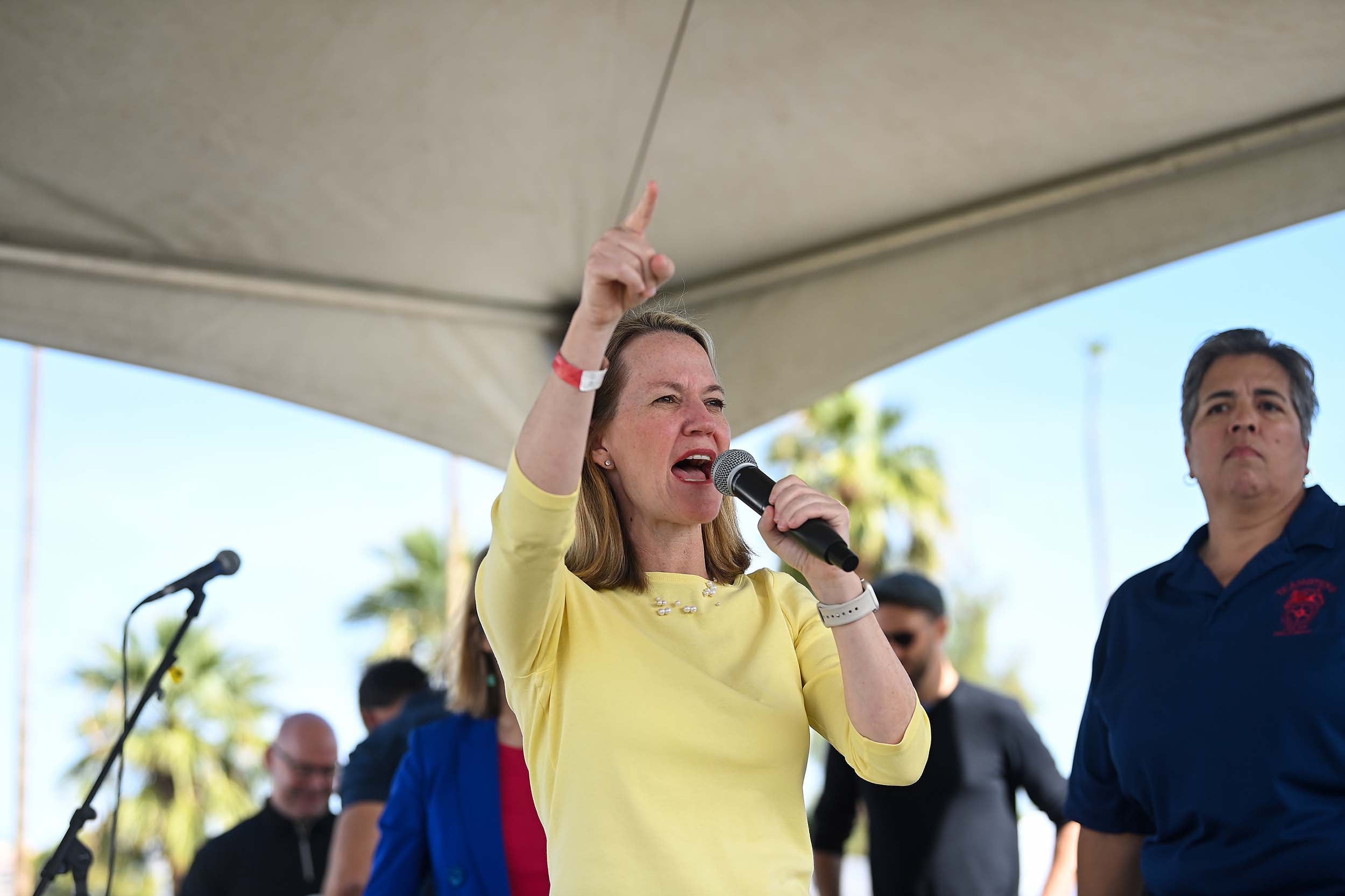
The Arizona Supreme Court won’t review lower court rulings that crippled Attorney General Kris Mayes’ fake electors case, leaving the prosecution of 18 people who attempted to overturn the state’s 2020 election results in limbo.
The case is one of several that arose in the aftermath of the 2020 election when allies of President Donald Trump, who lost the election, tried to install him anyway. Those people, who became known as fake or false electors, attempted to cast electoral votes for Trump in multiple states he lost and submit those certificates of votes to Congress.
In Arizona, those people — alongside other Trump allies — were later indicted on felony charges of fraud, conspiracy, and forgery. Their case has been on pause since Maricopa County Superior Court Judge Sam Myers sent it back to a grand jury last year, ruling that prosecutors had failed to provide a full copy of the relevant federal election law before the original jurors handed down their indictments in April 2024.
Mayes, a Democrat, unsuccessfully appealed the decision, which would have effectively forced a re-do of the case. Then, she asked the state’s top court to take up the matter.
In the wake of the Arizona Supreme Court’s ruling, Richie Taylor, a spokesperson for Mayes, said in a statement that her office would “return this case to the grand jury.”
But the high court’s decision suggests that case is now likely to stretch into 2027 or 2028. Mayes faces reelection this year. Her GOP opponents — Arizona Senate President Warren Petersen and military attorney Rodney Glassman — have both pledged to drop the case if they take the attorney general’s office.
The ruling comes as similar cases in other key swing states also flounder. In Georgia, prosecutors dropped their fake electors case last year. In Michigan, Attorney General Dana Nessel announced in March that she wouldn’t appeal a ruling dismissing her state’s fake electors case. In Nevada, a judge is set to issue a decision on a fake electors case later this month, but seemed skeptical of the charges during court hearings.
Meanwhile, Wisconsin’s fake electors case is moving forward. Attorneys who represented fake electors there are set to be arraigned later this month.
Sasha Hupka is a reporter for Votebeat based in Arizona. Contact Sasha at shupka@votebeat.org.