Votebeat is a nonprofit news organization reporting on voting access and election administration across the U.S. Sign up for Votebeat Michigan’s free newsletter here.
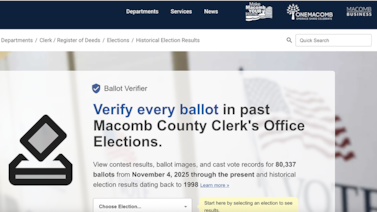
Macomb County has begun to post online an image of every ballot cast in the pivotal swing county.
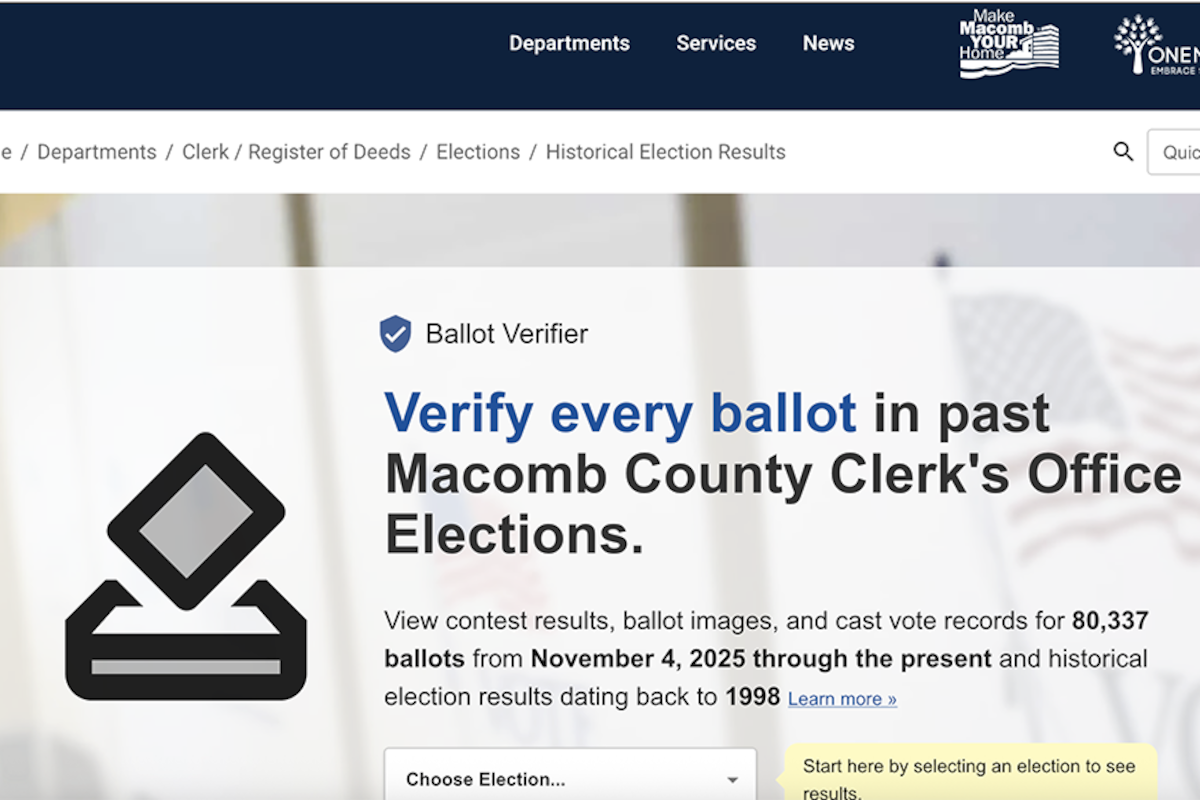
The county, Michigan’s third most populous, is using a program called “Ballot Verifier” to upload scans of every ballot cast for anyone to see. More than 80,000 ballots from the November 2025 election are already online, as is the “cast vote record,” which shows how tabulators read each ballot.
Images of cast ballots — which do not include a voter’s name, address, party affiliation, or other identifying information — are already public record and can be requested through local officials. Putting them online simply improves transparency, Macomb County Clerk Anthony Forlini said.
“We all wonder, when we put our ballot in, ‘did it score it the right way?’” Forlini told Votebeat. “This takes a little bit of the mystery out of it and adds a little bit of accountability for all of us.”
The premise is simple: Let voters see the ballots, and they can judge the results for themselves. Since Michigan votes on paper ballots, that means anyone can see the sometimes wacky ways people fill in bubbles by hand — an X where a bubble should be, a rant scrawled next to a candidate’s name — right alongside write-in candidates, undervotes, and all the other markings that show the full range of voter intent.
Macomb County plans to post images going back through the November 2024 election and will include future elections in the program as well, Forlini said. He is running for secretary of state as a Republican.
Ballot Verifier caught his attention about a year ago, he said, after he saw how it worked. It’s been used in a few counties around the country in the past few years. In Ada County, Idaho, which adopted it about two years ago, elections director Saul Seyler said the program “has helped build public confidence.”
The program helped address election distrust at the roots, Seyler said. Ada County — Idaho’s most populous county and home to Boise — has worked to improve trust for years, including offering constant livestreams of the facilities where ballots are handled and adding more windows when remodeling their offices.
Ballot Verifier, he said, offered the chance for voters to ensure that the machines had counted their ballots correctly. Officials brought out some of the department’s “harshest critics” to provide feedback on the tool, Seyler said, and even they found it useful.
“Realistically, probably 95% of the public won’t ever use the tool, but there is something to the fact that it’s available,” he said. “There’s a confidence that gets built just by knowing it’s there.”
It has required some minor tweaks to protocol to ensure voters don’t accidentally violate their own right to a secret ballot. The county changed their ballot language, for instance, to make clear that ballots are public records and that voters shouldn’t leave identifying marks.
Voter privacy is one of the greatest concerns about such programs. Michigan voters have a right to a secret ballot. Maintaining that is key, said Mark Lindeman, policy and strategy director at Verified Voting, because ballot secrecy laws exist to protect voters from coercion or vote buying. Stray marks or seemingly random write-in choices can still tie a ballot directly to a voter, he said.
He pointed to the 2008 Minnesota Senate election recount, where a ballot that included several write-in spaces marked with “Lizard People” was not counted because canvassers agreed with a challenge characterizing it as an identifying mark, which goes against Minnesota’s laws.
Election officials need to find a “transparent way” to reject the ballots images that are “most blatantly potentially identifiable,” Lindeman said, which can look different depending on the ballot and an election’s circumstances.
In Ada County, officials tried to address the potential issue by working with Civera, the company that produces Ballot Verifier, to ensure that voters are “masked” if something about their ballot would identify them, meaning it won’t be made publicly available. It’s not unheard of for only a single voter in a precinct to get a specific combination of taxing districts on their ballot, for example, and officials wanted to make sure that ballot would still remain private.
That and other workflow changes can add yet another step to “an already kind of chaotic time,” Seyler said, but he believes the change has already saved Ada County money: he said the published ballot images and cast vote records have prevented at least two recounts by allowing potential challengers to review records without having to file for one.
“This can not only be a resource to help build trust, but it can also just help you operationally,” he said.
Hayley Harding is a reporter for Votebeat based in Michigan. Contact Hayley at hharding@votebeat.org.