Votebeat is a nonprofit news organization reporting on voting access and election administration across the U.S. Sign up for Votebeat Texas’ free newsletter here.
Early voting is now underway in Texas for the Nov. 3 midterm elections. Texans had until Oct. 5 to register to vote. But two recently discovered backlogs of voter registration records caused by state errors have flooded the offices of election officials who process that paperwork.
If a registration is not processed by the time a voter shows up to cast a ballot, their name may not appear in the list of registered voters at the polling place. But those voters can still vote by casting a provisional ballot.
Here’s what to know about casting a provisional ballot in Texas:
What is a provisional ballot?
Federal law requires that provisional ballots be offered to any voter whose eligibility is uncertain, such as a voter who isn’t appearing on the list of registered voters due to an administrative error.
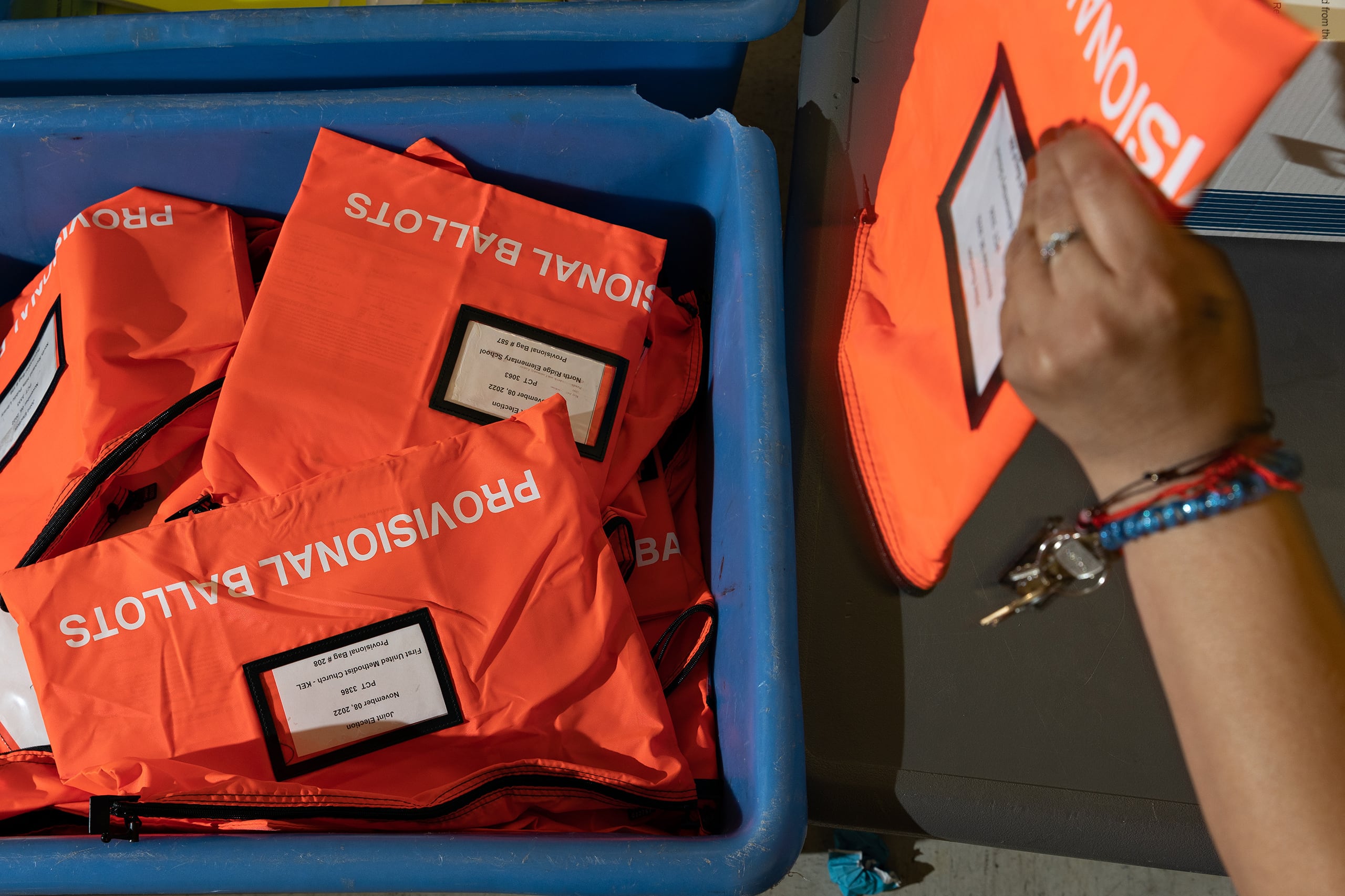
Provisional ballots are kept separate from all other ballots until after the election. Election officials then determine whether the voter is eligible to vote and whether the ballot should be counted.
Provisional ballots in Texas are offered during both early voting and on Election Day.
In Texas, who is offered a provisional ballot?
There’s a long list of circumstances under which a voter will be offered a provisional ballot instead of a regular one. It includes:
- A voter believes they are properly registered to vote, but does not appear on the list of registered voters and the voter registrar’s office is unable to immediately verify the voter’s registration status.
- A voter is on the precinct list of registered voters, but their registered residence address is outside the political subdivision in which the voter is seeking to vote.
- A voter is registered to vote but attempting to vote in a different precinct from where they are registered.
- A voter does not provide an acceptable form of identification.
- A voter’s name on their identification is not substantially similar to the name on the official list of registered voters.
- A voter’s identity cannot be verified by the identification presented.
- A voter has received a disability exemption, but does not have a Voter Registration Certificate indicating such exemption.
- A voter has applied for a ballot by mail, but has not yet properly canceled the mail ballot application.
- A voter votes during polling hours that are extended by a state or federal court.
What do provisional ballot voters have to do at the polling place?
Voters who agree to cast a provisional ballot will be asked additional questions by the election judge — the person supervising the polling location — to gather details election officials can later use to determine whether the voter is eligible. For example, if a voter isn’t appearing on the list of registered voters, the election judge might ask when and how the voter registered. If the voter registered through the Texas Department of Public Safety while obtaining or updating their driver’s license or state ID, election officials will make note of that to help them investigate the problem with the voter’s registration. (The state uncovered a backlog of hundreds of thousands of voter registration updates held up by that DPS driver’s license portal last month, though the backlog was reportedly cleared up by mid-October.)
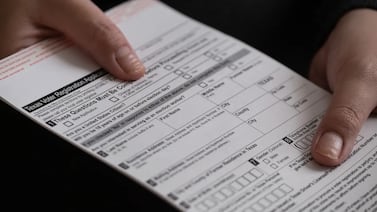
Voters will also be required to sign an affidavit that will act as a new voter registration form. The election judge will also fill out a form indicating the reason the voter is casting a provisional ballot. Both the voter and the election judge will sign the forms.
How are provisional ballots cast?
Once the voter and the election judge fill out all required forms, voters will head to the voting booth to cast their ballot just like everyone else at the polling location. In most counties, voters will mark their choices using an electronic ballot marking device. Some counties use paper ballots that voters mark by hand.
Once the voter is finished making their selections, the voter’s ballot must be placed in an envelope. Election workers keep it secure in a sealed container, separate from regular ballots. The ballots are then delivered to the county’s election officials for review.
Who determines whether a provisional ballot is counted or not?
During early voting and in the days after Election Day, county voter registrars will review their records in connection with any provisional ballots cast. They’ll determine whether the voter was actually registered by the deadline, and whether there’s any missing information that the voter might need to provide.
That information, combined with the notes and information gathered by the election judge at the polling place, is then delivered to the Early Voting Ballot Board — a group of people appointed by the county elections board that includes members of both political parties. The group is tasked with processing mail-in ballots to ensure they contain all the required information voters need to submit, and they also make determinations on provisional ballots.
How do I know whether my provisional ballot was counted?
Voters will be mailed a notice around two weeks after Election Day informing them of the determination made by the Early Voting Ballot Board.
Local election officials must conduct the canvass of votes — the official review and certification of votes that were counted — between Nov. 6 and Nov. 17. According to the Texas election code, election officials must deliver a written notice of the outcome of provisional ballots “no later than the tenth day after the local canvass.”
The notice must state whether a voter’s ballot was counted. If it was not counted, the notice must include the reason why it wasn’t. If the voter has additional questions, the notice will include contact information for local election officials.
Natalia Contreras covers election administration and voting access for Votebeat in partnership with the Texas Tribune. Natalia is based in Corpus Christi. Contact her at ncontreras@votebeat.org.