Votebeat is a nonprofit news organization reporting on voting access and election administration across the U.S. Sign up for Votebeat Wisconsin’s free newsletter here.
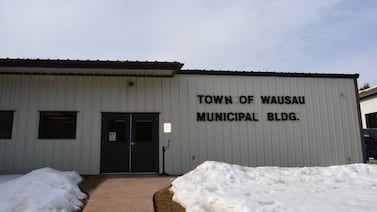
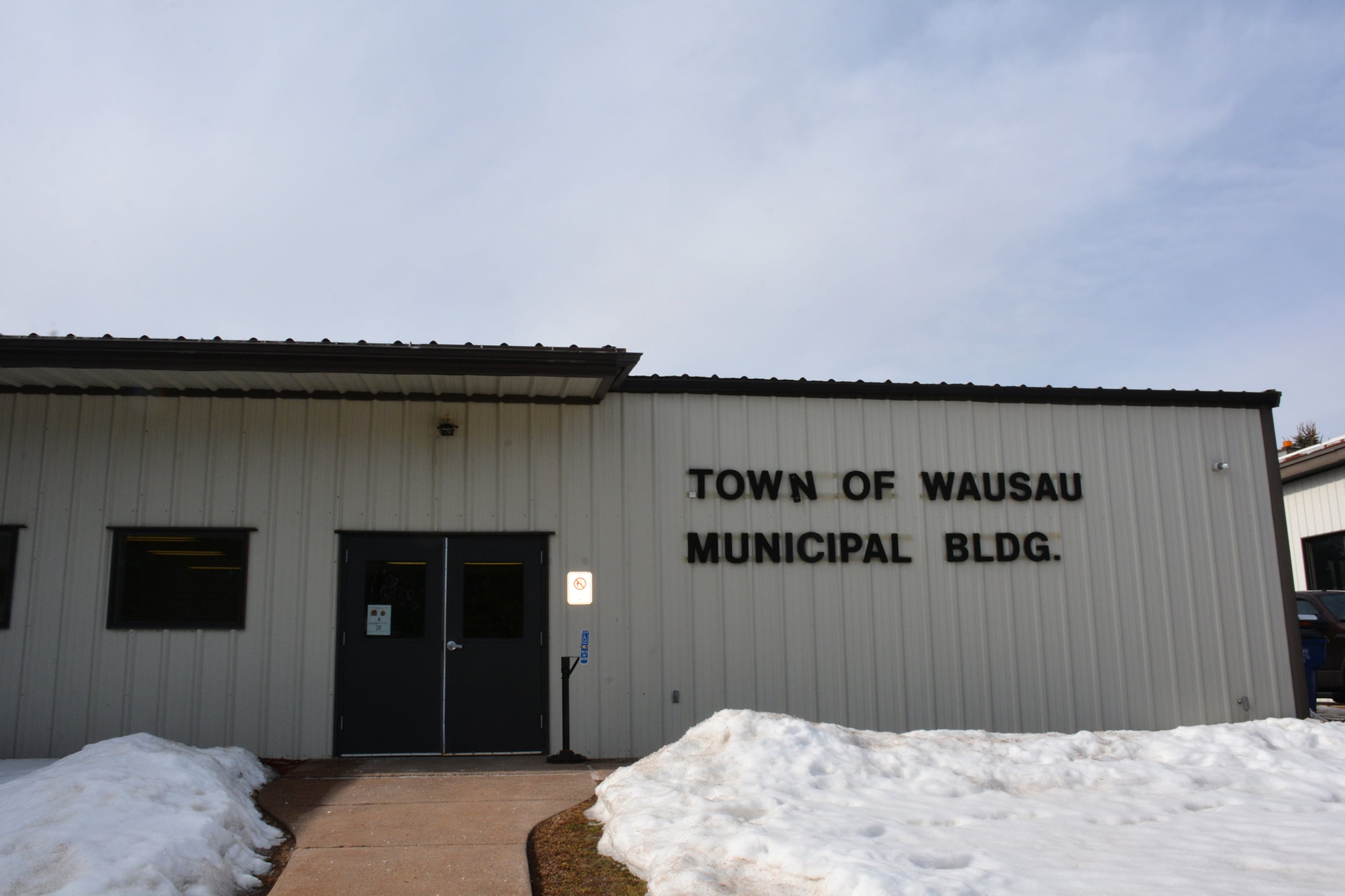
TOWN OF WAUSAU — Inside the mostly empty town hall on County Road Z last week, a handful of voters cast ballots in wooden booths for a school board race. The biggest question on the minds of local election officials wasn’t who would win — it was who would run elections next year.
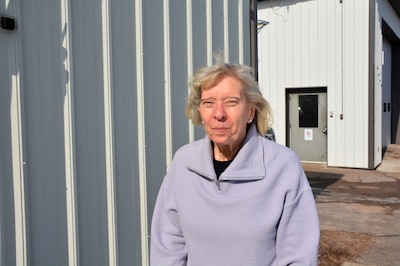
After two clerks left within a year, longtime town supervisor Sharon Hunter stepped in because no one else would. Hunter’s term ends next April. Nomination papers for a potential successor are due in January 2027, but local officials still don’t know who comes next.
“Sharon’s not going to do 29 years,” Deputy Clerk Amy Meyer said, referring to the long tenure of the clerk who resigned in late 2024, setting off the cascade of brief replacements.
Hunter, 72, laughed. “I’d be over 100 years old,” she said. “I don’t think you want me here with my walker.”
Hunter’s decision to step up in a town of 2,200 may seem insignificant. But Wisconsin’s election system — one of the most decentralized in the country — depends on people like her. The state requires each of its 1,850 municipalities to run its own elections. That means hundreds of local clerks are needed to keep the system running. By contrast, Texas, a state with nearly five times Wisconsin’s population, relies on county-level election offices and has about one-sixth as many local election officials.
That structure leaves Wisconsin unusually dependent on small-town clerks. Between 2020 and 2024, more than 700 municipal clerks here left their posts, the highest turnover by raw numbers in the nation. As rural communities age and fewer residents are willing or able to take on an increasingly complex job, replacing them has become harder — raising questions about how long the state’s hyper-local model can hold.
The system can absorb one vacancy. It strains under dozens. Elections get stitched together, paperwork piles up, and the quiet machinery of local government — licenses, payroll, meeting notices — shifts its weight onto whoever is left.
Meyer, 55, understands why people don’t want the job — she doesn’t want it either. Like her mother, she has worked elections in town for much of her adult life. She considered becoming clerk, but it wasn’t the right time. She doesn’t want residents coming to her house with ballots or questions, as they once did under the longtime clerk.
“There comes a point in the day where I want to turn my phone off,” Meyer said from the town hall, situated at the center of loosely stitched county roads dotted with ranch homes and small farms, some of them no longer in operation. “I don’t want to hear that your garbage didn’t get picked up, or your neighbor’s dog is barking,” she said. “I just don’t.”
In a small town, the clerk is often the first call for everything from election deadlines to everyday complaints — and the learning curve is steep.
“It’s going to take you practically the first year to learn everything,” Meyer said. “Now, we have somebody new in it, and we have spent half the term relearning.”
Older residents have long filled these roles, but clerks say the job has grown more demanding, with little added support. It is often thankless work for modest pay. In Wausau, the clerk earns about $27,000 a year with no benefits.
Even so, many residents remain committed to keeping elections at the town level. Hunter said preserving local control was her biggest reason for stepping in, though she has not decided whether to seek another term.
“But we do need to have someone coming after me,” she said. “Because I am old.”
In an aging town, succession is unclear
The rural town of Wausau sits just east of the City of Wausau, a community of about 40,000 that began as a logging town in the 1830s and now centers on manufacturing and a burgeoning ginseng farming industry. As the city has grown, the town has increasingly become a bedroom community, as its lower property taxes attract commuters. A handful of farms remain, but the town is less agricultural than it once was.
Its population is slowly growing — and steadily aging. That’s because retirees also make up a large and growing share of the town’s residents. Its median age has climbed by roughly a decade since 2000 and now hovers around 50 — a decade older than the statewide average. The town still must run elections, issue licenses, and post meeting notices. What’s less certain is who will do it.
Here, as in many communities nationwide, the responsibility will likely fall to older residents. Nationally, nearly 70% of chief election officials are 50 or older, according to the Elections & Voting Information Center. In Wisconsin, that share climbs to almost 80%, with the oldest officials concentrated in the smallest jurisdictions.
One poll worker, knitting pink yarn during a lull between voters, said at 71 she was too old to take on the clerk’s job. She had encouraged a younger neighbor to consider it, she said, but the woman had just given birth.
Wausau’s shift reflects a broader reality in rural Wisconsin: The state built a system that depends on hundreds of small-town clerks and their deputies — a structure rooted in an era when farms were multigenerational, churches were full, and civic roles widely shared. That foundation is thinning. About a quarter of Wisconsin’s farms closed between 2002 and 2022, and churches are aging and shrinking. Volunteer fire departments and other local services report persistent staffing shortages.
There is no sweeping rural exodus. Rural counties are mostly growing, largely because retirees are staying or moving in. Wisconsin’s population is projected to age most rapidly in its rural communities, according to UW-Madison’s Applied Population Lab.
Originally from nearby Birnamwood, Hunter moved to the town of Wausau in the 1970s and has worked in public service ever since. For four decades, she wrote federal grants and helped low-income youth map out their futures through the Wisconsin Department of Public Instruction.
Her entry into town government came by accident. Upset over a town decision to pave the ends of some residents’ driveways, but not hers or her neighbors’, she ran for town treasurer. What began as frustration became a career: She spent 10 years as treasurer and two decades as a supervisor.
Her path shifted again after the former town clerk, Cindy Worden, retired after 30 years on the job. Supervisors appointed a replacement, but she left after two weeks because of a terminal cancer diagnosis. The next clerk resigned within months, overwhelmed by balancing the duties with a full-time job and raising a family.
As the town searched for a clerk, Hunter and fellow supervisor Steve Buntin, a retired auto mechanic, filled in. Supervisors listed the job on Facebook and the town website. Potential candidates declined. Some didn’t want the scrutiny of elections, and others resisted the administrative grind.
At one point, county officials offered to step in to run elections and charge about $1,000 per election. That was Hunter’s turning point, though stepping into the role meant giving up her vote on the town board — a sacrifice she did not take lightly.
“After you start, you kind of get hooked,” Hunter said. The residents might be “ornery most of the time,” but helping them navigate difficult choices is public service. “It’s in your blood.”
She can return to being a supervisor if someone else steps up as clerk, but, as Buntin put it, “nobody seems to be knocking down the door.”
Last April, the town asked voters to allow clerks to be appointed rather than elected, which would have permitted hiring someone from outside town limits. The referendum failed narrowly. A new state law has since made it easier for small municipalities to switch to appointments, but the town has yet to make the jump.
“You still have to have somebody come forward who wants to be a clerk,” Meyer said. “Just because the state law changed doesn’t make it all that easy.”
Clerks are hard to recruit, and harder to retain
Wausau sits in Marathon County, home to about 130,000 people. To run elections for that population, the county depends on roughly 60 separate municipal clerks — one in each city, village, and town — layered beneath its elected county clerk. In most similarly sized counties elsewhere, such as St. Joseph County, Indiana, or Frederick County, Maryland, a single county office oversees elections for everyone.
There’s little appetite to abandon Wisconsin’s structure. Local clerks argue decentralization limits errors and keeps elections in familiar hands. But filling dozens of posts — and keeping them filled — is no easy task. Of the 13 new municipal clerks who have taken office in Marathon County since the April 2025 election, including Hunter, four resigned within months, County Clerk Kim Trueblood said. Since then, a fifth clerk — in the City of Wausau — has also stepped down.
Trueblood attributes part of the churn to recruitment practices that understate the job. Town and village chairs often approach potential clerks by describing the work as little more than taking meeting minutes.
“Then they get into a job, and it’s the elections, it’s all of the financial reporting, the liquor licenses, everything that they have to do — it’s just overwhelming,” she said. “And people who work a full-time job and have families, I don’t know how they do it.”
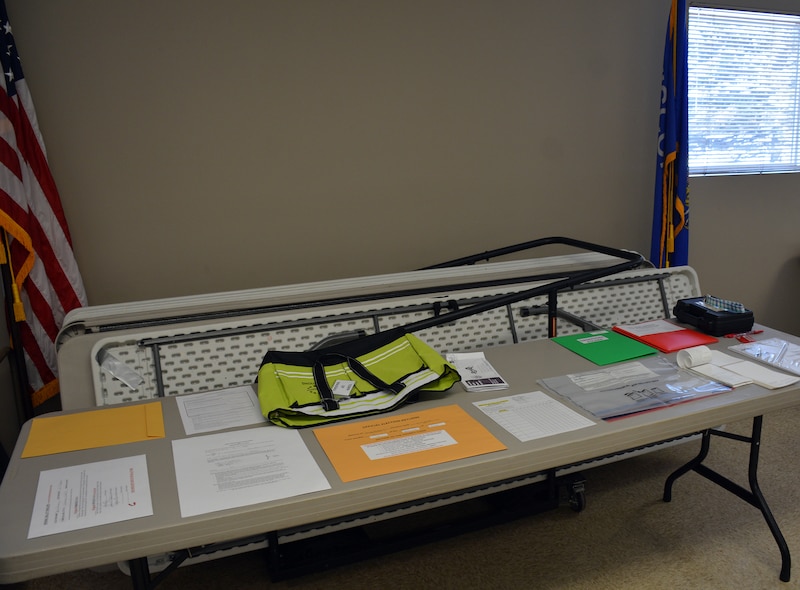
The pay rarely offsets the demands. In the town of Wausau, the clerk makes $27,628 per year plus a $1,000 mileage stipend, with no benefits. The job can require 10- to 20 hours a week — and far more around elections — covering everything from meeting notices and licenses to payroll and ballot administration.
Other municipalities in Marathon County pay far less. Kelley Blume, the clerk in the town of Marathon who’s also a deputy clerk for the county, earned just over $10,000 for her town role in 2025. During election seasons, she said, the hours stretch late into the night.
When she was first approached for the job about 10 years ago, she said town officials told her it would only be a couple of hours per week.
“It’s not a couple hours,” she said. “I feel bad for all of these new clerks that think it’s going to be easy.”
She is considering stepping down. The added responsibilities have grown heavier each year, she said, and she wants to spend more time with her children and grandchildren.
Waiting for the next name on the ballot
Hunter says she stepped in to preserve something she believes is worth protecting: the idea that elections should be run by people who know the roads and the names on the ballot, who know which farm sits beyond the bend and which houses were built last year. To her, local government isn’t an abstraction. It’s a neighbor answering the phone.
“I do feel local government is critical, and I would hate to see that be taken away from the residents,” Hunter said. “It’s important they have a voice, and it starts at their local government.”
She knows the structure is imperfect, but pride in local control runs deep here, even as the pool of residents willing to shoulder the work grows thinner. Ultimately, she said, the town may have to bend. Communities could share clerks or other services, even if that means loosening borders that have long felt fixed.
She’ll decide later this year whether to run again. If she doesn’t, she said, the town may take another vote on hiring clerks outside of town limits. In the meantime, she has no regrets about stepping up — even if nobody in town seems ready to follow her lead.
“It’s my civic duty,” she said.
Alexander Shur is a reporter for Votebeat based in Wisconsin. Contact Alexander at ashur@votebeat.org.