Votebeat is a nonprofit news organization reporting on voting access and election administration across the U.S. Sign up for our free weekly newsletter to get the latest.
In any given election, a whole lot of people handle the ballots and voting equipment. So how does a ballot stay secure and countable after it’s left the voter’s hands?
That’s possible thanks to a critical safeguard in election administration called the chain of custody. The chain of custody is a huge part of why voters can trust that their ballots are counted exactly as they intended.
Voters may not give much thought to this process, but if you’re concerned about the security of your ballot and the integrity of your vote, here’s a full explanation of how the chain of custody works.
What is the chain of custody?
The chain of custody is the process that ensures election materials are handled properly and by the correct people at every step, between when ballots are printed and when everything is put into storage after the election. It involves a prodigious amount of documentation of who is handling election materials, when, and what they do with them.
As the U.S. Election Assistance Commission noted in a 2021 report, “it is a best practice for chain of custody procedures to be clearly defined in advance of every election, well documented and followed consistently throughout the entire election lifecycle or process.”
It can seem tedious, but every link in the chain helps keep the election on track, and every piece of documentation makes it possible to retrace election officials’ steps.
How do election officials maintain the chain of custody?
The chain of custody starts long before a voter even sees their ballot. When blank ballots arrive from the printers, election workers document how many were received and when they arrived. When workers take voting machines out of storage, they write down their serial numbers and note their condition.
To make sure no unauthorized people can access these sensitive materials, election administrators often seal their offices (or wherever the materials are stored) starting at the very beginning of election season, when the first blank ballots arrive from the printers. That means many officials spend weeks redirecting packages or even cleaning their own offices to ensure no non-election officials, such as postal workers or custodial staffers, walk in.
From there, it is a matter of keeping intense and highly specific records whenever election materials are moved, such as when ballots and voting machines are taken to precincts on Election Day. And when a new person in the chain takes possession of the materials, they consult those records to make sure the chain is still intact, said Tina Barton, senior election expert at the Elections Group and a former election official.
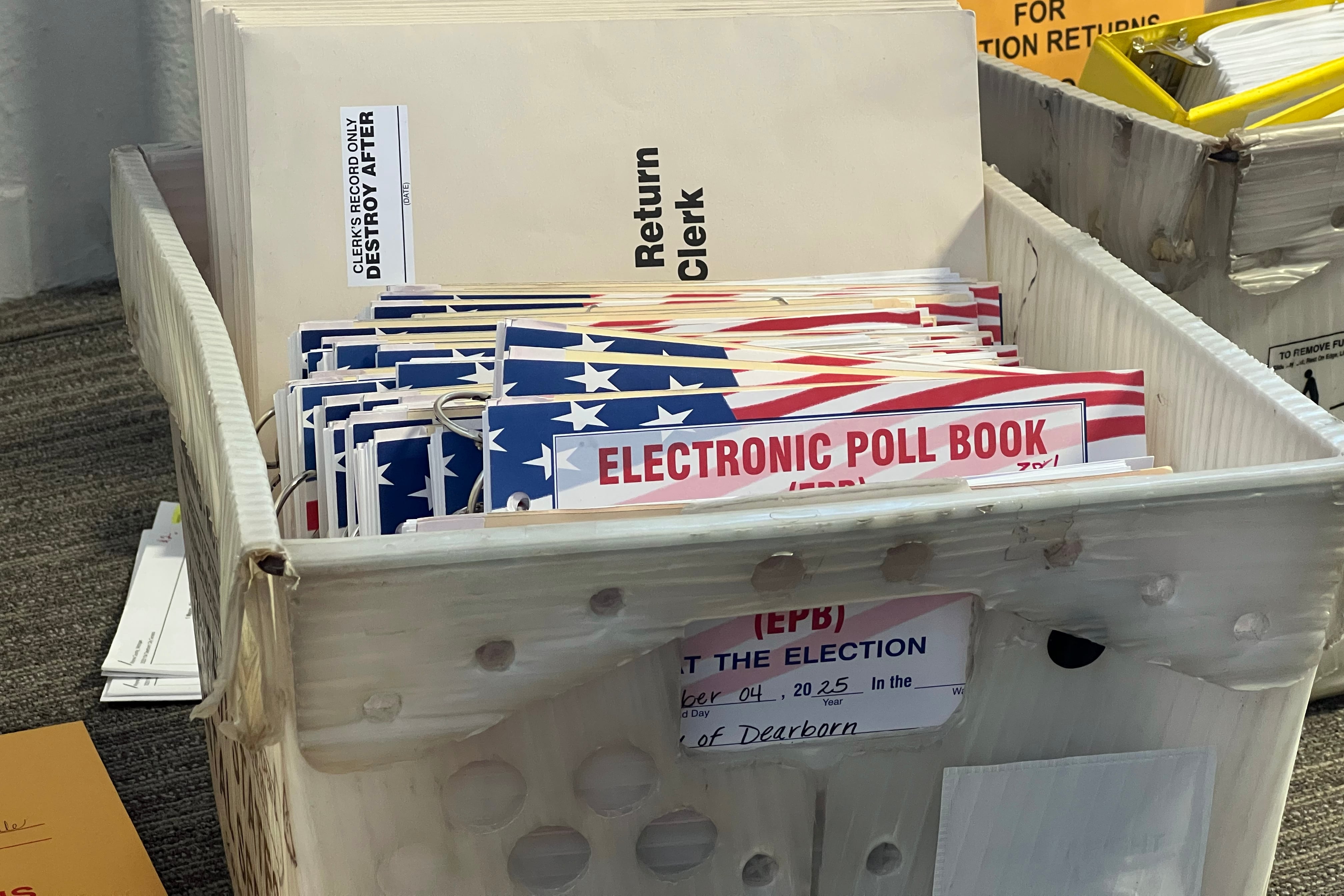
For instance, in Barton’s home state of Michigan, the pollbook for each precinct includes the serial numbers of that precinct’s voting machines, as well as the number from the machine’s locking seal (basically a stronger version of a zip tie, with an identifying number on it). When pollworkers arrive on Election Day morning, they compare the numbers in the pollbook with the numbers on the machine and seal. And if there are any irregularities — boxes that have been opened, for instance, or equipment that had to be changed out — they document them.
At each subsequent step in the process, documents are added to the record. Poll workers generally take note of who hands a ballot to which voter when, how the voter’s identity was verified, and any other factors that may be important.
After voting is completed, election officials seal the ballots in secure containers, noting the number of the seal and, often, other details such as the time and who is handling it. Depending on local rules, officials keep track of who is moving ballots, where they are going, what time they arrive, who is tabulating them, and so on. After ballots are tallied, witnesses sign paperwork to attest that the count was done properly. Any discrepancies between the number of ballots issued and the number counted? Documented. Any irregularities seen? Noted. Any errors at any step in the process? Recorded.
Once the ballots are all counted, election workers again seal them in secure containers, document the details thereof, and put the containers into storage. The warehouses where the ballots are stored are typically controlled by a small number of local officials who hold on to each piece of documentation for as long as is required by state and federal law.
Who is responsible for maintaining the chain of custody?
Importantly, almost nothing in the chain of custody involves one person working alone. Ballots are typically handled by groups of election officials working together, for instance. In many places, forms demand signatures from multiple people.
“Nearly every single thing we do in the election world is done in teams of two at minimum,” Barton said. “You’re not only documenting, but you have someone else who’s affirming it.”
Many states require such paperwork to be signed by two people from opposing political parties to add additional strength to such attestations. It’s one of Barton’s favorite things about elections, she said — that, even in an increasingly polarized nation, elections are an opportunity for people from both major parties to come together and sign off on the election.
Why does the chain of custody matter?
Keeping tabs on where ballots are at every step in the process ensures the integrity of an election from start to finish. It also helps the public feel more confident in the election result.
“It’s critical both to make sure that every eligible vote is counted and also to make sure that nothing interferes with, whether intentional or accidental, the security of the vote,” said Kathy Boockvar, president of Athena Strategies and formerly the top election official in Pennsylvania.
Maintaining the chain of custody is important for ensuring that no one is able to tamper with the ballots or any of the machinery, giving voters more than just blind trust that the election was secure.
“What we want to do is have as many checks on the process, as many eyes on the process, through different stages before certification,” Boockvar said. “Those layers of checks and reconciliations and confirmation that you know the numbers match to the extent possible — all those steps help strengthen the process and should give confidence to voters.”
Maintaining a strict chain of custody also helps with auditing election results, if needed. Officials going back to double-check ballots after the election — for recounts, for example — can find exactly what they’re looking for based on the documentation and know who was tasked with what at every step.
What if the chain of custody breaks?
Officials agree that breaks in the chain of custody are typically rare, but they do happen. Elections are run by humans, Boockvar noted, and humans sometimes make mistakes.
There are a variety of ways the chain can break. In one Michigan city, for instance, the chain of custody for 37 ballots was broken when non-election officials walked into the office where voted ballots were. In Maine, a number of ballots were mistakenly delivered in September to a private residence instead of to city officials. Mislaid paperwork can cause problems, as can car accidents or simple human forgetfulness.
It’s impossible to avoid every single problem, but best practices generally recommend adding documentation “at multiple points” during tabulation, as the EAC noted in its 2021 chain of custody report. That way, if there are problems, they can be caught more quickly and election officials can explain them and act accordingly. In Boockvar’s words, “it’s important as a means to track sources of error, help identify ramifications, and target resolution.”
When the chain of custody is not maintained, voters can be disenfranchised through no fault of their own. In the Michigan example, for instance, those 37 ballots were not included in the certified election results.
Hayley Harding is a reporter for Votebeat based in Michigan. Contact Hayley at hharding@votebeat.org.