Votebeat is a nonprofit news organization reporting on voting access and election administration across the U.S.
This news analysis was originally distributed in Votebeat’s free weekly newsletter. Sign up to get future editions, including the latest reporting from Votebeat bureaus and curated news from other publications, delivered to your inbox every Saturday.
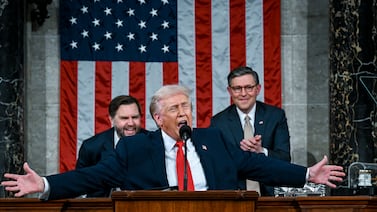
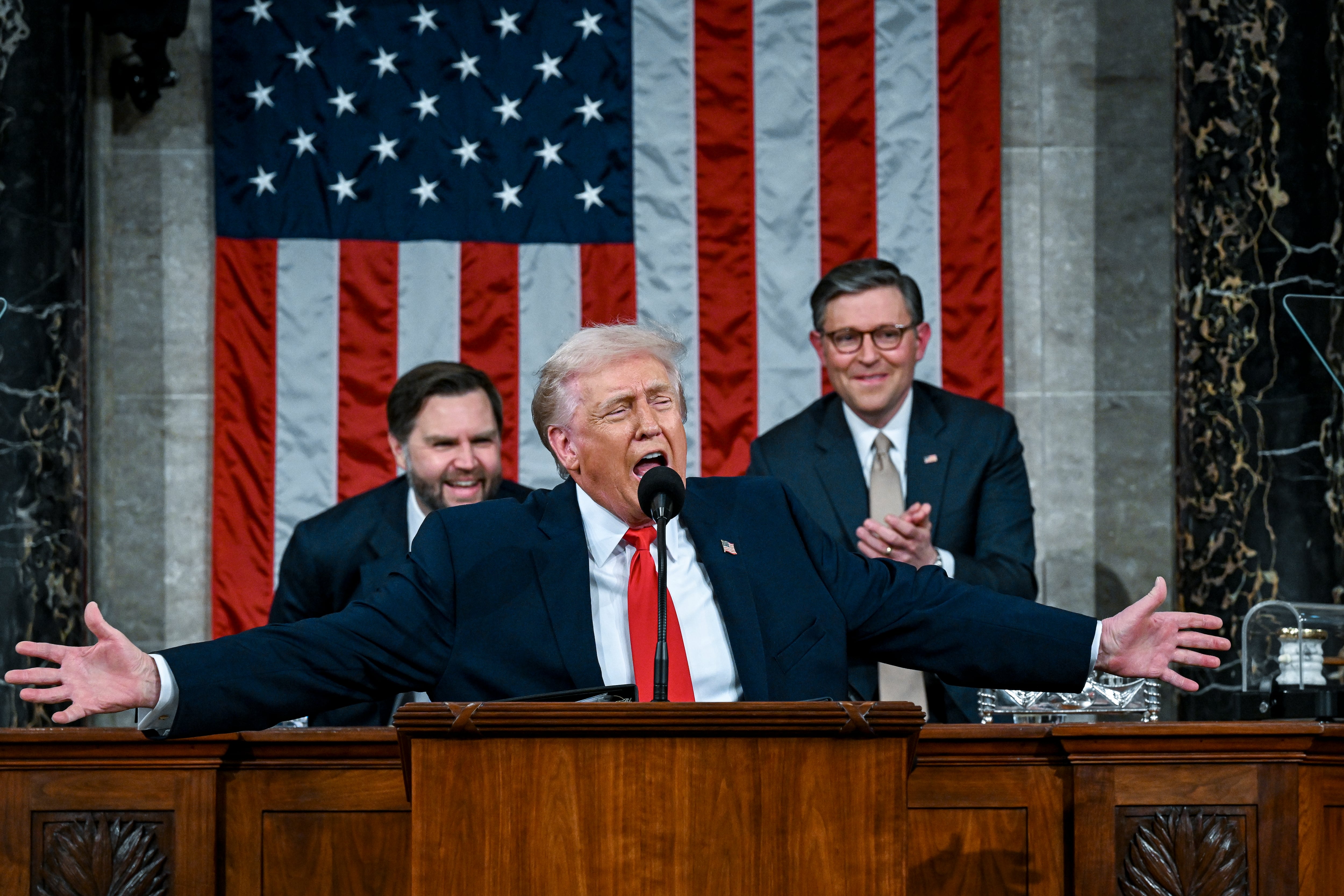
When President Donald Trump called on Congress to pass a bill mandating voter ID and proof of citizenship during his State of the Union speech Tuesday night, it was one of many moments that prompted Republican lawmakers to stand and applaud.
But when he followed that up with “no more crooked mail-in ballots except for illness, disability, military, or travel — none,” the applause was less vigorous. Some of those standing and applauding sat down.
Trump’s latest broadside against mail ballots (it’s far from the first one) is interesting given that the SAVE America Act, the bill Trump specifically called on Congress to pass, wouldn’t institute the limits on mail voting that Trump called for. Despite that, Trump has repeatedly suggested that it would.
Polls have found bipartisan support for the bill’s voter ID and proof-of-citizenship requirements. But it’s clear there’s markedly less support for restricting the use of mail ballots, even from many Republican politicians. “Utah has an exemplary mail-in voting system” that is “administered very well and is vital for our rural communities,” Rep. Blake Moore, a Utah Republican, told the Deseret News this week. A focus group conducted during the speech found that independent voters didn’t like Trump’s call for mail ballot restrictions, either.
The president has a long history of railing against the use of mail ballots (even though he’s voted by mail himself) and suggesting without evidence that Democrats use them to cheat in elections. But if he were to get his way, it would force millions of Americans — Democrats and Republicans alike — to find a new way to vote. In 2024, nearly 47 million Americans cast mail ballots that were ultimately counted, according to data tracked by the U.S. Election Assistance Commission. And multiple studies have found mail voting doesn’t benefit one party over the other.
Another major GOP elections bill, the Make Elections Great Again Act, does have provisions to limit mail voting — but even it wouldn’t go as far as Trump is proposing. That bill would ban the counting of mail ballots received after Election Day (that’s also at issue in an upcoming Supreme Court case), prohibit states from mailing ballots to voters who hadn’t specifically requested them, and place new limits on who is permitted to return a voter’s ballot on their behalf. The bill has yet to pass either chamber of Congress.
The SAVE America Act, by contrast, has already passed the House. On Tuesday night, Trump increased what has been his steady pressure on the U.S. Senate to act. “Congress should unite and enact this common-sense, country-saving legislation right now, and it should be before anything else happens,” he said.
Nearly all Democrats have opposed the SAVE America Act, arguing the new requirements, especially for proof of citizenship, will disenfranchise voters. Trump, though, without offering evidence, said Democrats oppose the bill because “they want to cheat. They have cheated. And their policy is so bad that the only way they can get elected is to cheat and we’re going to stop it.”
Then, seeming to directly address Senate Majority Leader John Thune, he added, “We have to stop it, John.”
But it takes 60 votes to break a filibuster in the Senate, and Republicans have just a 53-47 majority in the chamber. Proponents of the SAVE America Act have called on Thune to change the filibuster process for the bill from an on-paper hold to a literal talking filibuster, requiring Democrats to hold the floor and speak continuously in order to block a vote on it. However, that course of action could consume weeks of Senate floor time, and, this week, Thune said that wasn’t happening either.
It isn’t clear what happens next. Many people in Trump’s orbit seem determined to overhaul U.S. elections by whatever means necessary, and the president himself has suggested that if Congress fails to codify the election changes he’s called for, he’ll put them in place through an executive order.
Most legal experts, though, say the president has no legal authority over elections, and federal courts have largely blocked key provisions of his previous executive order on elections, including those to tighten proof-of-citizenship requirements. Trump suggested in a recent social media post that his next legal argument would be “irrefutable,” though he didn’t provide any details. There has, however, been speculation for months that he will in some way invoke emergency powers based on claims of foreign interference in U.S. elections.
Either way, preparations for the 2026 midterm elections are well underway, and primaries begin Tuesday. Voters, it turns out, have been using mail ballots for weeks already.
Carrie Levine is Votebeat’s editor-in-chief and is based in Washington, D.C. Contact Carrie at clevine@votebeat.org.