Votebeat is a nonprofit news organization reporting on voting access and election administration across the U.S. Sign up for Votebeat Arizona’s free newsletter here.
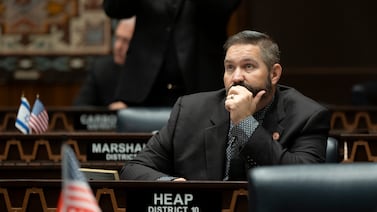
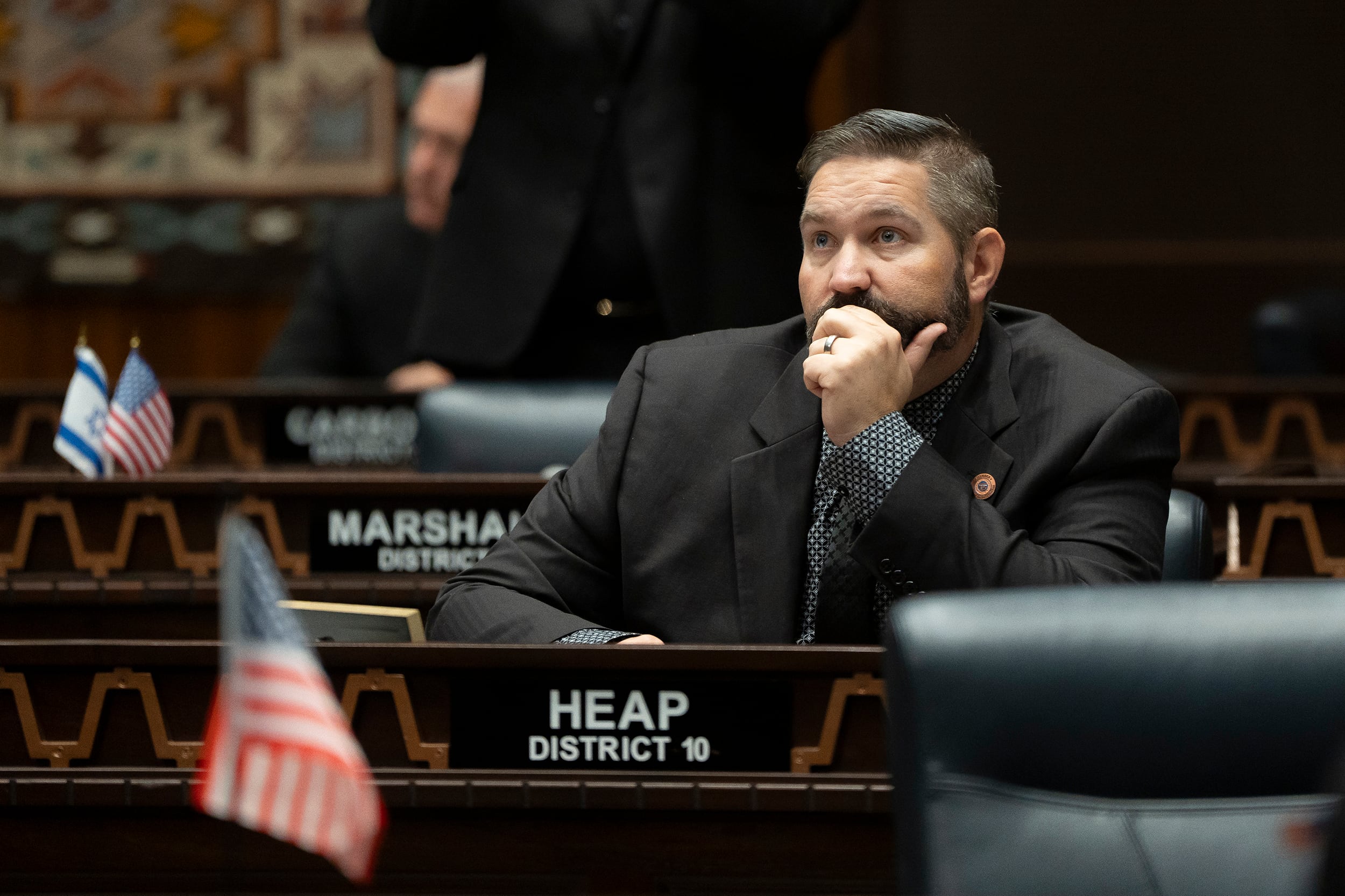
Maricopa County Recorder Justin Heap claimed last week that his office had identified 137 noncitizens on the county’s voter rolls — but that number may be inflated, as the database he used to arrive at it has a history of inaccuracy.
In a press release, Heap’s office said it identified the noncitizens while attempting to confirm the citizenship status of 61,681 voters impacted by a longstanding state coding error by running them through a digital database maintained by the U.S. Department of Homeland Security. It said the database confirmed the citizenship of 58,782 of those voters, or 95% of them, but flagged 137, or 0.2%, as noncitizens. Of those, it said 60 had voted in prior elections.
But experts have long warned that the system that the office used — called Systematic Alien Verification for Entitlements, or SAVE — is unreliable. A ProPublica investigation found that the system provided incorrect information to at least five states. In Texas, election officials in several counties found it had identified people as noncitizens who had already proved their citizenship to the state Department of Public Safety.
It’s unclear whether Maricopa County attempted to weed out false positives from its data. Judy Keane, a spokesperson for the recorder’s office, declined to answer questions about whether staff took any additional steps to confirm the voters’ noncitizenship status beyond running their names through SAVE.
The recorder’s office said it had referred the alleged noncitizens who had previously cast ballots to the Maricopa County Attorney’s Office and the Arizona Attorney General’s Office. Both offices declined to comment on whether they would investigate. The recorder’s office also did not answer questions about whether it sent notices to the flagged voters offering them a chance to prove their citizenship before making the referrals, as required by state law.
Calli Jones, a spokesperson for the Arizona Secretary of State’s Office, said her office was not aware that county officials were using the SAVE database to identify noncitizens. She added that it was “imperative” for officials to independently research voters’ citizenship status before taking steps to cancel their registration, and said her office will contact the recorder’s office to determine whether those procedures were followed.
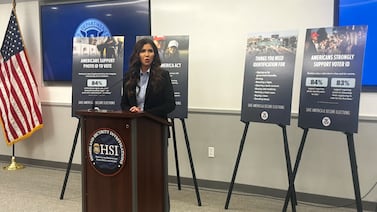
The recorder’s office’s announcement came hours after Heap, a Republican, appeared at a news conference held by Homeland Security Secretary Kristi Noem in Scottsdale. As a state lawmaker, he aligned with some of the farthest-right members of the Arizona House, and during his 2024 campaign for county recorder, he said there were “inconsistences and illegalities that happened” in prior elections. In last week’s press release, he framed his use of the SAVE system and his collaboration with the federal government as a move to ensure “election integrity.”
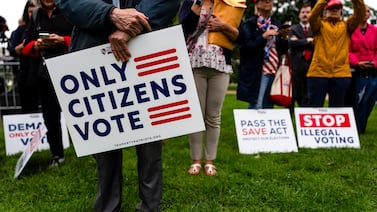
But in other states, Republican election officials’ initial estimates of noncitizen voters have often been found to be too high. For example, Iowa Secretary of State Paul Pate claimed in October 2024 that he had identified more than 2,000 noncitizens on his state’s voter rolls. Later, that number was revised down to 277. Officials in Texas, Missouri, and other states have been forced to make similar corrections.
“There have been times when a handful of election officials have acted highly politically in order to feed a narrative about fraud, and their claims so far have not withstood even minor scrutiny over time,” said David Becker, executive director of the Center for Election Innovation and Research. He added that “claims made without transparency about methodology,” like Heap’s, should “be taken with a giant mountain of salt.”
One of the reasons that estimates of noncitizens are often inflated is that false matches are common — often, several voters living in the same state, county, or city have similar names and the same date of birth. Plus, each year, hundreds of thousands of people become naturalized citizens, and they rarely take steps afterward to update their status with various government agencies. And when they do, government systems are often slow to update.
The SAVE system was initially designed in the 1980s to check immigrants’ eligibility for public benefits. In Arizona, election officials have sometimes used it to verify a registrant’s citizenship. State law mandates that county recorders “use all available resources to verify the citizenship status” of those registering to vote without providing a passport, birth certificate, or similar document.
But the system long required specific identification numbers that local officials didn’t have for most voters. It also couldn’t verify the citizenship status of U.S.-born citizens.
That changed last year, when the Department of Homeland Security revamped the tool to add citizenship data for U.S.-born citizens and allow states to upload thousands of names to it at once. However, the rush to turn SAVE into a voter verification tool made it prone to errors, ProPublica reported.
In light of that, Becker said he suspects the recorder’s office’s claim about noncitizens on the voter rolls is “a vast overstatement that will shrink significantly under further scrutiny.”
“Even taking his investigation at face value — which I think is probably questionable — the rate of noncitizen voting in Arizona is minuscule,” Becker said. “I think the recorder just proved that Arizona is doing a great job of keeping noncitizens off its voter lists.”
Sasha Hupka is a reporter for Votebeat based in Arizona. Contact Sasha at shupka@votebeat.org.