
Votebeat is a nonprofit news organization reporting on voting access and election administration across the U.S.
This news analysis was originally distributed in Votebeat’s free weekly newsletter. Sign up to get future editions, including the latest reporting from Votebeat bureaus and curated news from other publications, delivered to your inbox every Saturday.
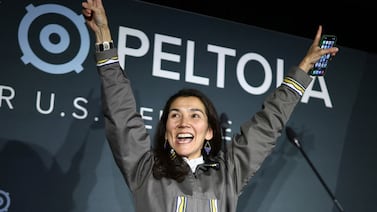
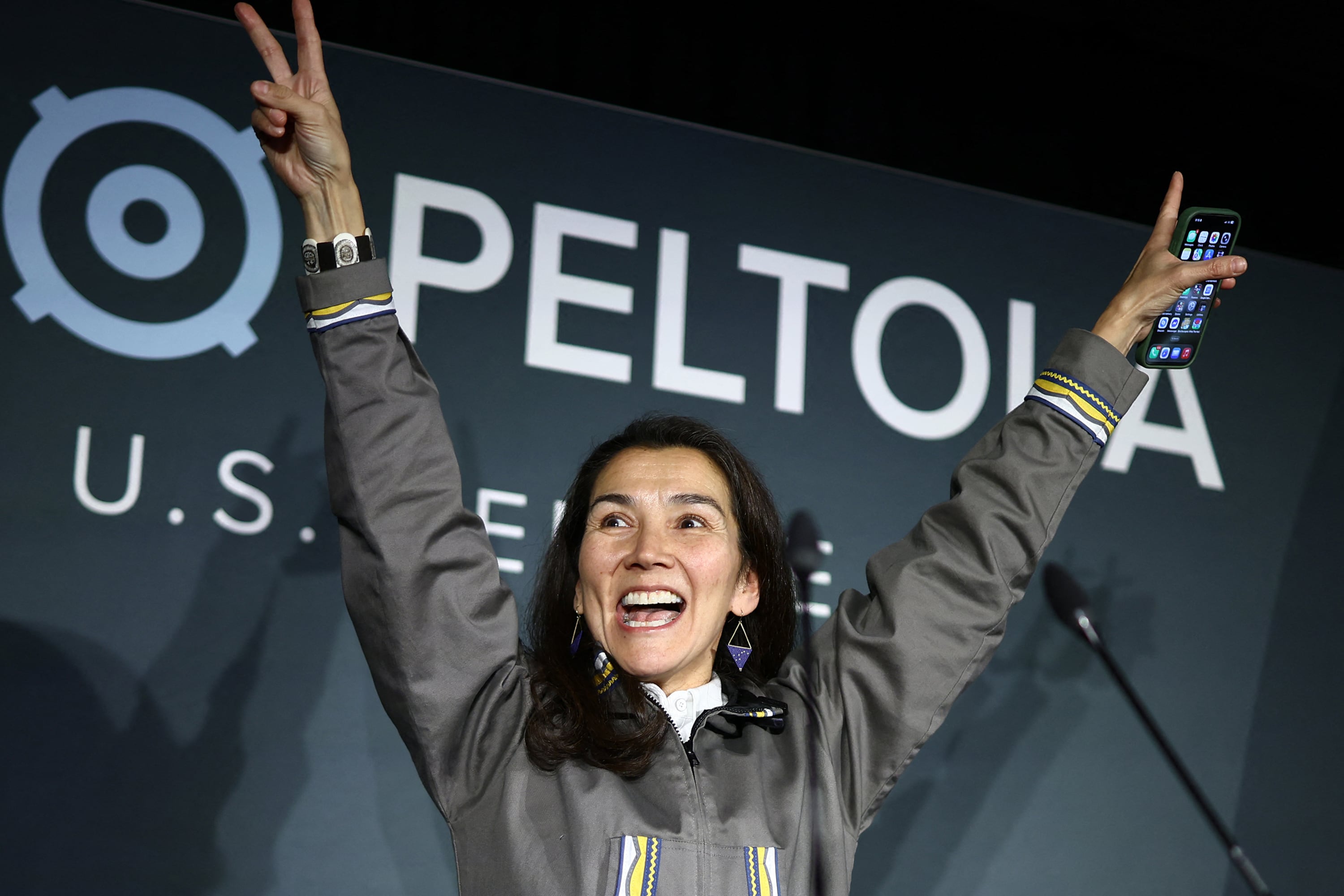
The final U.S. Senate contest has finally been called. Democrat Mary Peltola of Alaska became the sixth Democrat to unseat a Republican incumbent in the Senate in this election.
But that’s not the end of the story.
Alaska unexpectedly catapulted to the forefront of the political debate in the waning days of the campaign. That’s when President Donald Trump directed the U.S. Department of Justice to launch an investigation into the state’s Senate race over allegations that a candidate with the same name as the GOP incumbent was trying to confuse voters and pull support from the sitting senator. At the president’s direction, the Justice Department launched criminal and civil investigations, which Attorney General Todd Blanche vowed to pursue regardless of the race’s outcome.
The episode also put a spotlight on how Alaska conducts its elections. Alaska uses ranked choice voting to choose congressional representatives, and conducts open nonpartisan primaries from which four candidates advance to the general election regardless of their party affiliation.
Advocates for those methods say they promote a broader array of choices and more bipartisan outcomes, but critics say they confuse voters. Nonetheless, Alaska’s voters rejected a ballot measure — the second in two election cycles — that would have changed their system.
Alaskans narrowly approved ranked choice voting in 2020 and then rejected a proposal in 2024 to rescind the system, also by a small margin. This year, Alaska voters by a larger margin — 54% to 46% — opted again to keep ranked choice voting and open primaries.
“Yet again, Alaskans have proven that they want to have ranked choice voting and that they like it,” said Amy Lauren Lovecraft, a political science professor at the University of Alaska Fairbanks.
Lovecraft is a supporter of the system, which she says gives Alaskans a chance to break free of the two-party system that dominates American politics.
“If voters would like to have greater control over who runs in general elections and greater control over the ways in which issues are presented to citizens,” then ranked choice voting, as in Alaska, “makes a lot of sense,” Lovecraft said.
But critics of ranked choice voting say that this year’s Senate race is a case study in why the system should be scrapped.
The process encouraged political operatives to try and game the election by secretly supporting a spoiler candidate to confuse voters and drain support from their opponents, critics argued during the ballot measure debate in Alaska.
Alaska allows voters to rank candidates by preference. If no candidate gets more than 50% of first-choice votes, the candidate with the fewest votes is eliminated, and their votes are redistributed based on the voters’ second choices. The process continues until one candidate gets a majority.
At the end of the counting, it turned out that ranked choice voting didn’t come into play. Peltola won more than 50% of the votes. Dan S. Sullivan, the two-term GOP senator, secured 46%. The latest results show Peltola topping Sullivan by more than 12,000 votes.
The other two candidates on the ballot, retired teacher Dan J. Sullivan, who ran without party affiliation, and Republican Gerald Heikes, got fewer than 11,000 combined votes. So even if all those votes eventually ended up with the incumbent, he wouldn’t have won, and having a second candidate with the same name on the ballot ultimately didn’t matter to the outcome.
Even if the state had gone to a ranked choice tabulation, many of the second-place votes for Dan J. Sullivan were destined for Peltola. (One analysis found that less than a quarter of those who chose Dan J. Sullivan as their first choice chose the incumbent as their second choice.)
“Ranked choice voting did not impact the outcome of the 2026 Alaska Senate election,” said Michael Thorning, director of structural democracy at the Bipartisan Policy Center. “While many observers raised concerns about alleged spoiler candidates, ranked choice voting is actually a system that better accounts for those kinds of tactics because it reduces the likelihood of casting a ballot for the wrong party or individual.”
What happens next?
In the waning days of the campaign, the New York Times linked Peltola aides to an effort to recruit the retired schoolteacher to join the race in hopes of fracturing the Republican vote by putting another candidate on the ballot with the same name as the incumbent. Peltola has denied involvement in the effort.
Trump repeatedly accused Democrats of using tricks to deceive voters. Wall Street Journal columnist Kim Strassel bashed Alaska for having a “nightmarish electoral system.”
Right before Election Day, the Justice Department sent at least 20 letters to people telling them to preserve documents or that they might be targets in its investigation into the role Democrats played in recruiting the second Dan Sullivan.
While a wide spectrum of legal scholars doubt that the Justice Department could find a crime to successfully prosecute, that doesn’t mean the federal government will drop its investigation. Even before the race was decided, Attorney General Todd Blanche said “the priority of investigating a criminal potential fraud doesn’t stop because of the election, no matter who wins or loses.”
The Justice Department told Votebeat this week that it still plans to pursue the case. On Thursday, the Trump administration dropped a separate legal challenge to try and block certification of the Senate race.
In a legal brief opposing the Trump administration’s attempts to block certification of the Alaska Senate race, Stephen Richer, a Republican who oversaw elections in Arizona’s largest county and is now a fellow at the libertarian Cato Institute, argued that it’s up to voters to weigh in on any dirty tricks used in the campaign.
“Voters rather than judges must decide when one side has gone overboard,” Richer wrote.
Another potential legal path could depend on the incumbent senator, who could try to argue that the Democrats carried out a deliberately deceptive scheme that confused voters and impacted the outcome. Sullivan has not conceded the race and has said he would wait for all the votes to be counted and the race to be certified next week before he decides how to proceed.
But Derek Muller, a professor of law at the University of Notre Dame, argued that a Sullivan legal challenge would be a long shot, especially since Peltola got more than 50% of the vote.